By Graham Fisher
Updated November 2026
A hepa air purifier uv combo aims to do two jobs at once: a True HEPA filter traps airborne particles like dust, pollen, pet dander and smoke, while a UV-C lamp is meant to reduce some microbes passing through the unit. This list compares seven models on room coverage, filter type, UV-C use and the kinds of homes they tend to suit. Selection was based on published specifications, brand reputation and common owner feedback, not on any testing we carried out ourselves.
Our top picks at a glance
- 1
 TOP CHOICEBest overallGermGuardian Tower HEPA Air PurifierView on Amazon
- 2
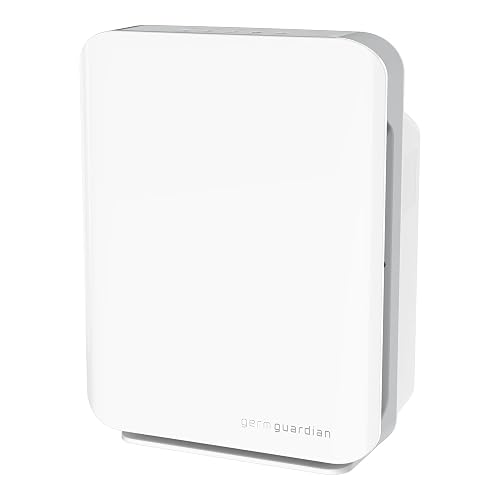 TOP CHOICEBest for large roomsGermGuardian Console HEPA Air PurifierView on Amazon
- 3
 TOP CHOICEBest for small bedroomsCrane Air Purifier with True HEPA FilterView on Amazon
- 4
 Best for odor controlNegative Ion and UV Air Purifier MJ002HView on Amazon
- 5
 Best for air quality monitoringAROEVE Air Purifier AP04View on Amazon
- 6
 Best for pet ownersInvisiClean Aura IIView on Amazon
- 7
 Best for allergy sufferersPure Enrichment PureZone Air Purifier for Bedroom & Living Room, 4-StaView on Amazon
Our Top Picks
Quick Comparison
| Product | Best for | Key feature |
|---|---|---|
| GermGuardian Tower HEPA Air Purifier | Overall use | Up to 743 sq. ft. |
| Crane Air Purifier with True HEPA Filter | Small bedrooms | 250 sq. ft. coverage |
| Negative Ion and UV Air Purifier MJ002H | Odor control | H13 filter and timer |
| AROEVE Air Purifier AP04 | Air quality monitoring | Sensors and auto mode |
| GermGuardian Console HEPA Air Purifier | Large rooms | Up to 1763 sq. ft. |
| InvisiClean Aura II | Pet owners | 4-in-1 H13 filtration |
| Pure Enrichment PureZone | Allergy sufferers | 4-stage filtration |
GermGuardian Tower HEPA Air Purifier
Portable Air Purifier for Smoke, Dust, Odor Reduction, UV-C, 3 Quiet Speeds, AHAM VERIFIDE, Up to 743 sq. ft., 22" GermGuardian Tower HEPA Air Purifier for Bedroom, Large Rooms, Home, Pets
Best for: Overall use in medium to large rooms
Suited to households that want one versatile unit for smoke, dust and odor across a bedroom or living area. Manufacturer specifications list coverage up to 743 square feet.
Pros
- Three quiet fan speeds for nighttime use
- UV-C light is listed as part of the filtration stack
Cons
- UV-C is a supplementary feature rather than the main filter
Crane Air Purifier with True HEPA Filter
Crane Air Purifier with True HEPA Filter, UV Light, 250 Sq Feet Coverage, Timer Function, Sleep Mode, Washable Particle Filter, EE-5067
Best for: Small bedrooms
A compact choice for a single bedroom or home office, with a sleep mode and timer that suit light sleepers. Listed coverage is about 250 square feet. A related read: HEPA vs Non HEPA Air Purifier: Which 7 Models Are Worth Buying in 2026.
Pros
- Sleep mode and timer function
- Washable pre-filter reduces replacement frequency
Cons
- Coverage is too small for open-plan spaces
Negative Ion and UV Air Purifier MJ002H
Negative Ion Function, UV Function, True H13 Filter, 8/12/24 hours Timer, Fragrance Diffuse Air Purifiers for Home with Negative Ion and UV, MJ002H, Black
Best for: Odor control
Fits people who want a True H13 filter plus negative ion and UV functions in a small footprint, with timer options of 8, 12 or 24 hours.
Pros
- H13 filter rating listed by the manufacturer
- Flexible 8/12/24 hour timer
Cons
- Negative ion features can produce ozone at some settings, so check the manual
AROEVE Air Purifier AP04
UV Secondary Purification, Air Quality Monitoring, Auto Mode, 0.3 Microns Filtration Efficiency, 1095 ft² Coverage Area AROEVE Air Purifiers for Home with Air Quality Sensors and Auto-AP04(White)
Best for: Air quality monitoring
Useful for buyers who want to see particle readings and let the unit adjust automatically. Manufacturer coverage is listed at 1095 square feet.
Pros
- Built-in air quality sensors and auto mode
- Large listed coverage area
Cons
- Sensor readings are best used as a trend, not a precise measurement
GermGuardian Console HEPA Air Purifier
Mid-Size Console Air Purifier for Smoke, Dust, Odor Reduction, UV-C, 3 Speeds, 8-Hour Timer, Up to 1763 sq. ft., 21" GermGuardian Console HEPA Air Purifier for Bedroom, Large Rooms, Home, Pets
Best for: Large rooms
Designed for open-plan living rooms and larger bedrooms, with a longer timer and three speeds. Listed coverage reaches 1763 square feet.
Pros
- Very large listed coverage
- 8-hour timer for scheduled operation
Cons
- Bulkier footprint than tower models
InvisiClean Aura II
Air Purifier for Home Allergies & Pets | 4-in-1 H13 True HEPA Filter/Ionizer/Carbon + UV Light | Portable Air Purifiers for Large Room & Bedroom Odor Elimination – InvisiClean Aura II
Best for: Pet owners
Aimed at homes with cats or dogs, combining H13 HEPA, ionizer, carbon and UV light in one portable unit.
Pros
- Four-stage filtration including carbon for odors
- Portable design for moving between rooms
Cons
- Ionizer function may not suit everyone, so review the settings first
Buying Guide
Room Size and Coverage Area
Match the coverage rating to the room you plan to use the unit in. Manufacturers list square footage based on a set number of air changes per hour, so a unit rated for a larger area will generally clean a small bedroom faster, which is a useful margin for allergy relief.
If the space is open-plan or has high ceilings, consider stepping up one size. A tower or console model usually covers more ground than a compact unit placed on a shelf.
True HEPA Filter Grade
Look for a filter that is described as True HEPA or H13, since these standards are designed to capture very small particles such as pollen, mold spores and pet dander. Some models list a filtration efficiency at 0.3 microns, which is the particle size that is most penetrating and therefore a common benchmark.
Be wary of marketing terms like “HEPA-type” or “HEPA-like,” which do not carry the same performance requirements.
UV-C Light Function and Realistic Expectations
A UV-C lamp is intended as a secondary measure to reduce some airborne microbes as air passes through the unit. It works best alongside a HEPA filter rather than as a replacement for cleaning surfaces or following general hygiene practices.
Check whether the UV light is enclosed inside the housing, since this helps prevent direct exposure. Also confirm how the manufacturer describes the lamp’s role so your expectations stay realistic.
Noise Levels, Speed Settings and Sleep Mode
If the purifier will run in a bedroom, look for multiple fan speeds, a sleep mode or a dimmable display. Lower speeds are typically much quieter, though they clean air more slowly, so you may want a stronger setting during the day.
Timers and auto modes are also helpful for running the unit on a schedule or adjusting output based on detected air quality.
Filter Replacement Costs and Maintenance
Ongoing filter costs can add up over the life of a purifier, so check how often the HEPA and carbon filters need replacing and how much replacements typically cost. Some models include washable pre-filters that extend the life of the main filter.
Also note whether the UV lamp is replaceable, as this is another maintenance item to plan for.
FAQ
Does a HEPA air purifier with UV light kill all germs?
No. The HEPA filter captures many airborne particles, while the UV-C lamp is designed to reduce some microbes passing through the unit. Neither feature guarantees that all germs in a room are eliminated.
Is a True HEPA filter better than a HEPA-type filter?
True HEPA filters are held to a defined efficiency standard for capturing very small particles. HEPA-type filters are not required to meet that same benchmark, so performance can vary more widely.
Can a HEPA air purifier help with pet dander and allergies?
A HEPA filter can capture many airborne allergens, including pet dander, pollen and dust mite debris. Results depend on room size, how often the unit runs and how much allergen is produced in the space.
Is it safe to run a UV-C air purifier around people and pets?
Most UV-C purifiers keep the lamp enclosed within the housing so that direct exposure is limited. Follow the manufacturer’s instructions and avoid opening the unit while it is operating.
How often should I replace the filters?
Replacement intervals depend on the model, how much you run the unit and the air quality in your home. Many manufacturers suggest checking the filter every few months and replacing it when it looks heavily clogged or when the indicator light prompts you.
Do I need a purifier with an ionizer or carbon filter as well?
Carbon filters are useful if odor reduction is a priority, since they help absorb some gases and smells. Ionizer features are optional and vary in how they are used, so choose based on your specific needs rather than as a default requirement.
Conclusion
For most households dealing with allergies, a large-coverage tower or console with a True HEPA filter and UV-C lamp is the most practical starting point, especially for bedrooms and living areas. Buyers with smaller spaces or tighter budgets may find a compact portable model with similar filtration a better fit.
If odor control and multi-room use matter most, prioritize a unit with a carbon stage and a higher coverage rating, while those focused on quiet overnight operation should look at models with strong sleep modes and low-noise settings.
Related reading
- Air Purifier HEPA UV Light: Does It Help? A Guide to Choosing One (2026)
- Whole Home HEPA Air Purifier: 6 Best Picks for Large Homes (2026)
- When to Change HEPA Filter Air Purifier Filters: Signs and Schedule (2026)
- What Is a Pure HEPA Air Purifier and Does It Actually Work?
About Graham Fisher
Graham Fisher is part of our editorial team and reviews and edits our indoor air guides, checking product details against manufacturer specifications and owner feedback.