By Ella Sterling
Finding an air purifier to remove cigarette smoke is harder than it sounds, because tobacco smoke is a mix of fine particles and gases. Particles are the visible haze and can be captured by a HEPA filter. The gases, including the sticky smell that clings to curtains and upholstery, need activated carbon. This guide compares six models with those two jobs in mind. Our selection criteria were clean-air delivery rate (CADR) for the room size, the amount and quality of activated carbon, filter replacement cost of ownership, noise at fan speeds people actually run, and patterns in owner feedback about odor removal in real homes. We did not run lab tests on these units. Everything below is based on manufacturer specifications, brand track record and what owners commonly report.
Our Top Picks
Quick Comparison
| Product | Best for | Key feature |
|---|---|---|
| Coway Airmega 400 | Large living rooms and open-plan spaces | High CADR with a thick activated carbon pre-filter |
| Blueair Blue Pure 211+ | Smokers who want quiet operation | Combined particle and activated carbon filter |
| Levoit Core 300 | Bedrooms and small apartments | Compact footprint with a three-stage filter |
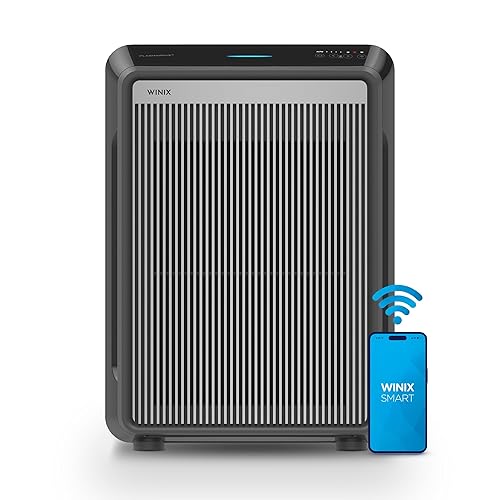
| Winix 5500-2 | Budget-minded buyers with medium rooms | PlasmaWave plus activated carbon filter |
| Honeywell HPA300 | Whole-home coverage in larger spaces | High-airflow design rated for large rooms |
| Medify MA-40 | Heavy smokers and high-odor situations | Extra-large carbon layer for gas-phase removal |
Coway Airmega 400
This suits people who need to clear smoke from a large living area or open-plan room. Its airflow is rated for spaces well beyond a typical bedroom, which matters when smoke has settled into a big volume of air.
Key specs
- Manufacturer-rated for rooms roughly 1,560 square feet
- True HEPA filtration plus activated carbon pre-filter
- Air quality sensor with color indicator
- Multiple fan speeds with a sleep mode
Pros
- High airflow suits large spaces well
- Carbon pre-filter helps with lingering odor
- Sensor makes it easy to see when air is clearing
Cons
- Filter sets add meaningful ongoing cost
- Larger footprint than compact models
Blueair Blue Pure 211+
This is a strong choice for smokers who want a purifier that runs quietly enough to leave on all day in a living room or bedroom. Its combined filter design targets both particles and odors in one unit.
Key specs
- Particle filter combined with activated carbon in one cartridge
- Fabric pre-filter to capture larger debris
- Designed for medium rooms according to manufacturer ratings
- Multiple fan speeds with low-noise operation at the lowest setting
Pros
- Quiet at low speeds
- Single cartridge simplifies maintenance
- Good fit for daily background use
Cons
- Carbon content is modest for heavy smoke odor compared with dedicated gas-focused units
- Replacement cartridges need to be changed on schedule to keep odor control
Levoit Core 300
This compact unit fits a bedroom, home office or small apartment where a smoker needs noticeable improvement without a large appliance taking up floor space. It is a reasonable entry point for smaller rooms.
Key specs
- Three-stage filtration: pre-filter, activated carbon and True HEPA
- Designed for small to medium rooms per manufacturer ratings
- Compact cylindrical design
- Filter-change indicator
Pros
- Small footprint fits bedrooms and desks
- Three-stage filter covers particles and some odor
- Simple controls and filter reminders
Cons
- Not sized for large open spaces
- Carbon layer is lighter than heavy-duty odor models
Winix 5500-2
Buyers who want a solid combination of particle capture and carbon filtration for a medium room, without paying for premium features, often look at this model. It is a practical middle-of-the-road option for a smoker’s living room.
Key specs
- True HEPA filter with activated carbon filter
- PlasmaWave technology as an added ionization step
- Air quality sensor with auto mode
- Designed for medium-sized rooms per manufacturer ratings
Pros
- Good balance of features for the category
- Auto mode adjusts to sensed air quality
- Carbon layer helps with everyday smoke odor
Cons
- Ionization features are a matter of ongoing debate and should not replace filtration
- Not the strongest choice for very large rooms
Honeywell HPA300
This is aimed at larger spaces, where a smoker’s home has multiple connected rooms and the goal is broader coverage rather than a single small room. Manufacturers position it for big areas, which fits smoke that spreads through open layouts.
Key specs
- True HEPA filter
- Manufacturer-rated for large rooms
- Multiple fan speeds with filter-change indicator
- Carbon-based odor option available in some configurations
Pros
- Strong airflow for large spaces
- Widely available replacement filters
- Straightforward controls
Cons
- Odor-specific carbon capacity is limited compared with dedicated gas-focused units
- Can be louder at higher speeds
Medify MA-40
This model is for heavy smokers or homes where odor has already built into fabrics and walls. Its larger carbon emphasis targets gas-phase pollutants, which is where many standard units fall short.
Key specs
- True HEPA filtration
- Substantial activated carbon layer
- Designed for medium to large rooms per manufacturer ratings
- Filter-change reminders
Pros
- Heavier carbon load suits strong odor
- Good particle capture from HEPA stage
- Designed with odor control as a priority
Cons
- Carbon-heavy filters cost more to replace over time
- Bulkier than compact bedroom units
Buying Guide
Choosing an air purifier for smoke is different from choosing one for pollen or dust. Smoke has two components that need separate treatment, so the filter design matters more than the marketing language on the box.
Selection Criteria
- Filtration type: A True HEPA filter captures fine particles, which is what makes smoke look hazy. Activated carbon adsorbs the gases responsible for the smell.
- Carbon quantity: Thin carbon pads saturate quickly. Owners dealing with heavy odor generally report better results with deeper or heavier carbon beds.
- CADR for room size: Clean-air delivery rate tells you how fast the unit moves clean air. A common guideline is to choose a CADR that is at least two-thirds of the room’s square footage, and higher for heavy smoking.
- Noise: Units you run continuously need to be tolerable at the speed you actually use.
Important Features
- Pre-filter to extend the life of the carbon and HEPA stages
- Air quality sensor and auto mode
- Filter-change indicator
- Sealed filter housing so air is forced through the media rather than around it
Specs to Check
- Manufacturer-rated room size and CADR values
- Weight of activated carbon in the filter, when listed
- Replacement filter model and availability
- Decibel levels at low and high fan settings
Choosing by Need
- Single small room, light smoking: a compact unit with HEPA and a modest carbon layer.
- Large living area or open plan: a higher-airflow model rated for big spaces.
- Heavy smoke or lingering odor: prioritize deep carbon beds, even if replacements cost more.
- Need quiet daytime and nighttime use: favor models with a low fan setting that stays unobtrusive.
Things to Watch Out For
- Ionizers and ozone-generating features are not a substitute for filtration, and ozone is a lung irritant. Look for units that do not rely on ozone output.
- A purifier does not remove smoke odor embedded in walls, carpet and fabric. Ventilation, cleaning and sometimes professional treatment are also needed.
- Running a purifier in a room where people are actively smoking does not make the air safe. Smoking outdoors is the most effective way to reduce indoor exposure.
FAQ
Can an air purifier completely remove cigarette smoke?
No. A good purifier can substantially reduce the particles and some of the odor, but it cannot remove everything, especially residue that has settled onto surfaces. Continued cleaning and ventilation help alongside filtration.
Do I need a HEPA filter or a carbon filter for smoke?
You need both. HEPA handles the visible particles, and activated carbon handles the gases that cause the smell. Units that combine the two are generally a better fit than those that only have one.
How do I size a purifier for my smoking room?
Measure the room’s square footage and compare it to the manufacturer’s rated room size and CADR. For heavy smoke, choose a unit rated for a larger room than you have so it can cycle air more often. For detail, see our guide on Air Purifier Room Size Guide.
How often should I replace the filters?
Replacement timing depends on how much smoke the unit handles. Heavy smoking shortens carbon life considerably. Follow the manufacturer’s indicator or replacement schedule, and check the pre-filter regularly. Our Air Purifier Maintenance guide covers this in more depth.
Will running the purifier fix the smell in my furniture?
It will help with airborne odor, but odor embedded in fabric and carpet tends to persist. Washing or professionally cleaning those materials is often needed alongside the purifier.
Is it safe to run a purifier while someone smokes indoors?
A purifier reduces exposure but does not eliminate the health risks of secondhand smoke. Health professionals recommend smoke-free indoor environments. If you have a medical concern, consult your doctor.
Should I look for an air purifier with an ionizer?
Ionizers can produce ozone, which irritates the lungs. Prioritize HEPA and activated carbon filtration, and avoid relying on ionization features for smoke control.
Conclusion
For a large living area, the Coway Airmega 400 and Honeywell HPA300 are built around airflow. For quiet everyday use, the Blueair Blue Pure 211+ and Winix 5500-2 are reasonable middle-ground options. For bedrooms and small spaces, the Levoit Core 300 fits without taking much room. If odor is the main problem, the Medify MA-40 has the heaviest carbon emphasis among these picks. Match the room size and odor level to the model’s rated specs, and remember that a purifier works best alongside ventilation and cleaning rather than in place of them.
Related reading
- Sans Air Purifier Review (2026): Features, Pros and Cons
- Pure Air 3000 Air Purifier Review (2026): Pros, Cons & Who Should Buy
- How to Select Air Purifier for Home: 7 Factors That Matter
- How Air Purifiers Work

About Ella Sterling
Ella covers indoor air, comparing specs, features and long-term owner feedback to help readers choose with confidence.