By Ella Sterling
Mold spores float through indoor air, and a HEPA air purifier for mold problems can capture many of them before they settle on surfaces or get inhaled. This guide compares seven units we selected using published specifications, manufacturer claims about true HEPA filtration, clean air delivery rate (CADR) figures, room coverage, and common patterns in owner feedback. Our criteria focused on real HEPA media rated to capture 0.3-micron particles, adequate airflow for the room size, pre-filters that extend the life of the HEPA layer, and manageable ongoing filter costs. A purifier cannot fix the moisture source behind mold, so we also note where that limitation matters.
Our Top Picks
Quick Comparison
| Product | Best for | Key feature |
|---|---|---|
| Coway AP-1512HH Mighty | Bedrooms and medium living rooms | True HEPA with activated carbon layer |
| Levoit Core 300 | Small bedrooms and home offices | Three-stage filtration with quiet low setting |
| Blueair Blue Pure 411 Auto | Compact rooms with odor concerns | HEPA-type filter with particle pre-filter |
| Honeywell HPA300 | Large open-plan spaces | High-airflow HEPA design with wide coverage |
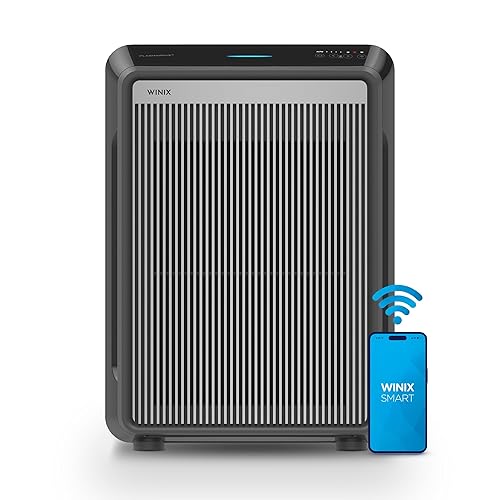
| Winix 5500-2 | Rooms needing carbon and HEPA together | Four-stage system with PlasmaWave option |
| Germ Guardian AC4825 | Budget-conscious buyers | True HEPA with UV-C light |
| Dyson Pure Cool TP04 | Premium buyers wanting fan and purifier combined | Glass HEPA filter with air multiplier fan |
Coway AP-1512HH Mighty
This unit suits bedrooms and medium living rooms where mold spores and general allergens are both concerns. It is a frequently recommended option in the consumer air purifier category.
Key specs
- True HEPA filter capturing 0.3-micron particles at stated efficiency
- Activated carbon pre-filter for odors and gases
- Coverage rated for rooms up to roughly 361 square feet
- Three fan speeds plus a sleep mode
Pros
- Real HEPA media with a carbon layer for odor support
- Filter-change indicator takes the guesswork out of maintenance
- Quiet operation on low speed
Cons
- Replacement filter sets add up over time
- Not sized for large open-plan spaces
Levoit Core 300
Good for small bedrooms, nurseries, and home offices where space is limited and noise matters. It is one of the most commonly purchased compact purifiers.
Key specs
- True HEPA filter plus activated carbon and pre-filter stages
- Coverage rated for rooms up to roughly 219 square feet
- Three fan speeds with a sleep mode
- Compact footprint for nightstand or corner placement
Pros
- Small footprint suits tight spaces
- Low setting is quiet enough for overnight use
- Straightforward controls
Cons
- Coverage is limited to smaller rooms
- Filter life depends heavily on pre-filter maintenance
Blueair Blue Pure 411 Auto
Suited to compact rooms where you want a purifier that handles particles and some odor sources without a complicated setup. Owners often mention its washable pre-filter as a maintenance benefit.
Key specs
- HEPA-type particle filter combined with a pre-filter
- Automatic mode adjusts fan speed based on air quality readings
- Designed for small to medium rooms
- Replaceable filter cartridge
Pros
- Washable pre-filter reduces replacement frequency
- Automatic mode is convenient for hands-off operation
- Slim, unobtrusive design
Cons
- Some buyers find the HEPA-type designation less specific than true HEPA labeling
- Smaller coverage than larger units
Honeywell HPA300
Best for large open-plan areas, such as a combined kitchen and living room, where a single unit needs to move a lot of air. Manufacturers position it for larger rooms than most compact models.
Key specs
- True HEPA filter with a standard 0.3-micron rating
- Coverage rated for rooms up to roughly 465 square feet
- Multiple fan speeds with a filter-status indicator
- Four-sided air intake for broader circulation
Pros
- Wider coverage than most compact purifiers
- Simple, durable build
- Filter indicator helps with timely replacement
Cons
- Larger footprint than compact models
- Fan noise is more noticeable on higher settings
Winix 5500-2
Fits rooms where you want HEPA particle capture alongside a substantial carbon layer for smoke, cooking, and household odors. It appeals to buyers who want a multi-stage system.
Key specs
- Four-stage filtration including a true HEPA filter and activated carbon
- PlasmaWave technology as an additional option
- Coverage rated for mid-size rooms
- Auto mode with air quality sensing
Pros
- Strong carbon filtration for odors alongside HEPA
- Multiple stages cover a range of pollutants
- Sensor-driven auto mode
Cons
- Some owners report the PlasmaWave feature adds maintenance questions
- Replacement filters for multi-stage systems can be a recurring expense
Germ Guardian AC4825
A practical pick for buyers who want a true HEPA filter and an added UV-C light stage at a budget-friendly tier. It is often considered for bedrooms and general living spaces.
Key specs
- True HEPA filter rated for 0.3-micron particles
- UV-C light stage in the airflow path
- Coverage rated for rooms up to roughly 167 square feet
- Three fan speeds and a timer
Pros
- True HEPA plus UV-C in an accessible tier
- Simple controls and a timer function
- Compact for smaller rooms
Cons
- Coverage is modest for larger rooms
- UV-C does not replace removing the moisture source behind mold
Dyson Pure Cool TP04
Designed for buyers who want air purification and a fan in one unit, with a glass HEPA filter that many owners appreciate for its sealed design. It sits in the premium segment of the market.
Key specs
- Glass HEPA filter with activated carbon layer
- Air multiplier fan for room circulation
- Sensor and app-based air quality monitoring
- Suitable for medium-sized rooms
Pros
- Combines purification and fan circulation
- Real-time air quality display
- Sleek design that fits modern interiors
Cons
- Premium tier with higher ongoing filter costs
- Fan and purification features may not suit buyers who only need filtration
Buying Guide
Selection criteria for mold-focused use
Mold spores are generally in the 3 to 40 micron range, and many are small enough to be captured by a true HEPA filter. When you shop for a HEPA air purifier for mold concerns, look for a unit that uses a genuine HEPA filter rated to capture 99.97 percent of particles at 0.3 microns. Read our guide to HEPA Filters Explained before comparing marketing terms like “HEPA-type” or “HEPA-like,” which do not carry the same standard.
Important features
- True HEPA filtration: The core requirement for capturing airborne spores.
- Pre-filter: Catches larger debris and extends HEPA life. Review 5 Best Air Purifier Pre-Filters for options.
- Activated carbon: Helps with musty odors that often accompany mold.
- Sealed system: Prevents unfiltered air from bypassing the filter.
Specs to check
- CADR: Clean air delivery rate indicates how quickly the unit removes particles. Our explainer on Air Purifier CADR Explained covers how to read it.
- Room size: Match the rated coverage to your room. The Air Purifier Room Size Guide shows how to calculate this.
- Air changes per hour: Aim for roughly four to five changes per hour for mold-prone spaces.
- Filter replacement cost: Compare the long-term cost of replacement HEPA and carbon filters before buying.
Choosing by need
For a single bedroom, a compact true HEPA unit is usually enough. For a basement or large open area with visible mold history, choose a higher-CADR model and run it continuously. If odors are part of the problem, prioritize units with meaningful carbon filtration. For general guidance on selecting a unit for your home, see How to Select Air Purifier for Home: 7 Factors That Matter.
Things to watch out for
- An air purifier does not stop mold from growing. Fix leaks, reduce humidity to below about 50 percent, and clean affected surfaces.
- UV-C lights and ionizers are not substitutes for HEPA filtration and may produce byproducts in some designs.
- Keep the unit away from walls and furniture so air can circulate freely.
- If you have significant mold growth or health symptoms, consult a qualified professional such as a mold remediation specialist or your physician.
FAQ
Does a HEPA air purifier remove mold?
A true HEPA filter captures airborne mold spores along with other particles. It does not destroy mold growing on surfaces, so cleaning and moisture control are still needed.
What humidity level prevents mold?
Most guidance recommends keeping indoor relative humidity between about 30 and 50 percent. A hygrometer helps you track it.
How long do HEPA filters last?
Manufacturers commonly specify replacement every six to twelve months depending on use and air quality. Pre-filters often need cleaning or replacement more frequently.
Can I run an air purifier all day?
Yes, most units are designed for continuous operation, and running on a low or medium setting is common for mold-prone rooms.
Is HEPA-type the same as true HEPA?
No. True HEPA meets a defined efficiency standard. HEPA-type and HEPA-like are marketing terms that do not guarantee the same performance.
Should I use a dehumidifier with an air purifier?
Often yes. A dehumidifier addresses moisture, which is the root cause, while the purifier removes airborne spores. Review Indoor Air Quality Guide: The Basics for context on how these work together.
Do air purifiers help with allergies from mold?
They can reduce airborne triggers for many people. If you have allergies or respiratory conditions, consult an allergist or physician for personalized guidance.
Conclusion
For a bedroom or small room, the Levoit Core 300 or Germ Guardian AC4825 fit well when space and budget are limited. The Coway AP-1512HH Mighty suits medium rooms where you want true HEPA with a carbon layer. For larger open areas, the Honeywell HPA300 offers wider coverage. Buyers who need strong odor control should consider the Winix 5500-2 or Blueair Blue Pure 411 Auto, and those wanting a fan combined with purification may prefer the Dyson Pure Cool TP04. Whichever you choose, pair it with moisture control and source repair, since no purifier can solve a mold problem alone. For more context, see Best True HEPA Air Purifiers and Air Purifier Maintenance.
Related reading
- Best True HEPA Air Purifiers
- Sans Air Purifier Review (2026): Features, Pros and Cons
- Pure Air 3000 Air Purifier Review (2026): Pros, Cons & Who Should Buy

About Ella Sterling
Ella covers indoor air, comparing specs, features and long-term owner feedback to help readers choose with confidence.