By Ella Sterling
A hepa air purifier dust model is one of the most practical ways to cut down on the fine particles that settle on furniture, float through sunbeams and aggravate allergies. Household dust is a mix of skin flakes, pet dander, pollen, fabric fibers and outdoor soil that drifts indoors, and most of it lives in the size range a true HEPA filter is built to catch. The trouble is that “HEPA” is a marketing word as often as it is a technical one, so this guide focuses on what actually matters: a filter that meets the HEPA standard, a clean air delivery rate (CADR) that matches your room, a fan that runs quietly enough to leave on overnight, and replacement filters you can afford to keep buying. The picks below are based on manufacturer specifications, brand reputation and common patterns in owner feedback. None of them were tested by us in a lab.
Our Top Picks
Quick Comparison
| Product | Best for | Key feature |
|---|---|---|
| Coway Airmega 400 | Large open-plan living areas | Four-stage filtration with a high CADR rating |
| Levoit Core 300 | Bedrooms and small offices | Quiet operation and a compact footprint |
| Blueair Blue Pure 211+ | Households with pets | Particle and carbon pre-filter combination |
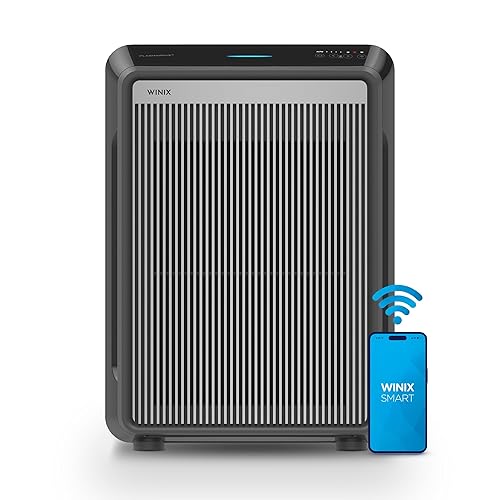
| Winix 5500-2 | Mid-size rooms on a budget | Plasmawave tech plus a True HEPA filter |
| Honeywell HPA300 | Large rooms with heavy dust | Tested-to-standard HEPA media and high airflow |
| Levoit Vital 200S | Smart-home users | Wi-Fi control and air quality sensor |
| Dyson Pure Cool TP04 | Allergy sufferers wanting a fan too | Purifier and fan in one unit |
| Hamilton Beach TrueAir | Small rooms and tight budgets | Compact HEPA with washable pre-filter |
| Rabbit Air MinusA2 | Quiet overnight use | Very low noise at sleep speed |
Coway Airmega 400
This is a strong fit for larger open-plan spaces where dust tends to circulate from the kitchen into the living room. Owners who run it on a higher fan setting in rooms of several hundred square feet often report visibly fewer airborne particles within a few hours.
Key specs
- Filtration: pre-filter, odor filter, True HEPA filter, and an activated carbon layer
- Designed for rooms roughly up to 1,560 square feet, per manufacturer guidance
- Includes an air quality indicator light
Pros
- Covers large rooms well at higher fan speeds
- Multi-stage filtration handles dust and odors together
- Filter change indicator makes maintenance simple
Cons
- Larger footprint than compact models
- Replacement filter sets add up over time
Levoit Core 300
A good match for bedrooms and small home offices where dust builds up around desks and bedding. Its low noise profile makes it easy to leave running through the night.
Key specs
- Filtration: pre-filter, True HEPA filter, and activated carbon
- Designed for rooms up to roughly 219 square feet, per manufacturer guidance
- Three fan speeds plus a sleep mode
Pros
- Compact and easy to place beside a bed
- Quiet on low settings
- Simple controls with a filter status light
Cons
- Not suited to large open rooms
- Fan can sound noticeable on the highest speed
Blueair Blue Pure 211+
Households with pets or frequent shedding often find this model useful because the fabric pre-filter catches larger hair and fibers before they reach the HEPA layer, which can extend the life of the main filter.
Key specs
- Filtration: particle pre-filter, HEPA-style particle filter, and activated carbon
- Designed for medium rooms, per manufacturer guidance
- Washable outer pre-filter
Pros
- Pre-filter helps protect the main filter from pet hair
- Clean, simple design
- Good airflow for its size
Cons
- Carbon layer is modest for strong odors
- Replacement filters must be bought regularly
Winix 5500-2
A practical option for mid-size rooms where you want a true HEPA filter plus an extra air-treatment feature without stepping up to a premium price tier.
Key specs
- Filtration: True HEPA filter, activated carbon, and PlasmaWave technology
- Designed for rooms up to roughly 360 square feet, per manufacturer guidance
- Auto mode with air quality sensing
Pros
- Sensor-based auto mode adjusts to dust levels
- Solid coverage for mid-size bedrooms and living rooms
- Filter replacement reminders are easy to follow
Cons
- Some owners prefer to avoid ionizing features altogether
- Sensor readings can drift with heavy use
Honeywell HPA300
Suited to larger rooms with noticeable dust, such as a home with hardwood floors and frequent foot traffic. Honeywell publishes airflow figures that make it straightforward to compare against room size.
Key specs
- Filtration: pre-filter and True HEPA filter
- Designed for large rooms, per manufacturer guidance
- Multiple fan speeds with a timer
Pros
- Strong airflow for its class
- Straightforward controls
- Widely available replacement filters
Cons
- Can be louder on higher speeds
- No carbon layer for odor control
Levoit Vital 200S
A fit for smart-home users who want to monitor and adjust their purifier from a phone or voice assistant. It works well in bedrooms and home offices.
Key specs
- Filtration: pre-filter, True HEPA, and activated carbon
- Wi-Fi connectivity with app and voice control
- Built-in air quality sensor
Pros
- App scheduling and remote control
- Compact footprint
- Good quiet operation on low settings
Cons
- Depends on a stable Wi-Fi connection for smart features
- Coverage is best for small to medium rooms
Dyson Pure Cool TP04
Good for allergy sufferers who want a purifier that doubles as a fan in a bedroom or living area. The sealed HEPA design is often cited by owners as a reason for low particle leakage.
Key specs
- Filtration: HEPA filter plus activated carbon
- Combined air purifier and fan design
- Oscillation and app-based controls on certain configurations
Pros
- Doubles as a fan, useful in warm months
- Well-sealed filter path
- Clear digital display of air quality
Cons
- Premium pricing tier
- Fan-driven design can be noisy at higher speeds
Hamilton Beach TrueAir
A budget-friendly option for small rooms, nurseries or a single bedroom where dust is a concern but a large unit isn’t needed.
Key specs
- Filtration: pre-filter and HEPA filter, plus carbon layer in some versions
- Designed for small rooms, per manufacturer guidance
- Simple dial controls
Pros
- Low entry cost within the HEPA category
- Compact and lightweight
- Washable pre-filter reduces replacement frequency
Cons
- Limited coverage for larger rooms
- Fewer advanced features than premium models
Rabbit Air MinusA2
Designed with quiet overnight use in mind, this model suits light sleepers and anyone who runs a purifier in a bedroom all night. Owners often mention how little noise it makes at its lowest setting.
Key specs
- Filtration: pre-filter, HEPA filter, and activated carbon
- Multiple speed settings including a very low sleep mode
- Modular filter design with customizable layers
Pros
- Very quiet at sleep speed
- Customizable filter stack
- Sturdy build
Cons
- Higher-end pricing tier
- Filter options can be confusing to choose between at first
Buying Guide
Choosing a hepa air purifier dust model comes down to a few measurable factors. Start with the room, then check the filter, the airflow and the long-term cost. For more background on how these units clean the air, see How Air Purifiers Work and HEPA Filters Explained.
Selection Criteria
- True HEPA certification: Look for “True HEPA” or a specified efficiency of 99.97 percent at 0.3 microns. “HEPA-like” or “HEPA-type” filters are not the same thing.
- CADR: Clean air delivery rate measures how much filtered air a unit delivers. Higher numbers mean faster dust removal. See Air Purifier CADR Explained for details.
- Room size coverage: Match the rated room size to your actual space. Undersized units run constantly and wear out faster.
- Noise level: Check decibel ratings on low and high settings if you plan to run the unit at night.
- Filter cost: Replacement filters are the main ongoing expense. Compare replacement intervals and set costs before buying.
Important Features
A pre-filter catches hair and larger debris, extending the life of the HEPA layer. Activated carbon helps with odors and some gases but does not replace HEPA for dust. Filter change indicators and auto modes with air quality sensors can take much of the guesswork out of daily use.
Specs to Check
- CADR rating for dust (not just smoke or pollen)
- Maximum rated room size
- Decibel levels at each fan speed
- Filter replacement interval and cost
- Power draw, if you care about running costs
Choosing by Need
- Large open living area: Prioritize higher CADR and room coverage.
- Bedroom with a sleeper: Prioritize low noise at sleep speed.
- Pets: Prioritize a washable pre-filter.
- Small room, limited space: A compact HEPA unit is usually enough.
For room-by-room sizing, the Air Purifier Room Size Guide walks through the math. If you are narrowing down bedroom options specifically, Best Air Purifiers for Bedrooms is a useful companion read.
Things to Watch Out For
- Marketing claims that don’t name a HEPA standard
- Units with ozone-generating features, which many health agencies advise against
- Replacement filters that are proprietary and hard to find
- Ignoring the cost of filters over the unit’s lifetime
Regular upkeep matters too. The Air Purifier Maintenance guide covers cleaning schedules and when to replace filters.
FAQ
Does a HEPA air purifier remove dust completely?
A True HEPA filter captures at least 99.97 percent of particles at 0.3 microns, which covers much of household dust. No purifier removes 100 percent of dust, and new dust constantly enters from doors, windows and clothing. Consistent use and regular vacuuming work best together.
What CADR do I need for dust?
A common rule of thumb is a CADR of about two-thirds of the room’s square footage for dust and pollen, though manufacturers’ own sizing guidance is the most reliable starting point. Check Air Purifier CADR Explained for a full breakdown.
How often should I replace a HEPA filter?
Most manufacturers recommend replacing the HEPA filter every 6 to 12 months, depending on use and air quality. Pre-filters are often washed or replaced more frequently. Follow the specific guidance for your model.
Can a HEPA purifier help with allergies?
Many people with dust or pollen sensitivities find that running a purifier reduces symptoms, though results vary. If you have allergies or asthma, talk with a doctor or allergist before relying on a purifier as part of your treatment plan.
Is a HEPA filter the same as a HEPA-type filter?
No. True HEPA meets a specific efficiency standard. HEPA-type and HEPA-like filters are marketing terms that may perform well below that standard. Look for the words “True HEPA” in the product specifications.
Do I need a pre-filter?
A pre-filter is not strictly required, but it is helpful. It captures larger particles and hair, which keeps the HEPA layer working longer. In homes with pets or heavy dust, a pre-filter can noticeably reduce how often you need to replace the main filter. For a deeper look, see 5 Best Air Purifier Pre-Filters.
Can I run a HEPA purifier all day and night?
Most units are designed for continuous operation, and many owners run them around the clock on a low setting. Check the manufacturer’s guidance on runtime and filter life before doing so, and watch for noise levels if the unit is in a bedroom.
Conclusion
For large open spaces with heavy dust, the Coway Airmega 400 and Honeywell HPA300 both offer strong airflow and room coverage. For bedrooms and quiet overnight use, the Levoit Core 300 and Rabbit Air MinusA2 are worth a close look. Households with pets may prefer the Blueair Blue Pure 211+ for its pre-filter design, while smart-home users might lean toward the Levoit Vital 200S. The Winix 5500-2 and Hamilton Beach TrueAir suit mid-size and smaller rooms on a more modest budget, and the Dyson Pure Cool TP04 appeals to those who want a purifier that also works as a fan. Match the CADR and room size to your space first, then compare filter costs and noise. Anyone with asthma or serious allergies should consult a doctor or allergist before making purifier decisions part of a treatment plan.

About Ella Sterling
Ella covers indoor air, comparing specs, features and long-term owner feedback to help readers choose with confidence.