By Ella Sterling
If you live with a cat and sneeze, itch or wake up congested, a HEPA air purifier for cat allergies can cut down the airborne dander, saliva proteins and hair fragments that set off symptoms. Cat allergen is unusually sticky and light, so it hangs in the air and settles on fabric for hours after a cat has been active. The right unit has a true HEPA filter, enough clean air delivery rate (CADR) for your room, a fan that runs quietly enough to leave on overnight, and replacement filters you can keep buying without hassle. The picks below were chosen by reviewing manufacturer specifications, brand track record and patterns in owner feedback. None of them were tested in our own lab, and a purifier is only one part of allergy control, so pair it with regular cleaning and grooming.
Our Top Picks
Quick Comparison
| Product | Best for | Key feature |
|---|---|---|
| Coway AP-1512HH Mighty | Bedrooms and medium living rooms | Four-stage filtration with a True HEPA layer |
| Levoit Core 300 | Small bedrooms and apartments | Very quiet sleep mode and compact design |
| Blueair Blue Pure 211+ | Open-plan spaces with cats roaming | Particle and carbon filter combination |
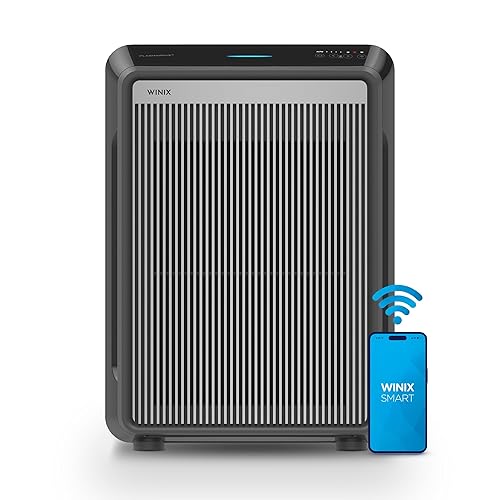
| Winix 5500-2 | Mid-size rooms on a moderate budget | PlasmaWave technology plus carbon filter |
| Honeywell HPA300 | Large rooms and whole-floor coverage | High CADR for a single-room unit |
| Coway Airmega 400 | Large living areas with heavy shedding | Smart sensors and high airflow |
| Levoit Core 400S | Medium-to-large bedrooms | Wi-Fi control and air quality sensor |
| Dyson Purifier Cool TP07 | Households that want a fan and purifier in one | Sealed HEPA filtration with fan function |
| Hamilton Beach TrueAir | Budget-conscious buyers in small rooms | Affordable True HEPA with simple controls |
| Rabbit Air MinusA2 | Allergy sufferers who want premium build quality | Multi-stage filtration with low noise |
Coway AP-1512HH Mighty
This is a strong default choice for a bedroom or a medium living room where a cat sleeps or spends a lot of time. Owners who have cats often report that it keeps dander noticeably lower after a few days of running.
Key specs
- Filtration: pre-filter, True HEPA filter, activated carbon
- Coverage: rooms up to roughly 361 square feet, according to manufacturer ratings
- Includes a filter change indicator
- Three fan speeds plus a sleep mode
Pros
- Well-established brand with consistent replacement filter availability
- Good coverage for typical bedrooms
- Filter indicator takes the guesswork out of replacement timing
Cons
- Can be audible on its higher fan speeds
- Larger footprint than the compact models on this list
Levoit Core 300
A good fit for small bedrooms, studio apartments and anyone who wants an unobtrusive unit that can run all night. Its low noise level and compact size make it easy to place near a sleeping cat’s favorite spot without disrupting rest.
Key specs
- Filtration: pre-filter, True HEPA, activated carbon
- Coverage: rooms up to roughly 219 square feet, according to manufacturer ratings
- Sleep mode with dimmable indicator light
- Filter life indicator on the unit
Pros
- Very quiet on low settings
- Compact enough for nightstands and small rooms
- Widely available replacement filters
Cons
- Coverage is limited, so it is less suitable for large open rooms
- Carbon layer is modest, which matters if odors are also a concern
Blueair Blue Pure 211+
Suited to open-plan living spaces where a cat moves between rooms and dander spreads easily. Its fabric pre-filter and particle-carbon filter are designed to handle a steady load of pet hair and dust.
Key specs
- Filtration: pre-filter, particle filter with activated carbon
- Coverage: rooms up to roughly 540 square feet, according to manufacturer ratings
- Three fan speeds
- Filter replacement reminders
Pros
- Large coverage area for an open floor plan
- Pre-filter captures hair before it reaches the main filter
- Simple, durable build
Cons
- Relies on a particle filter rather than a labeled True HEPA element, so verify the filter spec before buying
- Replacement cost over time can add up
Winix 5500-2
A practical option for mid-size rooms where you want additional odor control, since cat litter and bedding smells often come along with allergens. It combines a True HEPA filter with a carbon layer and an ionizing feature.
Key specs
- Filtration: True HEPA, activated carbon, PlasmaWave technology
- Coverage: rooms up to roughly 360 square feet, according to manufacturer ratings
- Auto mode with air quality sensor
- Filter replacement indicator
Pros
- Good balance of HEPA filtration and odor handling
- Auto mode adjusts speed to measured air quality
- Reasonable coverage for mid-size rooms
Cons
- Ionizer features are a point of debate, so some buyers prefer units without them
- Control panel can take a little getting used to
Honeywell HPA300
Best for larger rooms or for allergy sufferers who want one unit to cover most of a main floor. Honeywell’s HEPA-focused design is widely recognized for high airflow in a single-room format.
Key specs
- Filtration: True HEPA filter with pre-filter
- Coverage: rooms up to roughly 465 square feet, according to manufacturer ratings
- Four fan speeds, including a sleep setting
- Filter change indicator
Pros
- Strong coverage for larger spaces
- Straightforward controls
- Honeywell has a long history in air filtration
Cons
- Larger and heavier than compact bedroom models
- Higher speeds are noticeable in quiet rooms
Coway Airmega 400
A good match for a large living area with a shedding cat, especially if you want sensors that respond automatically to changes in air quality. It is built for continuous operation in busier spaces.
Key specs
- Filtration: pre-filter, True HEPA, activated carbon
- Coverage: rooms up to roughly 1,560 square feet, according to manufacturer ratings
- Air quality sensors with auto mode
- Filter life indicator
Pros
- Very large coverage rating
- Automatic mode responds to particle levels
- Good build quality for heavy daily use
Cons
- Overkill for a single small bedroom
- Larger footprint and higher replacement filter costs
Levoit Core 400S
Useful for medium-to-large bedrooms or a home office where you want remote control and app-based monitoring. The built-in air quality sensor helps you see when dander levels rise after cat play sessions.
Key specs
- Filtration: pre-filter, True HEPA, activated carbon
- Coverage: rooms up to roughly 404 square feet, according to manufacturer ratings
- Wi-Fi and voice assistant compatibility
- Air quality sensor with real-time readings
Pros
- App control and scheduling are convenient
- Good coverage for mid-to-large bedrooms
- Sensor gives useful feedback
Cons
- Requires a Wi-Fi connection for smart features
- App experience varies with phone compatibility
Dyson Purifier Cool TP07
Aimed at households that want a fan and a purifier in one device, which is useful in warm months. Dyson designs its HEPA system as a sealed unit, and owners often mention that it looks at home in a living room.
Key specs
- Filtration: sealed HEPA filter with activated carbon
- Functions: purifying, fan and heater in some models
- App and remote control
- Filter life tracking
Pros
- Combines air movement and filtration
- Sealed filter design limits leakage of unfiltered air
- Sleek, modern design
Cons
- Premium pricing tier and replacement filters are costly
- Fan function can distract from the purifying role in some rooms
Hamilton Beach TrueAir
A budget-friendly option for small rooms where you need a True HEPA filter but do not need smart features. It suits renters or first-time buyers who want to see whether a purifier helps before committing to a premium model.
Key specs
- Filtration: True HEPA, pre-filter, activated carbon
- Coverage: small rooms, roughly up to 200 square feet
- Three fan speeds
- Simple manual controls
Pros
- Budget-friendly entry into True HEPA filtration
- Simple to operate
- Compact design fits on a dresser or nightstand
Cons
- Limited coverage for larger rooms
- Fewer advanced features and sensors
Rabbit Air MinusA2
Best for allergy sufferers who want a premium, well-built unit with multiple filtration stages and a very quiet operating profile. It is often chosen for bedrooms where sleep quality matters most.
Key specs
- Filtration: pre-filter, HEPA, activated carbon, and optional ionizer on some configurations
- Coverage: rooms up to roughly 1,000 square feet, according to manufacturer ratings
- Low-noise operation on sleep settings
- Filter replacement indicator
Pros
- Multi-stage filtration suits heavy allergen loads
- Quiet on low fan settings
- Solid construction
Cons
- Premium tier, with higher ongoing filter spending
- Full feature set may be more than a small room needs
Buying Guide
Selection criteria for cat allergies
Cat allergen, mainly the Fel d 1 protein, attaches to very fine particles and to dander flakes. Those particles stay suspended longer than ordinary dust, so a purifier needs to capture small particles reliably and run long enough to keep up with ongoing shedding. Focus on three things first: a True HEPA filter, a CADR rating suited to your room, and a noise level you can live with while it runs.
Important features
- True HEPA filtration. Look for filters described as meeting the True HEPA standard, which means capturing at least 99.97 percent of particles at 0.3 microns. Read more in our HEPA Filters Explained guide.
- Pre-filter. A washable or replaceable pre-filter catches hair and larger debris before it loads up the HEPA layer. Our 5 Best Air Purifier Pre-Filters article covers options in detail.
- Activated carbon. Carbon helps with litter box and bedding odors, though it does not capture allergens on its own.
- Sealed design. Units where air is forced through the filter rather than around it perform better in real rooms.
Specs to check
- CADR. Clean air delivery rate indicates how quickly a unit cleans air. Match it to your room size using the Air Purifier CADR Explained article and the Air Purifier Room Size Guide.
- Noise level. Check the decibel rating on the lowest and highest fan speeds. A unit you run on high at night is not doing much good.
- Replacement filter cost and availability. Filters are a recurring cost. Check how often the manufacturer recommends replacement and whether filters are easy to find.
- Air changes per hour (ACH). Many guides suggest several air changes per hour for allergy control. Divide CADR by room volume to estimate this.
Choosing by need
- Small bedroom, light shedding: a compact True HEPA unit with a quiet sleep mode.
- Medium bedroom or home office: a unit with a mid-range CADR and a filter indicator.
- Open-plan living space: higher coverage and a pre-filter that handles hair.
- Strong odors along with allergies: a unit with a meaningful carbon layer.
- Frequent smart home use: app control and sensors.
Things to watch out for
- Terms such as “HEPA-like,” “HEPA-type” or “HEPA-style” do not mean True HEPA. Read the filter spec carefully.
- Ionizers and ozone-generating features are not recommended for people with asthma and should be avoided if you are sensitive to ozone. Consult a physician or allergist if you have respiratory conditions.
- A purifier does not replace allergy medication or medical care. If symptoms are severe, talk with a doctor or allergist.
- Filters need replacing on schedule. A clogged filter is a major reason purifiers underperform.
- Placing the unit where the cat sleeps or where you spend the most time usually helps more than running it in an unused room.
FAQ
Does a HEPA air purifier actually help with cat allergies?
It can reduce airborne cat dander and allergen particles, which may lower symptoms for some people. Results vary, and it works best alongside regular cleaning, grooming and bedding washing. It does not eliminate allergens entirely.
What CADR do I need for a cat allergy?
A common rule is to choose a CADR rating that suits your room’s square footage, then run the unit on a setting that delivers several air changes per hour. For allergy control, many people aim for a unit rated for a room larger than the one they plan to use it in.
Should I run the purifier all day or only at night?
Continuous operation on a low setting usually works better than occasional high-speed bursts, since allergens keep getting disturbed. Many owners run a purifier in the bedroom overnight and in the main living area during the day.
How often should I replace the HEPA filter?
Follow the manufacturer’s recommendation, which is often somewhere around every six to twelve months depending on use and pet shedding. Homes with several pets may need more frequent changes.
Can a purifier remove cat smell as well as allergens?
Activated carbon helps reduce odors, but a heavier carbon layer or a separate odor-focused filter is usually needed for strong litter box smells. HEPA filtration targets particles, not gases.
Is a True HEPA filter enough on its own?
A True HEPA filter is the core of allergen capture, but a pre-filter extends its life and carbon adds odor control. Cleaning floors, vacuuming with a HEPA vacuum and washing bedding are also important.
Are there any risks with air purifiers for people with asthma?
Avoid units that produce ozone, and be cautious with ionizers. If you have asthma or another respiratory condition, check with your doctor or allergist before choosing a purifier.
Conclusion
For most cat owners with allergies, a True HEPA air purifier sized to the room where the cat sleeps is the most useful starting point. The Levoit Core 300 and Hamilton Beach TrueAir suit small rooms and tighter budgets, while the Coway AP-1512HH Mighty and Winix 5500-2 fit typical bedrooms and mid-size living spaces. Larger open areas point toward the Honeywell HPA300, Blueair Blue Pure 211+ or Coway Airmega 400. If you want smart features, the Levoit Core 400S is a practical choice, and the Dyson Purifier Cool TP07 and Rabbit Air MinusA2 suit buyers who prioritize design and build quality. Check CADR against your room, factor in filter replacement costs and pair the purifier with consistent cleaning for the best results. If symptoms persist, speak with an allergist.
Related reading

About Ella Sterling
Ella covers indoor air, comparing specs, features and long-term owner feedback to help readers choose with confidence.