 By Graham Fisher
Updated November 2026
A dehumidifier for musty basement problems is one of the most practical tools you can buy, because that smell is almost always a sign of excess moisture. This guide compares seven units that are popular for basement use, weighing pint capacity, square-footage ratings, drainage options, humidity control and noise. Nothing here comes from hands-on lab testing; the comparison draws on manufacturer specifications, brand track records and the feedback patterns owners commonly report.
Our top picks at a glance
- 1
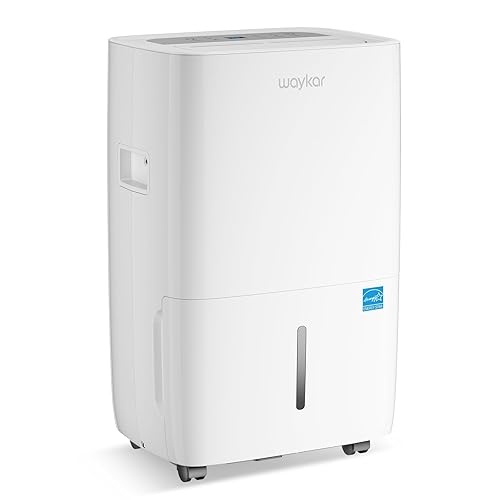 TOP CHOICEBest overallWaykar 80 Pints 5000 Sq. Ft 2025 Energy Star Dehumidifier for BasementView on Amazon
- 2
 TOP CHOICEBest for large, damp basementsKNKA Energy Star 5500 Sq.Ft Dehumidifier for BasementView on Amazon
- 3
 TOP CHOICEBest for drainage flexibilityavylo Dehumidifier for Basement with Pump and HoseView on Amazon
- 4
 Best for quiet operationQuiet Smart Compressor Energy Star 4500 Sq.Ft DehumidifierView on Amazon
- 5
 Best for small basement rooms95Oz Dehumidifier for Home 1000 Sq.Ft (Deep Black)View on Amazon
- 6
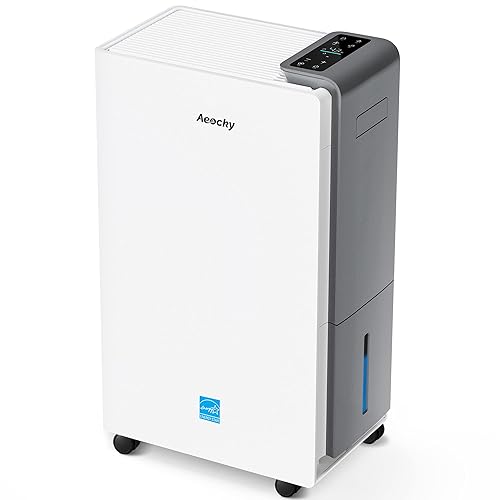 Best for efficiencyAEOCKY Energy Star Most Efficient 2025 Dehumidifier for BasementView on Amazon
- 7
 Best budget pickCompressor Dehumidifier 32 Pint with Drain Hose and 24H TimerView on Amazon
Our Top Picks
How We Selected These Dehumidifiers
Basement dehumidifiers are judged on a few measurable points. First, daily removal capacity in pints, measured by the manufacturer under standard test conditions, which matters more than square-footage claims. Second, humidity range control, since a unit that can hold 45 to 50 percent relative humidity is more useful than one that simply runs. Third, drainage options, because a basement with no floor drain depends on a pump or a continuous hose route. Fourth, noise levels and automatic shutoff, which affect whether the unit can run around the clock. Finally, we considered brand reputation and common owner feedback about reliability and defrost behavior.
Quick Comparison
| Product | Best for | Key feature |
|---|---|---|
| Waykar 80 Pints 5000 Sq. Ft 2025 Energy Star Dehumidifier for Basement | Overall whole-basement use | 80-pint daily rating with auto-defrost |
| KNKA Energy Star 5500 Sq.Ft Dehumidifier for Basement | Large, very damp basements | Drain hose plus smart humidity control |
| avylo Dehumidifier for Basement with Pump and Hose | Basements without a floor drain | Built-in pump with three drainage options |
| Quiet Smart Compressor Energy Star 4500 Sq.Ft Dehumidifier | Finished basements and bedrooms | Quiet compressor with auto shutoff |
| 95Oz Dehumidifier for Home 1000 Sq.Ft (Deep Black) | Small rooms and storage nooks | Sleep mode and ambient light |
| AEOCKY Energy Star Most Efficient 2025 Dehumidifier for Basement | Running costs over long seasons | Intelligent humidistat with Energy Star rating |
| Compressor Dehumidifier 32 Pint with Drain Hose and 24H Timer | First-time buyers and light dampness | 24-hour timer and three operating modes |
Waykar 80 Pints 5000 Sq. Ft 2025 Energy Star Dehumidifier for Basement
90° Auto Swing, 30%–80% Humidity Control for home, Continuous drainage support, Whole-House Dehumidification, Auto-defrost Waykar 80 Pints 5000 Sq. Ft 2025 Energy Star Dehumidifier for Basement
Best for: Overall whole-basement use in a seriously damp space
This is a good fit for a full basement that smells musty year-round, especially one with a history of standing moisture or seepage. The high pint rating gives it headroom during humid summers.
Key specs
- Listed capacity of 80 pints per day
- Rated for up to 5,000 square feet
- Energy Star certified per the listing
- Auto-defrost function and humidity range from 30 to 80 percent
- Continuous drainage support
Pros
- High removal capacity suited to large, wet basements
- Auto-defrost helps it keep running in cool conditions
- Continuous drain option reduces emptying
Cons
- Large footprint takes up floor space
- Noticeable operating sound at full speed
Bottom line: Choose this if your basement is large and consistently humid and you want the highest capacity on this list.
KNKA Energy Star 5500 Sq.Ft Dehumidifier for Basement
Dehumidifier with Drain Hose, Dehumidifiers for Home, Bedroom, Bathroom, Large Room, Smart Humidity Control, Sleep Mode KNKA Energy Star 5500 Sq.Ft Dehumidifier for Basement, Max 80 Pint/Day
Best for: Large, very damp basements
Suited to a basement with strong musty odor and large square footage that needs a unit sized for the load rather than a small portable.
Key specs
- Rated for up to 5,500 square feet
- Maximum 80 pints per day per the listing
- Includes a drain hose
- Smart humidity control and sleep mode
Pros
- Sizing claim supports large open basements
- Drain hose allows continuous operation
- Sleep mode suits nighttime running
Cons
- Bulky and heavy when the tank is full
- Square-footage ratings vary with ceiling height and moisture load
Bottom line: A strong option for a big, damp basement where you can run a drain hose to a floor drain or sump.
avylo Dehumidifier for Basement with Pump and Hose
Energy Star Most Efficient 2025,5000 Sq.Ft Dehumidifier,Top Mounted 2.11Gal Tank,3 Drainage Option,Auto Shut Off,Auto Defrost avylo Dehumidifier for Basement with Pump and Hose, Max 90 Pints/D, White
Best for: Basements without a convenient floor drain
Owners in this situation often struggle with bucket emptying. A built-in pump and multiple drainage options solve the problem of where the water goes.
Key specs
- Rated for up to 5,000 square feet
- Listed at up to 90 pints per day
- Built-in pump with three drainage options
- Top-mounted 2.11-gallon tank and auto shutoff
Pros
- Pump lets you drain upward or over longer distances
- Auto shutoff prevents overflow when the tank is full
- Multiple drainage paths add flexibility
Cons
- Pump adds a small amount of operating noise
- Pump setup needs careful hose routing
Bottom line: Pick this if your basement drainage is the main problem and you want the unit to handle water disposal on its own.
Quiet Smart Compressor Energy Star 4500 Sq.Ft Dehumidifier
Humidity Control and Auto Shut-off,Quiet Smart Compressor for Home, Bathroom, Garage and Large Rooms Dehumidifier,4500 Sq.Ft Energy Star Dehumidifier for Basement,Drain Hose
Best for: Finished basements and rooms where noise matters
When a basement doubles as a home office, playroom or guest space, a quiet compressor and automatic shutoff keep the unit from becoming a nuisance.
Key specs
- Rated for up to 4,500 square feet
- Smart compressor with humidity control
- Automatic shutoff
- Includes a drain hose
Pros
- Marketed as quiet, suiting living spaces
- Auto shutoff prevents overrun
- Drain hose supports continuous use
Cons
- Lower stated square-footage than larger units
- Noise levels still rise at high fan speed
Bottom line: A good balance for a finished basement where you spend time and want low background noise.
95Oz Dehumidifier for Home 1000 Sq.Ft (Deep Black)
Quiet, Auto Shutoff, Sleep Mode, 7 Color Ambient Light for Bedroom, Bathroom, Basement (Deep Black) Dehumidifier, 95Oz Dehumidifier for Home 1000 Sq.Ft
Best for: Small basement rooms, storage nooks and closets
If the musty area is a single room or a corner rather than the whole basement, a compact unit rated for about 1,000 square feet is often enough.
Key specs
- Rated for up to 1,000 square feet
- Sleep mode
- Seven-color ambient light
Pros
- Compact size fits tight spaces
- Sleep mode reduces nighttime disturbance
- Lower purchase commitment for a small area
Cons
- Limited capacity for a damp full basement
- Tank-only emptying in many configurations
Bottom line: Best for a small, contained damp area rather than an entire basement.
AEOCKY Energy Star Most Efficient 2025 Dehumidifier for Basement
Max 80 Pint/D, Dehumidifier with Drain Hose for Home, Large Room, Bedroom, Bathroom, Intelligent Humidistat AEOCKY 5500 Sq.Ft Energy Star Most Efficient 2025 Dehumidifier for Basement
Best for: Lower running costs over long humid seasons
Energy-conscious buyers who will run a unit for months at a time benefit most from an efficiency-focused design with an intelligent humidistat.
Key specs
- Maximum 80 pints per day per the listing
- Rated for up to 5,500 square feet
- Energy Star certification as listed
- Intelligent humidistat and drain hose
Pros
- Efficiency focus reduces electricity use
- Large capacity for a whole basement
- Humidistat helps hold a steady setpoint
Cons
- Efficiency claims depend on conditions and settings
- Large size needs room to breathe on all sides
Bottom line: Worth considering if you expect to run the unit through a long humid season and want efficiency as a priority.
Compressor Dehumidifier 32 Pint with Drain Hose and 24H Timer
Compressor Dehumidifier with Drain Hose, 3 Modes, 30–80% Humidity Control, 38 dB Sleep Mode, 24H Timer, Auto Defrost, Timer 32 Pint Dehumidifier for Basement and Home, Up to 2,500 Sq. Ft.
Best for: First-time buyers and basements with light dampness
For a basement that is damp but not flooded, a mid-capacity unit with a timer and multiple modes can keep costs and noise moderate.
Key specs
- Rated for up to 2,500 square feet
- 32 pints per day capacity
- Three operating modes and 24-hour timer
- 38 dB sleep mode and auto defrost
Pros
- Timer and modes give practical control
- Quiet sleep mode suits bedrooms and rec rooms
- Moderate size is easier to move
Cons
- Lower capacity for heavy moisture
- Tank may need frequent emptying without a hose
Bottom line: A sensible first dehumidifier for a moderately damp basement that is not extreme.
Buying Guide
Capacity in Pints Matters More Than Square Feet
Square-footage ratings are estimates that assume average moisture and standard ceiling heights. A basement that smells musty usually holds more moisture than an average room, so the pint rating tells you more about real performance. For a damp basement with visible condensation, look for 50 pints per day or more. For a mildly musty space, 30 to 35 pints can be enough.
Good picks for this: Waykar 80 Pints 5000 Sq. Ft 2025 Energy Star Dehumidifier for Basement, KNKA Energy Star 5500 Sq.Ft Dehumidifier for Basement
Drainage Options: Tank, Hose or Pump
Most units offer a removable tank, but a basement dehumidifier that runs continuously should drain through a hose to a floor drain, sump or outdoor point. If there is no drain nearby, a pump model lets you route water upward or over a longer distance. Manufacturers typically note the maximum lift height for pumps, so check that figure before you buy.
Good picks for this: avylo Dehumidifier for Basement with Pump and Hose, KNKA Energy Star 5500 Sq.Ft Dehumidifier for Basement
Humidity Control and Auto Shutoff
A built-in humidistat lets you set a target, typically between 30 and 80 percent relative humidity. For musty basements, a target around 45 to 50 percent is a common starting point because it discourages mold growth without making the space uncomfortably dry. Auto shutoff protects the unit when the tank fills, which matters for overnight operation.
Good picks for this: Quiet Smart Compressor Energy Star 4500 Sq.Ft Dehumidifier, Compressor Dehumidifier 32 Pint with Drain Hose and 24H Timer
Noise Level and Sleep Mode
If the basement is near a bedroom, home office or media room, noise becomes a real factor. Manufacturers often list decibel levels, and sleep modes reduce fan speed. Expect the unit to be louder at its highest setting, so look for a mode that lets you run it at a lower speed when conditions allow.
Good picks for this: Quiet Smart Compressor Energy Star 4500 Sq.Ft Dehumidifier, 95Oz Dehumidifier for Home 1000 Sq.Ft (Deep Black)
Size and Placement
Dehumidifiers need airflow on all sides to work efficiently, so leave several inches of clearance from walls. Measure the floor space and the path to a drain before you buy. Heavy units with full tanks can be hard to carry on basement stairs, so consider how you will move the unit when the tank needs emptying.
Good picks for this: 95Oz Dehumidifier for Home 1000 Sq.Ft (Deep Black), Compressor Dehumidifier 32 Pint with Drain Hose and 24H Timer
Energy Efficiency and Running Cost
Basement dehumidifiers can run for many hours a day during humid months. Energy Star certification signals that a unit meets efficiency criteria set by the program, and manufacturers list energy use in their specifications. Running costs depend on local electricity rates, so compare the listed wattage or energy-use figure rather than assuming one unit is cheaper to run.
Good picks for this: AEOCKY Energy Star Most Efficient 2025 Dehumidifier for Basement, Waykar 80 Pints 5000 Sq. Ft 2025 Energy Star Dehumidifier for Basement
Durability, Defrost and Maintenance
Units that operate in cool basements can ice up on the coils. Auto-defrost functions help keep the unit running, and a clean filter improves airflow. Clean the filter at least every few weeks during heavy use, and empty or check the drain hose regularly to prevent backflow or clogs.
Good picks for this: Waykar 80 Pints 5000 Sq. Ft 2025 Energy Star Dehumidifier for Basement, avylo Dehumidifier for Basement with Pump and Hose
FAQ
What size dehumidifier do I need for a musty basement?
For a basement with a noticeable musty smell, most people start with a unit rated for 50 pints per day or more. A mildly damp basement may be fine with 30 to 35 pints. Check whether the square-footage rating assumes average moisture, since musty spaces usually need more capacity than the rating suggests.
Should I run a basement dehumidifier continuously?
Many people run a basement unit around the clock during humid months, with the humidistat set to roughly 45 to 50 percent. Running continuously keeps moisture from building back up. A drain hose is essential for continuous operation so you are not emptying a tank every few hours.
Where should I place the dehumidifier in the basement?
Place the unit near the center of the damp area, away from walls, with clearance on all sides for airflow. Keep it away from heat sources and make sure the drain hose can reach a floor drain or sump without kinks.
Will a dehumidifier remove the musty smell completely?
A dehumidifier reduces the moisture that feeds the odor, which often reduces the smell significantly over time. It does not clean existing mold or mildew. If you see visible growth, the area should be cleaned and the moisture source fixed. For significant mold, consult a professional.
How often should I clean the filter and empty the tank?
Check the filter every few weeks during heavy use and rinse or replace it as the manufacturer directs. If you are using the tank rather than a hose, empty it when the indicator signals it is full. A drain hose removes the need for regular emptying.
Can a dehumidifier cause problems in a basement?
A properly sized and maintained unit is generally safe. Problems can arise if the tank overflows, the hose clogs or the unit runs in conditions it is not rated for. Follow the manufacturer’s guidance on operating temperature and keep the drain path clear.
Do I still need to fix the source of the moisture?
Yes. A dehumidifier manages humidity but does not stop water entering the basement. Cracks, poor grading, gutter overflow and plumbing leaks should be addressed separately. If water is entering the basement, consult a professional waterproofing or foundation contractor.
Conclusion
For most musty basements, the Waykar 80 Pints model is a strong overall choice because of its high capacity and auto-defrost. Larger damp spaces may suit the KNKA or AEOCKY units, while basements without a floor drain are better served by the avylo pump model. Finished basements where noise matters fit the Quiet Smart Compressor unit, small contained areas suit the 95Oz compact, and first-time buyers with light dampness may find the 32-pint timer model sufficient. Match capacity and drainage to the actual moisture load, and fix any water entry at the source.
Sources
- Energy Star guidance on dehumidifier efficiency and how certification is defined (energy.gov)
- Indoor air quality and moisture control recommendations for preventing mold and mildew (epa.gov)
- Guidance on mold exposure and health considerations in damp indoor environments (cdc.gov)
Related reading
- 6 Best Dehumidifiers for Musty Smell in Your Home (2026)
- Midea Dehumidifier 50 Pint Review: Features and Performance
- Midea Cube 50 Pint Dehumidifier: Setup, Settings and Upkeep Guide (2026)
- HWD-45 Wall Mounted Horizontal Dehumidifier Review (2026)
About Graham Fisher
Graham Fisher is part of our editorial team and reviews and edits our indoor air guides, checking product details against manufacturer specifications and owner feedback.