By Ella Sterling
If you smoke indoors, or you share a home with someone who does, an air purifier for cigarette smoke can reduce the visible haze and the stale odor that cling to walls, fabric and furniture. It will not erase everything, and it cannot replace ventilation or a smoke-free house, but the right unit makes a real difference in the air you breathe day to day. This guide compares seven models with the criteria that matter most for tobacco smoke: a true HEPA filter for the fine particles, a meaningful activated carbon load for gases and odor, a clean airflow rating (CADR) matched to the room, and filter replacement costs you can live with over time. Each pick is ranked by how well it fits those criteria rather than by any sales figure.
Our Top Picks
Quick Comparison
| Product | Best for | Key feature |
|---|---|---|
| Coway Airmega 400 | Large living rooms and open-plan spaces | Large-room CADR with a substantial carbon pre-filter stage |
| Levoit Core 300 | Bedrooms and small apartments | Compact footprint with a three-stage HEPA and carbon filter |
| Blueair Blue Pure 211+ | Smokers who want a quiet unit for a home office or bedroom | Particle and activated carbon filter combined in one cartridge |
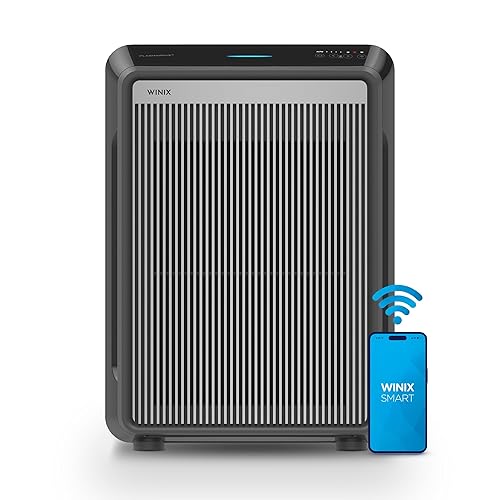
| Winix 5500-2 | Mid-size rooms with heavy odor problems | PlasmaWave technology paired with a carbon filter |
| Honeywell HPA300 | Budget-minded buyers in medium rooms | True HEPA filtration with a wide, multi-speed fan |
| Coway AP-1512HH Mighty | Smaller rooms and daily maintenance-light use | Four-stage filtration with an easy-to-replace filter set |
| Germ Guardian AC4825 | Starter purchase for a single small room | Compact true HEPA design with a carbon layer |
Coway Airmega 400
This is the pick for a larger living room, open-plan main floor, or a smoking area that spans several rooms. Its airflow is sized for bigger spaces, which matters because smoke particles need to be pulled through the filter quickly to keep the room from building up haze.
Key specs
- Designed for large rooms with a high clean-air delivery rate
- True HEPA filter plus activated carbon pre-filter
- Auto mode with air quality sensing
- Manufacturer-listed filter replacement interval for the combined filter set
Pros
- Strong airflow for the square footage it is rated to cover
- Carbon stage helps with the lingering tobacco odor
- Sensor-driven auto mode adjusts to smoke events
Cons
- Large footprint takes up floor space in smaller rooms
- Replacement filter sets add up over a year of heavy use
Levoit Core 300
A good fit for a bedroom or a small apartment where a smoker needs something compact that still moves air efficiently. It is one of the more common choices for people who want a true HEPA unit without a bulky cabinet.
Key specs
- Three-stage filtration: pre-filter, true HEPA, activated carbon
- Designed for small to medium rooms
- Sleep mode with reduced fan noise and dimmed indicator
- Filter replacement roughly every six months under typical use, per manufacturer guidance
Pros
- Compact enough to sit on a nightstand or dresser
- Carbon stage addresses tobacco odor, not just particles
- Quiet operation on low speeds
Cons
- Not sized for large open rooms or heavy continuous smoking
- Carbon layer is thinner than in some larger units, so odor control can fade sooner
Blueair Blue Pure 211+
Suited to a home office, bedroom, or den where noise matters and smoke needs to be handled in a single room. Owners often point to its quiet running as the main reason they keep it on.
Key specs
- Particle and activated carbon filtration in one cartridge
- Designed for small to medium rooms
- Fabric pre-filter to catch larger debris before the main filter
- Manufacturer-specified cartridge replacement schedule
Pros
- Very quiet on low settings
- Single-cartridge design keeps maintenance simple
- Good for managing smoke in a single bedroom or office
Cons
- Coverage is limited, so it works best in one room at a time
- Cartridge cost is a recurring factor for heavy daily smoke loads
Winix 5500-2
This is the choice for a mid-size room where odor is the main complaint, such as a living room that has absorbed years of smoke. Its carbon filter is the central feature for odor work.
Key specs
- PlasmaWave technology paired with a true HEPA filter and carbon filter
- Auto mode with a particle sensor
- Designed for medium to large rooms
- Filter replacement guidance published by the manufacturer
Pros
- Carbon filter is well suited to tobacco odor
- Sensor-based auto mode reacts to smoke spikes
- Solid coverage for mid-size living spaces
Cons
- Plasma features are a feature some buyers prefer to avoid, so check your comfort level
- Larger footprint than compact bedroom units
Honeywell HPA300
A practical pick for a buyer who wants a true HEPA unit for a medium room without a premium price tag. It is a common choice for people starting with air cleaning.
Key specs
- True HEPA filtration for fine smoke particles
- Multi-speed fan for different room sizes
- Designed for medium-sized rooms
- Filter replacement interval published by the manufacturer
Pros
- Strong particle capture for the money
- Simple controls with clear fan speeds
- Widely available replacement filters
Cons
- Limited carbon action compared with units that have thicker carbon beds, so odor may linger
- Less suited to very large rooms
Coway AP-1512HH Mighty
A strong option for a smaller room, such as a home office or a single bedroom, where the goal is a compact, low-maintenance unit with a full filtration stack.
Key specs
- Four-stage filtration including true HEPA and activated carbon
- Designed for small to medium rooms
- Filter change indicator
- Manufacturer-listed filter replacement interval
Pros
- Full filtration stack in a compact body
- Filter change indicator simplifies upkeep
- Good balance of particle and odor control for small rooms
Cons
- Not sized for large open spaces
- Carbon load is modest for very heavy smoke use
Germ Guardian AC4825
A reasonable starting point for a single small room, such as a bedroom where a smoker wants to reduce particles overnight. It is a straightforward unit with few settings.
Key specs
- True HEPA filter with an activated carbon layer
- Designed for small rooms
- Three-speed fan with a timer
- Filter replacement interval set by the manufacturer
Pros
- Simple controls and a small footprint
- True HEPA plus carbon for basic smoke and odor work
- Low-cost entry point for a single room
Cons
- Coverage is limited to small rooms
- Carbon layer is modest, so strong odors may persist
Buying Guide
Choosing an air purifier for cigarette smoke is mostly about matching three things: the particles, the gases, and the size of the room. Smoke contains both fine particulate matter, which a HEPA filter captures, and gaseous compounds that cause odor, which only activated carbon can adsorb in meaningful amounts. A unit that handles only one of these will leave you with either a hazy room or a smelly one. For background on how these stages work together, see How Air Purifiers Work.
Selection criteria
- Filtration type: Look for a true HEPA filter, not a “HEPA-type” or “HEPA-like” label. True HEPA is specified to capture at least 99.97% of particles at 0.3 microns.
- Carbon load: Odor control depends on how much activated carbon is in the filter, not just whether a carbon layer exists. A thicker or heavier carbon bed generally handles tobacco odor better.
- Airflow (CADR): The clean air delivery rate tells you how much filtered air the unit produces. For smoke, it is wise to pick a unit rated for a room larger than yours. More detail is in Air Purifier CADR Explained.
- Room size: Use the manufacturer’s coverage rating and cross-check with Air Purifier Room Size Guide.
Important features
- A pre-filter to catch hair, lint and larger debris, which extends the life of the HEPA and carbon layers
- An air quality sensor and auto mode, so the fan responds when smoke spikes
- A filter change indicator, which removes guesswork
- Fan noise ratings or a sleep mode if the unit will run in a bedroom
For a deeper look at the rest of the selection process, read How to Select Air Purifier for Home: 7 Factors That Matter and Air Purifier Buying Guide.
Specs to check
- Stated CADR for smoke or dust (the smoke rating is usually the most relevant)
- Activated carbon weight or depth, when the manufacturer publishes it
- Replacement filter cost per year under the manufacturer’s schedule
- Power draw on high speed, if you plan to run the unit continuously
Choosing by need
- Single bedroom, light smoking: A compact unit with HEPA and carbon, such as the Levoit Core 300 or Coway AP-1512HH Mighty.
- Living room or open plan, daily smoking: A larger unit with more airflow and a thicker carbon stage, such as the Coway Airmega 400 or Winix 5500-2.
- Odor is the main complaint: Prioritize carbon load over raw airflow.
- Tight budget for one room: A true HEPA unit like the Honeywell HPA300 or Germ Guardian AC4825 is a sensible start, with the understanding that carbon action will be limited.
Things to watch out for
- Ozone-generating features. Ozone can irritate the lungs, and the EPA advises against ionizers and ozone generators for indoor use.
- Carbon filters are not a substitute for ventilation. Cigarette smoke releases gases that carbon cannot fully remove, so open windows when possible.
- Replacement filters are a long-term cost. Check their availability and frequency before you buy.
- Air purifiers cannot remove smoke residue already embedded in furniture, drapes and carpet. Cleaning those surfaces is still necessary.
If you are also tracking air quality, see Best Indoor Air Quality Monitors to confirm the unit is doing its job.
FAQ
Does an air purifier remove cigarette smoke smell?
It can reduce smoke odor, but only to the extent the unit has a meaningful activated carbon filter. HEPA filters catch particles well but do little for odor molecules. A thicker carbon layer improves results, and a unit with only a thin carbon film will handle odor less effectively.
What is the best type of filter for cigarette smoke?
A combination of true HEPA and activated carbon is the standard approach. HEPA captures the fine particles that make smoke visible, and carbon adsorbs gases that cause odor.
How big a room can an air purifier for cigarette smoke handle?
Use the manufacturer’s smoke CADR and coverage rating as your guide. Choosing a unit rated for a room larger than yours generally gives better results with smoke, since smoke tends to build up quickly. The Air Purifier Room Size Guide explains the calculation.
How often should I replace the filter?
Follow the manufacturer’s interval, but expect to change filters more often with daily smoking. Heavy smoke loads can saturate carbon faster than the stated schedule assumes. The Air Purifier Maintenance guide covers signs of a worn filter.
Can an air purifier replace opening windows?
No. Purifiers reduce particles and some gases inside a room, but they do not replace fresh air exchange. Ventilation is still important, especially when smoking.
Is it safe to run an air purifier while someone smokes?
Running a purifier with a HEPA and carbon filter is generally considered a practical way to reduce indoor particles. Avoid models that produce ozone. If you have asthma, heart disease or another respiratory condition, consult your doctor or a qualified professional about your specific exposure.
Should I buy one unit for the whole house or one per room?
Most owners of smoke-heavy homes place a unit in the room where smoking happens most, then add a second unit for a bedroom or nursery. Whole-home solutions like ducted systems are a different category, covered in 14 Best Furnace Air Filters for Home Use.
Do HEPA filters remove smoke residue on surfaces?
No. HEPA captures airborne particles, not the residue that has already settled on walls and fabric. Surface cleaning is needed for that, and the purifier will help prevent new buildup.
Conclusion
For most people looking for an air purifier for cigarette smoke, the best fit depends on room size and how much odor is the real problem. A compact bedroom unit such as the Levoit Core 300 or Coway AP-1512HH Mighty suits a single small room. The Blueair Blue Pure 211+ is a good match if quiet running matters most. For larger living spaces with heavier smoke, the Coway Airmega 400 and Winix 5500-2 offer more airflow and carbon. Budget-minded buyers covering one medium room can start with the Honeywell HPA300 or Germ Guardian AC4825, accepting that odor control will be limited. Whichever you choose, pair it with ventilation and regular filter changes, and confirm the results with a monitor if you can.

About Ella Sterling
Ella covers indoor air, comparing specs, features and long-term owner feedback to help readers choose with confidence.