
 By Graham Fisher
Updated November 2026
If you are looking for an air purifier to remove formaldehyde, the main challenge is that this gas does not behave like dust or pollen. It is a volatile organic compound that off-gases from particleboard, plywood, laminate flooring, adhesives, some paints and certain textiles, and a standard HEPA filter alone will not capture it. This guide compares five models with formaldehyde-focused designs, using the criteria that matter most: the type of filtration used (activated carbon or chemical media versus HEPA-only), the room size each unit is rated to cover, how easy it is to maintain, and how well the design suits real-world use such as a new home, a bedroom or a small office.
Our top picks at a glance
- 1
 TOP CHOICEBest overallTESRAN Formaldehyde Removal MachineView on Amazon
- 2
 TOP CHOICEBest for premium whole-home upgradesDyson Purifier Big+Quiet Formaldehyde BP03View on Amazon
- 3
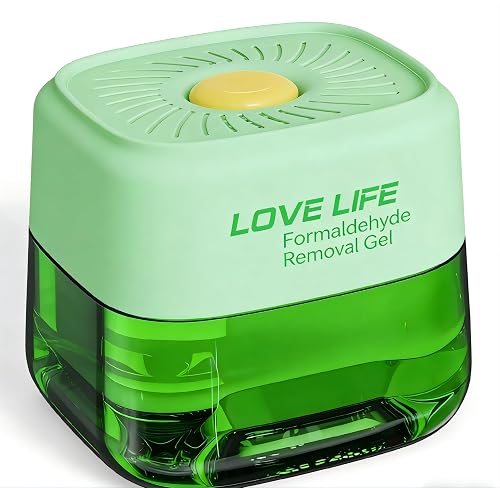 TOP CHOICEBest for closets and drawersFormaldehyde Absorber GelView on Amazon
- 4
 Best for large open roomsDyson Purifier Cool Formaldehyde TP09View on Amazon
- 5
 Best for bedroomsMila Air Mini Smart Home Air PurifierView on Amazon
Our Top Picks
The table below summarizes the five models. Each one is described in more detail after it.
| Product | Best for | Key feature |
|---|---|---|
| TESRAN Formaldehyde Removal Machine | Single rooms up to about 30 square meters | Formaldehyde-focused filtration with touch controls |
| Dyson Purifier Big+Quiet Formaldehyde BP03 | Larger rooms and open-plan living areas | Formaldehyde-targeted filtration with a quiet, full-room design |
| Formaldehyde Absorber Gel | Closets, drawers, cars and small enclosed spaces | Passive, no-power absorption with a long activation window |
| Dyson Purifier Cool Formaldehyde TP09 | Large rooms that also need circulation | Purifies and fans in one unit |
| Mila Air Mini Smart Home Air Purifier | Bedrooms and quiet overnight use | Multi-stage filtration with HEPA and a quiet mode |
TESRAN Formaldehyde Removal Machine
TESRAN Formaldehyde removal machine Focus on formaldehyde removal Effectively purifies up to 30㎡ of space 99.99% formaldehyde removal rate Touch control & modern design Ideal for home and office use
Best for: Best overall for a single room with a clear formaldehyde focus
This unit suits someone who has a specific formaldehyde concern in one room, such as a newly furnished bedroom or a home office with new particleboard furniture. Its listing centers on formaldehyde removal rather than general air cleaning, which makes it easier to match to the problem.
Key specs
- Rated to purify up to about 30 square meters of space
- Listed formaldehyde removal rate of 99.99 percent
- Touch control panel with a modern design
Pros
- Formaldehyde is the stated focus of the design
- Covers a typical single room
- Touch controls are simple to adjust
Cons
- Coverage ends at the rated room size, so larger spaces need more units
- Manufacturer removal rates are lab-condition figures and real results vary with ventilation and source strength
Bottom line: A strong first choice for one room with a known formaldehyde source, especially if you want a purifier built around that gas.
Dyson Purifier Big+Quiet Formaldehyde BP03
Dyson Purifier Big+Quiet Formaldehyde BP03
Best for: Best premium option for larger rooms and open-plan spaces
This model is for buyers who want a formaldehyde-targeted purifier that can handle more floor area and run quietly enough for living areas. It is a better fit for open layouts where a smaller unit would struggle.
Key specs
- Designed for formaldehyde capture as a core function
- Built for larger rooms than compact purifiers
Pros
- Designed to handle larger spaces
- Quiet operation suits daytime and evening use
- Formaldehyde-specific design
Cons
- Higher up the premium range than most alternatives
- Filter replacement schedules should be checked before buying
Bottom line: Best for buyers who want a dedicated formaldehyde unit for a large room and are willing to invest in a premium machine.
Formaldehyde Absorber Gel
Formaldehyde Absorber Gel – 24h Fast-Acting, 90-Day Long-Lasting, One-Click Activated, No Plug, Baby & Pet Safe, with Test Kit & Carbon for Home, Nursery, Closet, Bedroom, Fridge, Car
Best for: Best for closets, drawers and small enclosed spaces
This is not an air purifier in the powered sense. It is a passive absorber that works without electricity, which makes it useful in places where a fan-based unit is impractical, such as a closet with new furniture or the inside of a vehicle.
Key specs
- No plug or power required
- Listed as activated in one click
- Includes a test kit and carbon component
Pros
- Works without electricity or maintenance schedules
- Suitable for closets, drawers and cars
- Includes a test kit to check results
Cons
- Only affects the immediate enclosed area and cannot clean a whole room
- Absorption capacity is finite and the gel must be replaced once spent
Bottom line: A practical add-on for small spaces, but not a substitute for a powered purifier in a main living area.
Dyson Purifier Cool Formaldehyde TP09
White/Gold Large Dyson Purifier Cool Formaldehyde TP09 Air Purifier and Fan
Best for: Best for large rooms that also need air circulation
This model combines air purification with a fan, which can help move air through a room more evenly. It suits buyers who want one appliance that handles formaldehyde and general airflow in a large space.
Key specs
- Combines purification and fan functions
- Designed for formaldehyde reduction
Pros
- Dual function reduces the number of appliances needed
- Helps circulate air across larger rooms
- Formaldehyde-focused design
Cons
- Premium pricing tier and a larger footprint
- Fan noise may be noticeable on higher settings
Bottom line: Good for buyers who want purification and air movement in one unit for a large living area.
Mila Air Mini Smart Home Air Purifier
Mila Air Mini Smart Home Air Purifier with Overreactor H14 HEPA Replacement Filter, Removes Formaldehyde, VOCs, Dust & Odors, Ideal for Large Room or Bedroom, Quiet-Mode
Best for: Best for bedrooms and quiet overnight use
This compact unit is aimed at bedrooms and other spaces where low noise matters. It uses a HEPA-based replacement filter alongside formaldehyde, VOC and odor removal, making it a general-purpose option for buyers who also deal with dust.
Key specs
- Uses an H14 HEPA replacement filter
- Listed to remove formaldehyde, VOCs, dust and odors
- Quiet mode for sleeping
Pros
- Quiet mode suits bedrooms
- Covers several pollutant types, not only formaldehyde
- Compact enough for nightstands and small rooms
Cons
- Coverage is smaller than full-size units, so it suits one bedroom at most
- Formaldehyde performance depends on the filter’s carbon content, which should be checked on replacement
Bottom line: A sensible choice for a bedroom where you want formaldehyde and dust handled together without much noise.
Buying Guide
Choosing an air purifier to remove formaldehyde involves more than comparing brand names. The factors below will help you match a model to your room and source.
Filtration type: carbon or chemical media
HEPA filters capture particles, but formaldehyde is a gas, so you need activated carbon or a chemical adsorbent. Check the listing for carbon or formaldehyde-specific media. A purifier with HEPA only will not remove formaldehyde effectively.
Good picks for this: TESRAN Formaldehyde Removal Machine, Dyson Purifier Big+Quiet Formaldehyde BP03
Room size and coverage rating
Manufacturers rate purifiers for a maximum floor area. Use the square footage of the room you plan to treat, and size up if the room is open or has high ceilings. Running a unit rated for a smaller area will reduce its effect.
Good picks for this: Dyson Purifier Cool Formaldehyde TP09, TESRAN Formaldehyde Removal Machine
Passive versus powered operation
Powered purifiers move air through a filter continuously, which is important in occupied rooms. Passive absorbers work without electricity but only affect the enclosed space around them. Decide whether you need to treat a whole room or a small pocket such as a closet.
Good picks for this: Formaldehyde Absorber Gel, Mila Air Mini Smart Home Air Purifier
Noise level and sleep use
If the purifier will run in a bedroom, look for a quiet or sleep mode and check the decibel range if the manufacturer provides one. Units that run at full speed in a bedroom can disrupt sleep.
Good picks for this: Mila Air Mini Smart Home Air Purifier, Dyson Purifier Big+Quiet Formaldehyde BP03
Filter replacement and running cost
Carbon and chemical filters saturate over time, and their replacement interval determines the long-term cost of ownership. Check the filter part number, how often the manufacturer recommends replacement and whether a filter-change indicator is included.
Good picks for this: Mila Air Mini Smart Home Air Purifier, Dyson Purifier Cool Formaldehyde TP09
Ventilation and source control
A purifier reduces formaldehyde but does not stop it from being released. Running the air purifier alongside ventilation, keeping indoor humidity moderate and reducing new sources such as unsealed composite wood will improve results. The purifier should be treated as one part of the approach.
Good picks for this: TESRAN Formaldehyde Removal Machine, Formaldehyde Absorber Gel
Build quality and controls
Touch controls, clear status indicators and a sturdy housing make a purifier easier to live with over several years. Check whether the controls are intuitive and whether the unit has an auto mode that adjusts speed based on air quality.
Good picks for this: TESRAN Formaldehyde Removal Machine, Dyson Purifier Big+Quiet Formaldehyde BP03
FAQ
Can a regular HEPA air purifier remove formaldehyde?
No. HEPA filters capture particles such as dust, pollen and smoke particles, but formaldehyde is a gas. You need activated carbon or a chemical adsorbent to capture it. Look for a purifier that lists formaldehyde or carbon-based filtration.
How long does it take to see a reduction in formaldehyde?
This depends on room size, the strength of the source, ventilation and the purifier’s rated coverage. Some owners report noticeable changes in odor within days, but measuring actual concentration requires a testing kit or professional measurement.
Do I need to run the purifier all the time?
For the best results in an occupied room, continuous operation on a low or auto setting is generally recommended. Running it only intermittently will reduce the amount of air processed over time.
How often should I replace the filter?
Follow the manufacturer’s specified replacement interval. Carbon and chemical media lose capacity as they absorb gas, so the filter needs replacing even if it looks clean. Filter-change indicators help but should not be the only guide.
Is a passive absorber like gel as effective as a powered purifier?
Passive absorbers are useful for small enclosed spaces such as closets or cars, but they do not move air through a room and cannot treat a whole living area. They work best alongside a powered unit rather than as a replacement.
Should I see a professional about formaldehyde exposure?
If you have symptoms such as persistent eye, nose or throat irritation, headaches or breathing difficulty, or if you are concerned about a new home or renovation, consult a physician or a qualified indoor air professional. They can advise on testing and health implications.
Conclusion
For a dedicated formaldehyde unit in a single room, the TESRAN Formaldehyde Removal Machine is a focused first choice. Buyers with larger or open spaces may prefer the Dyson Purifier Big+Quiet Formaldehyde BP03 or the Dyson Purifier Cool Formaldehyde TP09, which add more coverage and, in the TP09’s case, air circulation. The Mila Air Mini Smart Home Air Purifier suits bedrooms where quiet operation matters, and the Formaldehyde Absorber Gel is a practical passive option for closets, drawers and vehicles. Whichever you choose, pair it with ventilation and by reducing new formaldehyde sources for the best results.
Sources
- Guidance on indoor air quality, volatile organic compounds and household sources of formaldehyde (epa.gov)
- Health information on formaldehyde exposure, symptoms and when to seek medical advice (cdc.gov)
- Standards and guidance on ventilation and indoor air quality in buildings (ashrae.org)
Related reading
- Air Purifier to Remove Cigarette Smoke: 6 Best Picks for Smoky Homes (2026)
- Air Purifier for VOC: How to Pick One That Actually Removes Fumes
- Air Purifier for Smells: How to Pick One That Actually Removes Odors
About Graham Fisher
Graham Fisher is part of our editorial team and reviews and edits our indoor air guides, checking product details against manufacturer specifications and owner feedback.





