By Ella Sterling
If you have ever woken up to a hazy sky or a kitchen full of burnt toast smoke, you know how fast smoke spreads through a home. An air purifier that removes smoke has to do more than move air. It needs a true HEPA filter for the fine particles that make up most smoke, enough activated carbon to reduce odors and gases, and enough airflow to clean a room within a reasonable time. The picks below were chosen by checking manufacturer specifications, brand track record and the patterns owners commonly describe, with attention to coverage area, Clean Air Delivery Rate (CADR) and how the filters are replaced over time. Nothing here is based on our own lab testing, so confirm current specs on the product page before you buy.
Our Top Picks
Quick Comparison
| Product | Best for | Key feature |
|---|---|---|
| Coway AP-1512HH Mighty | Bedrooms and medium living rooms | Four-stage filtration with activated carbon |
| Blueair Blue Pure 211+ | Smoke and odor in open rooms | HEPASilent filter with activated carbon layer |
| Levoit Core 300 | Budget-minded buyers in small rooms | Compact true HEPA design |
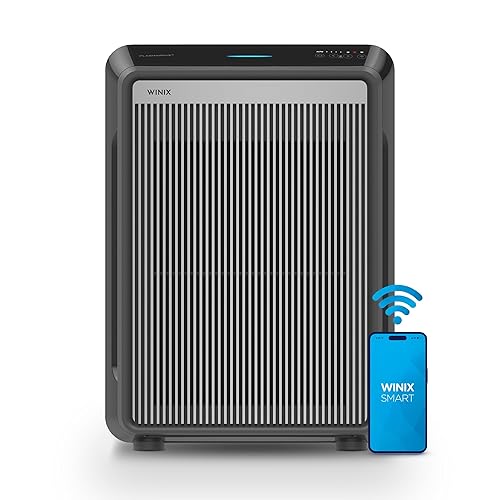
| Winix 5500-2 | Smoke plus gas and odor control | PlasmaWave with carbon filter |
| Honeywell HPA300 | Large open-plan spaces | High CADR for whole-room coverage |
| Dyson Purifier Cool TP07 | Households wanting purification plus fan | Sealed HEPA and carbon filtration with app monitoring |
| Rabbit Air MinusA2 | Heavy smoke exposure and long-term use | Multi-stage system with customizable filters |
| IQAir HealthPro Plus | Serious smoke events and allergy sufferers | Very high filtration efficiency with thick gas filter |
Coway AP-1512HH Mighty
This suits people who want a dependable purifier for a bedroom or a medium living room and need to deal with cooking smoke and everyday odors. It is a common choice for households that run the unit continuously on a low setting.
Key specs
- Filtration: pre-filter, true HEPA, activated carbon, and a fourth-stage filter
- Coverage: rated for rooms up to about 361 square feet by the manufacturer
- Includes an air quality indicator and auto mode
Pros
- Carbon layer helps with cooking and cigarette odors
- Quiet on low speeds for overnight use
- Filter replacement schedule is straightforward
Cons
- Carbon filter capacity is modest for heavy, sustained smoke
- Coverage is smaller than larger units on this list
Blueair Blue Pure 211+
Good for open rooms where smoke and odors spread quickly, such as a combined kitchen and living area. Owners often mention its simple design and low maintenance.
Key specs
- Filtration: particle filter with activated carbon layer (HEPASilent design)
- Coverage: rated for medium to large rooms per manufacturer guidance
- Fabric pre-filter available as a separate replacement
Pros
- Works well for mixed particle and odor problems
- Compact footprint for the airflow it delivers
- Pre-filter is washable, reducing replacement frequency
Cons
- Filter replacements add up over time
- Carbon layer is thinner than dedicated gas-filtration units
Levoit Core 300
A practical option for a small bedroom, nursery or home office where you mainly want to reduce fine smoke particles and do not need heavy odor control.
Key specs
- Filtration: pre-filter plus true HEPA filter
- Coverage: rated for small rooms per manufacturer specifications
- Three fan speeds and a sleep mode
Pros
- Compact and easy to place on a dresser or nightstand
- Simple controls with few settings to learn
- Filter replacements are widely available
Cons
- No activated carbon layer in the standard configuration, so odor reduction is limited
- Not suited to large rooms or whole-home smoke events
Winix 5500-2
Useful for homes dealing with smoke along with gases and odors, such as after a fireplace or cooking session. Its combination of filtration and ionizing technology is a selling point for many buyers.
Key specs
- Filtration: true HEPA, activated carbon, and PlasmaWave technology
- Coverage: rated for large rooms per manufacturer specifications
- Auto mode with air quality sensor
Pros
- Carbon filtration adds real odor and gas capability
- Sensor-driven auto mode adjusts speed to conditions
- Good coverage for the price tier
Cons
- Ionizer features are a point of debate; check whether you want them
- Replacement filter sets need to be ordered regularly
Honeywell HPA300
Best for large open-plan spaces where whole-room coverage matters more than compact size. It suits households dealing with wildfire smoke that drifts in through the house.
Key specs
- Filtration: pre-filter, true HEPA, and activated carbon
- Coverage: rated for large rooms per manufacturer specifications
- Multiple fan speeds with a filter change indicator
Pros
- Strong airflow for the footprint
- Filter life indicator takes guesswork out of replacement
- Widely available replacement filters
Cons
- Larger and heavier than compact models
- Fan noise on higher speeds is noticeable to some owners
Dyson Purifier Cool TP07
Fits households that want a purifier that doubles as a fan and includes app-based air quality monitoring. Buyers who care about design often choose this model.
Key specs
- Filtration: sealed HEPA and activated carbon filter
- Coverage: suited to medium rooms per manufacturer guidance
- Real-time air quality display and app connectivity
Pros
- Combines purification with a fan for year-round use
- Sealed filtration design limits particle bypass
- Clear air quality reporting
Cons
- Premium price tier and ongoing filter costs
- Coverage is smaller than dedicated large-room purifiers
Rabbit Air MinusA2
A strong choice for people with heavy smoke exposure or sensitivities who want customizable filtration and are willing to manage a more involved system.
Key specs
- Filtration: multi-stage system with HEPA and carbon options
- Coverage: rated for large rooms per manufacturer specifications
- Quiet operation on low settings
Pros
- Filter options can be matched to specific smoke and odor needs
- Designed for long daily use
- Strong reputation for build quality among owners
Cons
- Setup and filter selection take more research
- Premium tier with higher long-term filter costs
IQAir HealthPro Plus
Aimed at serious smoke events, wildfire seasons and allergy sufferers who want the highest filtration efficiency available in a home unit.
Key specs
- Filtration: pre-filter, HyperHEPA-class filter, and thick activated carbon gas filter
- Coverage: rated for large rooms per manufacturer specifications
- Real-time particle sensing with fan control
Pros
- Thick gas filter handles heavier odor and gas loads
- Very high particle removal efficiency per manufacturer data
- Sealed design reduces air bypass
Cons
- Premium tier with high ongoing filter replacement costs
- Heavy and large, so placement needs planning
Buying Guide
Before comparing models, it helps to understand what makes a purifier effective against smoke. For background on how these units clean air, see How Air Purifiers Work, and for a broader overview of the selection process, read How to Select Air Purifier for Home: 7 Factors That Matter.
Selection Criteria
- Filter type: Look for true HEPA for fine particles. Smoke is mostly fine particulate matter, so this is the baseline requirement.
- Activated carbon: Smoke also carries gases and odors. A meaningful carbon layer is what separates a particle-only unit from a true smoke-and-odor purifier.
- CADR: Clean Air Delivery Rate tells you how much filtered air the unit delivers. Higher numbers clean a room faster. See Air Purifier CADR Explained for how to read it.
- Room size: Match the rated coverage to your space. Air Purifier Room Size Guide walks through the math.
Specs to Check
- CADR for smoke (the smoke rating, not just dust or pollen)
- Carbon filter weight or thickness, which indicates gas-filtration capacity
- Noise levels on the speed you plan to use most
- Replacement filter cost and availability over the life of the unit
Choosing by Need
- Small bedroom or nursery: A compact true HEPA unit is usually enough for particles.
- Kitchen or open-plan living area: Prioritize carbon filtration and higher CADR.
- Wildfire smoke or heavy events: Choose a high-CADR model with a thick carbon layer and sealed filtration.
Things to Watch Out For
- Ozone-generating ionizers can produce irritants. Check whether a unit adds ozone before you buy.
- Marketing terms such as “HEPA-type” or “HEPA-like” do not guarantee true HEPA performance. Look for true HEPA wording.
- Running a purifier does not replace source control. Stop indoor smoking and ventilate cooking areas where possible.
FAQ
Does an air purifier really remove smoke?
A purifier with a true HEPA filter captures much of the fine particulate matter in smoke, and an activated carbon layer helps with some gases and odors. Results depend on room size, airflow and how strong the smoke source is.
Is HEPA enough for cigarette smoke?
HEPA handles the particles well, but cigarette smoke also contains gases and odors. For odor control, choose a unit with a substantial activated carbon layer.
How do I know what size purifier I need?
Check the manufacturer’s rated room size and compare it to your room’s square footage. For smoke, many people size up to get faster cleaning. The Air Purifier Room Size Guide has the calculation.
How often should I replace the filters?
Replacement timing depends on the unit and how much smoke it handles. Heavy smoke exposure shortens carbon filter life. Follow the manufacturer’s indicator or schedule, and see Air Purifier Maintenance for general guidance.
Can an air purifier help with wildfire smoke?
It can reduce indoor fine particles during wildfire events, especially with the windows closed and a high-CADR unit running. It will not eliminate exposure entirely, so follow local air quality advice.
Should I run my purifier all the time during smoke events?
Running it continuously on a low or auto setting usually works better than short bursts, since it keeps refiltering incoming particles. Check the filter more often during heavy smoke.
Is ozone a concern with smoke-removing purifiers?
Some ionizing or ozone-producing features can create irritants. If you have respiratory concerns, choose a purifier without ozone generation and consult a healthcare professional about your specific situation.
Conclusion
For a bedroom or small room, a compact true HEPA unit such as the Levoit Core 300 covers particles well, while the Coway AP-1512HH Mighty adds carbon for odors. For kitchens and open living areas, the Blueair Blue Pure 211+ and Winix 5500-2 offer stronger odor handling. Large spaces and wildfire smoke call for higher-CADR models like the Honeywell HPA300, while the Rabbit Air MinusA2 and IQAir HealthPro Plus suit heavy, ongoing exposure. Match the unit to your room size and smoke source, confirm specs on the product page, and consult a healthcare professional if you have respiratory conditions.

About Ella Sterling
Ella covers indoor air, comparing specs, features and long-term owner feedback to help readers choose with confidence.