By Ella Sterling
If you share your home with a cat and your eyes itch, your nose runs, or your chest feels tight, a cat allergy air purifier can reduce the airborne allergens that trigger those symptoms. The main culprit is Fel d 1, a protein found in cat saliva and skin flakes, which is small and light enough to float in the air for hours. This guide ranks seven units by how well their specifications match the job: capture efficiency for fine particles, airflow rated for the room size, filter replacement cost over time, noise at sleep settings, and the presence of a pre-filter that catches fur before it clogs the main filter. We researched manufacturer specifications, brand reputation and common owner feedback patterns. We did not test these units ourselves, so treat the notes below as a starting point and check current specs before you buy.
Our Top Picks
Quick Comparison
| Product | Best for | Key feature |
|---|---|---|
| Coway AP-1512HH Mighty | Bedrooms and medium living rooms | Four-stage filtration with a true HEPA layer |
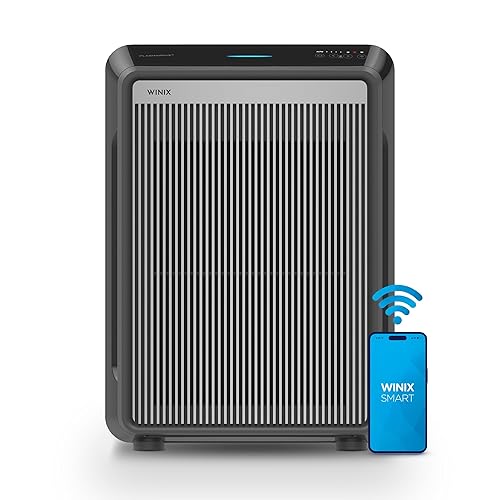
| Winix 5500-2 | Open-plan rooms with heavy shedding | PlasmaWave technology plus a carbon filter |
| Blueair Blue Pure 211+ | Multi-cat homes and quiet operation | Particle plus carbon filter that is easy to replace |
| Levoit Core 300 | Small bedrooms and budget-minded buyers | Compact footprint with a sleep mode |
| Honeywell HPA300 | Large rooms needing high airflow | High clean air delivery rate for its class |
| Germ Guardian AC5000 | Households wanting a full-room, no-frills unit | Three-stage filtration with a UV-C light |
| Hamilton Beach TrueAir | Shared spaces with mixed pet and cooking odors | Multi-stage filter with odor-reducing carbon |
Coway AP-1512HH Mighty
This is a strong fit for a single cat in a bedroom or a mid-sized living room, where you want a true HEPA layer and a filter schedule that is easy to track. Owners of cat households often describe it as a reliable everyday unit rather than a specialty device.
Key specs
- Filtration: pre-filter, true HEPA, activated carbon, and an optional ionizer
- Designed for rooms roughly up to 361 square feet, per manufacturer guidance
- Air quality indicator light for dust and odor levels
Pros
- Certified HEPA filtration captures fine allergen particles
- Filter change indicator simplifies upkeep
- Multiple fan speeds allow a quiet overnight setting
Cons
- Replacement filter sets add ongoing expense
- Not designed for very large open spaces
Winix 5500-2
Best for open-plan spaces where a cat sheds across a living area and kitchen. It suits owners who want a larger-coverage unit with a combined particle and gas filter stage.
Key specs
- Filtration: True HEPA, activated carbon, and PlasmaWave ionization
- Manufacturer-rated for rooms in the mid-hundreds of square feet
- Auto mode adjusts fan speed to measured air quality
Pros
- Covers larger rooms than many compact units
- Auto mode reduces manual adjustment
- Carbon stage helps with litter box odor
Cons
- Ionization features are a matter of personal preference
- Larger footprint needs floor space
Blueair Blue Pure 211+
A good match for multi-cat households or anyone sensitive to fan noise, since the unit is widely described as quiet at low speeds. Its particle and carbon filter is designed to be swapped without tools.
Key specs
- Filtration: particle filter combined with activated carbon
- Manufacturer lists coverage for medium rooms; check the current rating for your square footage
- Three fan speeds plus an auto setting
Pros
- Low noise at lower fan speeds suits bedrooms
- Simple filter swap
- Compact design fits on a shelf or side table
Cons
- Filter replacements are a recurring cost
- Coverage is smaller than larger-room models
Levoit Core 300
A practical choice for a small bedroom or a home office where one cat spends time. It is aimed at buyers who want a compact unit with a sleep-friendly mode and a straightforward control panel.
Key specs
- Filtration: pre-filter, True HEPA, and activated carbon
- Rated for small rooms, per manufacturer specifications
- Sleep mode dims the display and lowers fan noise
Pros
- Small footprint suits nightstands and tight spaces
- Sleep mode is useful for light sleepers
- Accessible filter pricing compared with larger units
Cons
- Not suited to large rooms or open plans
- Carbon layer is thinner than in bigger models
Honeywell HPA300
Best for large rooms where airflow matters more than compact size. Households with a cat and a lot of open floor space often look at this class of unit first.
Key specs
- Filtration: True HEPA with a carbon pre-filter
- Manufacturer rates it for large rooms based on clean air delivery rate
- Fan speed controls and filter change reminder
Pros
- Strong airflow for its class
- Filter life indicator simplifies maintenance
- Suitable for multi-room use with an open floor plan
Cons
- Larger body is harder to place in small rooms
- Higher-speed operation is noticeable
Germ Guardian AC5000
Suited to households wanting a straightforward full-room unit with an added UV-C stage. It is often considered by buyers who want a basic, no-frills setup for a shared living space.
Key specs
- Filtration: pre-filter, True HEPA, and activated carbon, plus a UV-C light
- Manufacturer rates coverage for medium to large rooms
- Multiple fan speeds with a timer
Pros
- Three-stage filtration with UV-C in one unit
- Timer function is convenient
- Simple controls
Cons
- UV-C benefit is secondary to the HEPA filter for allergens
- Filters need regular replacement to keep performance
Hamilton Beach TrueAir
A reasonable option for shared spaces such as a family room or kitchen-adjacent area, where cat odors mix with cooking smells. It suits buyers who want odor reduction alongside allergen capture.
Key specs
- Filtration: multi-stage with HEPA-style and activated carbon layers
- Designed for medium rooms per manufacturer guidance
- Multiple fan speeds and filter indicator
Pros
- Carbon stage targets odors from litter and cooking
- Multiple speeds give flexibility
- Filter reminder aids maintenance
Cons
- Filter specs vary by model, so confirm the exact HEPA rating
- Less specialized for pet dander than dedicated pet models
Buying Guide
Choosing a cat allergy air purifier comes down to a few measurable factors. Start with what you are trying to capture. Cat allergen is mostly carried on very fine particles, so a true HEPA filter (rated to capture 99.97 percent of particles at 0.3 microns) is the baseline. Be cautious with products that use vague terms like “HEPA-type” or “HEPA-like,” since those do not always meet the standard. If you are also dealing with litter box smells, a deep activated carbon layer adds value, but it does not replace particle filtration.
Selection criteria
Judge each unit on four things: particle capture, airflow for your room, operating noise, and filter cost over time. A unit that looks strong on paper can underperform if it is sized for a smaller room than yours.
Important features
- True HEPA filter: the core requirement for fine allergen particles
- Pre-filter: catches fur and large hair so the HEPA layer lasts longer
- Activated carbon: helps with litter and general odors
- Filter change indicator: prevents you from running a clogged filter
- Sleep or quiet mode: useful if the unit sits in a bedroom
Specs to check
Look for the Clean Air Delivery Rate (CADR), which tells you how quickly a unit removes smoke, dust and pollen. As a common rule, match the CADR to your room size, aiming for a rate that gives you about two to three air changes per hour. Our Air Purifier Room Size Guide and our explainer on CADR walk through the math. Also check the manufacturer’s coverage rating and confirm whether the unit’s noise level at its lowest setting suits where you will sleep.
Choosing by need
- One cat, small bedroom: a compact true HEPA unit with a sleep mode
- One or more cats, living room: a mid-sized unit with a pre-filter and carbon
- Multiple cats or open plan: a larger-coverage unit with strong airflow
- Odor as well as allergy: a unit with a substantial carbon layer
For a broader framework, see our Air Purifier Buying Guide and the factors in How to Select Air Purifier for Home: 7 Factors That Matter. If you want to understand what happens inside the unit, How Air Purifiers Work explains the filtration stages in plain terms.
Things to watch out for
- Ozone-generating ionizers can irritate airways. Check whether the unit produces ozone, and avoid it if you or your household have asthma.
- Replacement filters are an ongoing cost, so compare filter pricing per year before committing.
- A pre-filter that is never cleaned will choke airflow. Rinse or vacuum it on the schedule in the manual.
- Placing the unit in a corner or behind furniture reduces its effectiveness. Keep it open and near where the cat rests.
If your symptoms are severe or persistent, speak with an allergist or physician. An air purifier supports, but does not replace, medical treatment for allergies.
FAQ
Does a cat allergy air purifier really reduce symptoms?
It can reduce airborne allergen levels, which may ease symptoms for some people. Results vary, and most people also benefit from regular cleaning, bedding washes and keeping the cat out of the bedroom.
Is a HEPA filter enough for cat dander?
A true HEPA filter captures the fine particles that carry cat allergen, so it is the most important feature. Adding a pre-filter and carbon layer helps the system handle fur and odors, but HEPA is the core.
What room size should I buy for?
Measure the room’s square footage and compare it to the manufacturer’s coverage rating. For allergy control, buying a unit rated for a larger room than yours often gives better results. Our Air Purifier Room Size Guide covers the calculation.
How often should I change the filter?
Filter life depends on use, fan speed and how much fur the cat sheds. Many manufacturers list an approximate interval, but a filter change indicator or a visual check of the pre-filter is more reliable in a cat household.
Are ionizer or UV-C features worth it?
Some owners like the added features, but they are not substitutes for HEPA filtration. Ionizers can produce ozone, so check the specifications before choosing one for a home with someone who has breathing issues.
Can I run the purifier all day?
Most units are designed for continuous operation on a low or medium setting. Running it constantly is common in allergy households, but check the manual for guidance on your specific model.
Do I still need to clean the house?
Yes. An air purifier removes particles from the air but does not clean surfaces. Vacuuming with a HEPA-rated vacuum, washing cat bedding and dusting regularly all reduce the allergen load the purifier must handle.
Conclusion
For most cat households, a true HEPA unit with a pre-filter is the right starting point. The Coway AP-1512HH Mighty suits bedrooms and mid-sized living rooms, while the Winix 5500-2 and Honeywell HPA300 make more sense for open plans and larger spaces. The Blueair Blue Pure 211+ and Levoit Core 300 are better fits for quiet sleeping areas and smaller rooms, and the Germ Guardian AC5000 and Hamilton Beach TrueAir are worth considering if you also want UV-C or odor reduction in a shared space. Match the unit’s coverage rating to your room, confirm the HEPA certification, and factor filter replacement into your budget before you buy. If symptoms persist, consult an allergist.
Related reading
- Sans Air Purifier Review (2026): Features, Pros and Cons
- Pure Air 3000 Air Purifier Review (2026): Pros, Cons & Who Should Buy
- How to Select Air Purifier for Home: 7 Factors That Matter

About Ella Sterling
Ella covers indoor air, comparing specs, features and long-term owner feedback to help readers choose with confidence.