
 By Graham Fisher
Updated November 2026
An energy star certified dehumidifier uses less electricity than a standard unit of the same capacity, which matters if the machine will run most of the day during humid months. This guide compares five models on Amazon US by coverage area, noise level, tank versus continuous drain, timer and humidity control, and how well each suits basements, bedrooms, bathrooms and whole-home use. Selection is based on product listings, brand reputation and common owner feedback patterns, not on our own testing.
Our top picks at a glance
- 1
 TOP CHOICEBest overallKesnos 2,500 Sq. Ft. Energy Star Dehumidifier for BasementView on Amazon
- 2
 TOP CHOICEBest for whole-home coverageLudatido 2026 Upgraded 80 Pint ENERGY STAR Basement DehumidifierView on Amazon
- 3
 TOP CHOICEBest for quiet bedroomsUthfy 38 Pints Energy Star Most Efficient 2025 Dehumidifier for BasementView on Amazon
- 4
 Best for smart humidity controlKNKA Energy Star 5500 Sq.Ft Dehumidifier for BasementView on Amazon
- 5
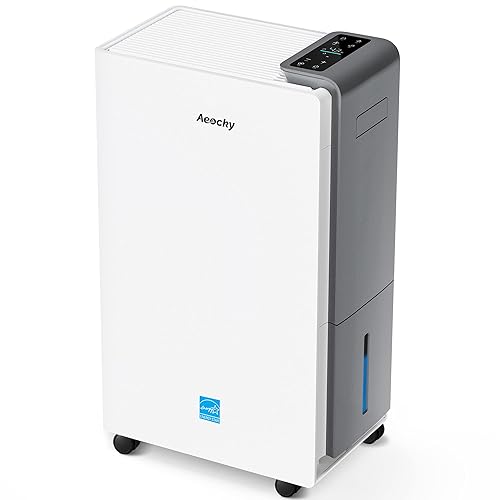 Best for large basementsAEOCKY 5500 Sq.Ft Energy Star Most Efficient 2025 Dehumidifier for BasementView on Amazon
Our Top Picks
Quick Comparison
| Product | Best for | Key feature |
|---|---|---|
| Kesnos 2,500 Sq. Ft. Energy Star Dehumidifier | Overall balance | 36 dB, four pre-set modes |
| Ludatido 2026 Upgraded 80 Pint ENERGY STAR | Whole-home coverage | 5,000 sq. ft. rated, child lock |
| Uthfy 38 Pints Energy Star Dehumidifier | Quiet bedrooms | Three modes, 24-hour timer |
| KNKA Energy Star 5500 Sq.Ft Dehumidifier | Smart humidity control | Sleep mode, drain hose |
| AEOCKY 5500 Sq.Ft Energy Star Dehumidifier | Large basements | 80 pints per day, humidistat |
Kesnos 2,500 Sq. Ft. Energy Star Dehumidifier for Basement
Ultra Quiet 36 dB, 0.39-Gallon Water Tank, 4 Pre-Set Modes, Auto Defrost, Timer, Ideal for Home, Bedroom, Bathroom, etc. Kesnos 2,500 Sq. Ft. Energy Star Dehumidifier for Basement with Drain Hose
Best for: Overall balance in bedrooms and small basements
This suits buyers who want a quiet, easy-to-set-up unit for a single room or a finished basement corner. Owners often report that the 36 dB operating level is comfortable for overnight use.
Pros
- Rated at 36 dB, which is quiet for sleeping
- Four pre-set modes plus automatic defrost
Cons
- The 0.39-gallon tank needs frequent emptying without a hose
Ludatido 2026 Upgraded 80 Pint ENERGY STAR Basement Dehumidifier
5,000 Sq.Ft Coverage for Whole Home,1.32 Gal Tank,35dB Quiet,Child Lock,Sleep/Fan/Dry Modes,24H Timer & Auto Continuous Drain Ludatido 2026 Upgraded 80 Pint ENERGY STAR Basement Dehumidifier
Best for: Whole-home coverage
This model fits households that want one larger unit to cover an open floor plan or a full basement. The manufacturer specifies coverage up to 5,000 square feet, with a 24-hour timer and auto continuous drain.
Pros
- Large stated coverage area with a 24-hour timer
- Child lock and continuous drain option
Cons
- Its size and weight make placement less flexible
Uthfy 38 Pints Energy Star Most Efficient 2025 Dehumidifier for Basement
Uthfy 38 Pints Energy Star Most Efficient 2025 Dehumidifier for Basement with Drain Hose, 3000 Sq. Ft Dehumidifiers for Home, Bedroom, Bathroom, Garage, 3 Modes, 24H Timer, Smart Humidity Control
Best for: Quiet bedrooms and bathrooms
This is a mid-size option for rooms up to about 3,000 square feet, aimed at people who want consistent humidity control without constant attention. Owners often mention the smart humidity setting as its main convenience.
Pros
- Three operating modes and a 24-hour timer
- Smart humidity control keeps the target level steady
Cons
- Lower pint capacity than the larger units on this list
KNKA Energy Star 5500 Sq.Ft Dehumidifier for Basement
Dehumidifier with Drain Hose, Dehumidifiers for Home, Bedroom, Bathroom, Large Room, Smart Humidity Control, Sleep Mode KNKA Energy Star 5500 Sq.Ft Dehumidifier for Basement, Max 80 Pint/Day
Best for: Smart humidity control in large rooms
This unit suits people who want the machine to hold a set humidity level on its own and run quietly at night. The sleep mode and drain hose make it practical for basements that need steady operation.
Pros
- Sleep mode for quieter nighttime running
- Drain hose option for continuous operation
Cons
- Setup of the drain line takes some planning
AEOCKY 5500 Sq.Ft Energy Star Most Efficient 2025 Dehumidifier for Basement
Max 80 Pint/D, Dehumidifier with Drain Hose for Home, Large Room, Bedroom, Bathroom, Intelligent Humidistat AEOCKY 5500 Sq.Ft Energy Star Most Efficient 2025 Dehumidifier for Basement
Best for: Large basements with heavy humidity
This high-capacity model is for damp basements where a smaller unit would run almost nonstop. The stated 80 pints per day rating points to strong moisture removal under high-humidity conditions.
Pros
- High stated capacity of 80 pints per day
- Intelligent humidistat holds the target level
Cons
- Larger footprint and more noise than compact models
Buying Guide
Check the Energy Star Label and Pint Rating
An energy star certified dehumidifier has been verified to meet efficiency standards set by the US EPA and Department of Energy. Pint ratings are measured under standard test conditions, so compare them against the humidity level you actually have. Worth reading next: 6 Best Dehumidifiers with Energy Star Rating for Home Use (2026).
Match Capacity to Room Size
Coverage areas listed by manufacturers assume typical conditions. A damp basement usually needs more capacity than a dry bedroom of the same size.
FAQ
What does the Energy Star label on a dehumidifier mean?
The Energy Star label indicates that the unit meets federal efficiency standards and uses less electricity than a conventional dehumidifier of similar capacity. Over a season of near-constant operation in a damp basement, that lower energy draw can make a noticeable difference. The label does not guarantee a specific pint rating, so you still need to check capacity separately.
How many pints per day do I need for my basement?
Pint rating refers to how much moisture the unit can remove in a day under standard test conditions, and it is a better guide for damp, humid spaces than square footage alone. A very wet basement with a history of standing moisture generally needs a higher-capacity unit than a dry, well-ventilated room of the same size. When in doubt, choose a model with more capacity, since a larger unit can cycle off once the humidity target is reached.
Is a continuous drain better than a tank for a basement?
A continuous drain hose lets the dehumidifier empty itself into a floor drain, sump or outdoor location, so you never have to empty a bucket. This is usually the more convenient choice for basements that run for long stretches. A tank-only model is easier to place in spaces without a drain nearby but will need regular emptying.
Are these dehumidifiers loud enough to disturb sleep?
Several of the models listed are rated for quiet operation, which makes them more suitable for bedrooms, especially on sleep or low-fan settings. Noise levels can still vary with fan speed and room layout, so placing the unit away from the bed helps. If quiet operation matters most, compare the decibel ratings in the listings before buying.
Can I use a dehumidifier in a bathroom or garage?
Yes, many of these units are marketed for bathrooms, garages and other spaces prone to moisture, but the room must be within the unit’s coverage range. Bathrooms with heavy shower use may need a higher-capacity model or a unit with an auto-humidity setting to avoid running excessively. Garages are often colder, and some dehumidifiers include auto-defrost to keep working efficiently in lower temperatures.
How do I keep a dehumidifier running efficiently?
Keep the intake and outlet vents clear of furniture and dust, and clean or replace the filter regularly. Set the target humidity between roughly 40 and 50 percent so the unit does not overwork, and use the timer or humidity control to avoid running it when the space is already dry. Keeping doors and windows closed while it runs also helps it reach the target faster.
Conclusion
For a damp basement or a whole-home setup that needs to run for long hours, the higher-capacity models with continuous drain options are the better fit. The Kesnos and the larger 80-pint units suit those demanding spaces, while the Ludatido and KNKA options cover heavy moisture problems with different tank and drain setups. Buyers who need a quieter unit for a bedroom or a compact option for a bathroom will find the lower-capacity, quiet-running models a more practical match. For another angle, check out 6 Best Energy Star Most Efficient Dehumidifier Picks of 2026.
Before you buy, confirm the Energy Star label, match the pint rating to your actual moisture level rather than just room size, and decide whether a drain hose or a tank works better for your layout. Choosing with those three factors in mind will help you get reliable performance without paying for capacity you do not need.
Related reading
- 7 Best Energy Star Air Purifier Models Compared for Home Use (2026)
- Would a Dehumidifier Help With Mold? Causes, Limits and Steps (2026)
- Would a Dehumidifier Cool a Room? Yes, a Little, Here's How
About Graham Fisher
Graham Fisher is part of our editorial team and reviews and edits our indoor air guides, checking product details against manufacturer specifications and owner feedback.
