 By Graham Fisher
Updated November 2026
Choosing a true HEPA air purifier from Honeywell comes down to room size, the particles you need to capture (pollen, pet dander, smoke or dust), and how much you want to spend on replacement filters over time. This guide compares six Honeywell models against those criteria, using product listings, brand specifications and common owner feedback patterns. We did not run lab tests on these units. A related read: 6 Best Home Air Purifier HEPA Filter Models for Home Use (2026).
Our top picks at a glance
- 1
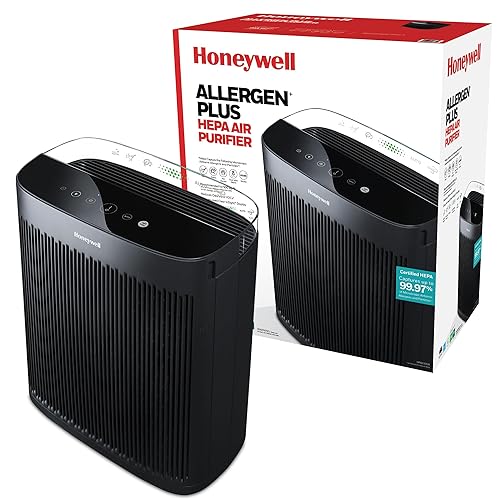
 TOP CHOICEBest overallHoneywell AllergenPlus HEPA Air Purifier for Home, HPA304View on Amazon
- 2
 TOP CHOICEBest for extra-large roomsHoneywell HEPA Air Purifier for Home, XL Rooms, HPA5300BView on Amazon
- 3
 TOP CHOICEBest for multi-pollutant coverageHoneywell Allergen Plus 4-in-1 HEPA Air Purifier for Home, HPA4300WView on Amazon
- 4
 Best for bedroomsHoneywell Allergen Plus Compact HEPA Air Purifier for Home, HPA125WView on Amazon
- 5
 Best for filter replacementHoneywell HEPA Air Purifier Filter R, 3-Pack for HPA 100/200/300, 3000, 5000View on Amazon
- 6
 Best for smoke and wildfire smokeHoneywell HPA030 HEPA Tower Air Purifier, Airborne Allergen ReducerView on Amazon
Our Top Picks
Quick Comparison
| Product | Best for | Key feature |
|---|---|---|
| Honeywell AllergenPlus HEPA Air Purifier, HPA304 | Large rooms | Covers up to 2250 sq ft |
| Honeywell HEPA Air Purifier, HPA5300B | Extra-large rooms | Auto mode, 2423 sq ft |
| Honeywell Allergen Plus 4-in-1, HPA4300W | Mixed pollutants | Up to 1718 sq ft |
| Honeywell Allergen Plus Compact, HPA125W | Bedrooms | Up to 530 sq ft, quiet |
| Honeywell HEPA Filter R 3-Pack | Replacement filters | Three-pack spare filters |
| Honeywell HPA030 HEPA Tower | Smoke and wildfire haze | Rated for about 200 sq ft |
Honeywell AllergenPlus HEPA Air Purifier for Home, HPA304
HoneywellLarge room air purifier with air purifier filter, quiet operation, reduces allergens, dust, pollen, smoke, pet dander, odors AllergenPlus HEPA Air Purifier for Home, 2250 Ft², White, HPA304
Best for: Large rooms with mixed allergens
This model suits open-plan living areas where you want one unit to handle dust, pollen, pet dander and odors. The listing specifies coverage up to 2250 square feet. For a deeper look, HEPA vs Non HEPA Air Purifier: Which 7 Models Are Worth Buying in 2026 covers this in detail.
Pros
- Large stated coverage area
- Quiet operation noted by owners
Cons
- Bulky footprint for small apartments
Honeywell HEPA Air Purifier for Home, XL Rooms, HPA5300B
HoneywellHEPA air purifiers for home reduce allergens, dust, pollen, pet dander, odors & smoke, clean 2423 Ft² rooms in 1 hour HEPA Air Purifier for Home, XL rooms, Auto Mode, Black, HPA5300B
Best for: Extra-large rooms that need fast turnover
Best suited to great rooms or open lofts where the manufacturer’s 1-hour clean-time claim for about 2400 square feet matters. It includes an auto mode that adjusts fan speed to air quality.
Pros
- Auto mode adjusts to detected particles
- Large stated room coverage
Cons
- Larger size than compact models
Honeywell Allergen Plus 4-in-1 HEPA Air Purifier for Home, HPA4300W
HoneywellAir purifiers for home with up to 1718 ft² coverage for large rooms; reduce allergens, pet dander, smoke and odors Allergen Plus 4-in-1 HEPA Air Purifier for Home, White, HPA4300W
Best for: Households with several pollutant types
A good fit for homes with pets, smokers or cooking odors, where one filter stack needs to address several sources. Coverage is listed at up to 1718 square feet. We also found 5 Best 3M Filtrete Air Purifier Models for Home Use (2026) useful on this point.
Pros
- Targets allergens, smoke and odors together
- Mid-size coverage for most living rooms
Cons
- Filter stack may need replacing sooner with heavy use
Honeywell Allergen Plus Compact HEPA Air Purifier for Home, HPA125W
HoneywellHoneywell air purifiers for home, Up to 530 ft², Quiet HEPA air purifiers for bedroom, 3-in-1 filter, HPA125W Allergen Plus Compact Small Room HEPA Air Purifiers for Home
Best for: Bedrooms and small spaces
Designed for rooms up to about 530 square feet, this compact unit is a practical choice for a sleeping area. Owners often describe it as quiet enough for overnight use.
Pros
- Compact footprint
- Quiet operation reported for bedrooms
Cons
- Not suited to large open rooms
Honeywell HEPA Air Purifier Filter R, 3-Pack for HPA 100/200/300, 3000, 5000
Genuine Honeywell filter HEPA air filter replacement targets smoke, pollen,pet dander and dust Honeywell HEPA Air Purifier Filter R 3-Pack For HPA 100/200/300, 3000, 5000
Best for: Keeping existing units running
This is a replacement filter set rather than a standalone purifier. It suits owners of older compatible Honeywell models who want genuine parts on hand.
Pros
- Three filters in one pack
- Genuine Honeywell replacement part
Cons
- Only useful with compatible models
Honeywell HPA030 HEPA Tower Air Purifier, Airborne Allergen Reducer
Honeywell HPA030 HEPA Tower Air Purifier, Airborne Allergen Reducer for Medium/Large Rooms (200 sq ft), Black – Wildfire/Smoke, Pollen, Pet Dander, and Dust Air Purifier
Best for: Smoke and wildfire haze in medium rooms
Aimed at medium and large rooms, with listing language that highlights wildfire smoke and pollen. A useful option when outdoor air quality drops.
Pros
- Marketed for wildfire smoke and pollen
- Tower design saves floor space
Cons
- Rated coverage is modest for very large rooms
Buying Guide
Room Size and Coverage Area
Match the purifier’s rated coverage to the room you plan to use it in. A unit rated for a small bedroom will struggle in a large open living area, so consider a larger model or a second unit for spaces with high ceilings or open layouts.
For best results, look for a purifier rated for a bit more area than your room measures. This gives the unit room to clean the air more often without running at full speed all the time.
The Main Particles You Need to Capture
Think about what is actually in your air. If allergies are your main concern, pollen and dust matter most. Pet owners should focus on pet dander, and households dealing with wildfire smoke or cooking odors should look for models that mention smoke and odor reduction.
All true HEPA filters trap very fine particles, but some models add activated carbon for gases and odors. If odors are a problem, choose a unit with a combined HEPA and carbon filter.
Noise Level and Fan Speeds
If the purifier will run in a bedroom or office, pay attention to how loud it gets on its higher settings. Models with multiple fan speeds and a dedicated sleep or quiet mode let you keep air moving without disrupting rest or concentration.
Auto mode, where the unit adjusts its speed based on detected air quality, can be a convenient way to balance cleaning power and noise throughout the day.
Long-Term Filter Costs
Replacement filters are the ongoing expense of owning an air purifier. Check how often the manufacturer recommends replacing filters and what the replacement packs cost compared with the purifier itself. A lower upfront price can be offset by expensive filters over time.
Genuine Honeywell replacement filters are designed to match each model’s airflow and filtration performance, so using them helps keep the unit working as intended.
Size, Placement and Ease of Use
Consider where the purifier will sit. Compact units fit on a nightstand or small table, while tower designs take up more floor space but may offer more airflow. Look for simple controls, a filter-change indicator and a design that makes filters easy to access.
FAQ
What makes a HEPA air purifier a true HEPA filter?
A true HEPA filter is designed to capture at least 99.97 percent of airborne particles at 0.3 microns in size. This standard covers many common allergens, including pollen, dust and pet dander. Look for the term “true HEPA” in product details rather than vaguer marketing phrases.
How often should I replace the filter?
Replacement timing depends on the model, how many hours the unit runs and the air quality in your home. Many Honeywell models include a filter-change indicator, and the manufacturer’s guidance is the best starting point. Homes with pets, smoke or heavy dust may need more frequent changes.
Can a Honeywell air purifier help with odors and smoke?
Models that include activated carbon or are specifically designed for odors and smoke can help reduce those smells in addition to capturing particles. HEPA filters alone are mainly effective for particles, so check the product features if odor control is important to you.
Should I run the purifier all the time?
Running an air purifier continuously, or at least on a regular schedule, generally gives the best results because air is always being cleaned. Many people use a lower fan speed or auto mode overnight and a higher speed when the room is in use or when air quality worsens.
Is one purifier enough for my whole home?
One unit usually cleans only the room it is placed in, so whole-home coverage often requires multiple purifiers. Choose units based on the rooms where you spend the most time, such as bedrooms and living areas, and consider a larger model for bigger open spaces.
Conclusion
If you need the most coverage for a large space, the larger Honeywell models with high rated area are the best fit, while a compact unit suits a bedroom or small office. Households focused on pet dander, dust or pollen should choose a model that targets those particles, and those concerned with odors or smoke should look for added carbon filtration.
Before buying, compare replacement filter costs and noise levels against your daily routine, since those factors shape how comfortable and affordable the purifier will be over the long run.
Related reading
- Top 5 Honeywell 17000-S QuietCare True HEPA Air Purifier Models Compared
- Honeywell True Hepa Air Purifier 50250-s: Setup, Filters and Room Size Guide
- True HEPA Filter Air Purifier Review: HAP603 Features and Performance
About Graham Fisher
Graham Fisher is part of our editorial team and reviews and edits our indoor air guides, checking product details against manufacturer specifications and owner feedback.