By Ella Sterling
An air purifier can help with mold, but mostly by cleaning mold spores out of the air, not by removing the mold growing on walls, ceilings or furniture. Used alone, it reduces the spores that cause coughing, sneezing and irritation. Paired with moisture control and proper cleanup, it becomes a useful part of a mold strategy. This guide explains what a purifier can and cannot do, how to choose the right type, and the steps that actually stop mold from returning.
What an Air Purifier Can and Cannot Do About Mold
Mold reproduces by releasing microscopic spores into the air. Those spores travel, settle on surfaces and land on new damp material, where they can grow. A portable air purifier with a true HEPA filter captures airborne particles, including most mold spores, as air moves through it. That means it lowers the number of spores you breathe and keeps them from spreading through the room.
Shopping for one? See our guide: 7 Best HEPA Air Purifiers for Mold: Expert Picks Compared (2026).
What it cannot do is kill the colony feeding on drywall, grout or carpet backing. A purifier does not stop the source. If the moisture problem continues, mold will keep producing new spores faster than any filter can catch them. Think of the purifier as a way to manage what’s floating in the air while you fix what’s causing the growth.
Why Filter Type Matters for Mold Spores
Mold spores typically fall in the range of roughly 2 to 40 microns, though many common types sit at the smaller end of that span. The filter you choose determines how well those particles are captured.
- True HEPA filters are rated to capture at least 99.97 percent of particles at 0.3 microns. This is the standard most people should look for when mold is the concern.
- HEPA-type or “HEPA-like” filters are not held to the same testing standard. Manufacturers may describe them as comparable, but read the specifications carefully.
- Activated carbon layers target odors and gases, such as the musty smell mold can produce. They do not capture spores on their own, so they work best alongside a HEPA stage.
- Ionizers and UV features are marketed for killing microbes, but their effects on mold in real rooms are inconsistent. Do not rely on them as a substitute for filtration.
Check the Clean Air Delivery Rate (CADR) as well. CADR tells you how quickly a unit cleans smoke, dust and pollen from a room, and a higher number means faster cleaning. Match the CADR to your room size using an Air Purifier Room Size Guide, since an undersized unit will struggle to keep up with spore levels.
Step-by-Step: Using an Air Purifier Alongside Mold Cleanup
A purifier works best as one step in a larger process. Follow this order so the effort you put in actually pays off.
- Find and fix the moisture source. Look for leaks, condensation on windows, damp basements, bathroom ventilation problems and water stains. Mold needs moisture, and no filter can compensate for a constant water source.
- Measure indoor humidity. Keep relative humidity between about 30 and 50 percent. A hygrometer costs little and gives a clear reading. If levels stay above 50 percent, a dehumidifier may be needed.
- Clean or remove the mold. Small surface mold on hard, non-porous surfaces can often be cleaned with detergent and water. Porous materials such as drywall, insulation and ceiling tiles that have significant growth usually need removal. For large areas, consult a professional remediation company.
- Place the purifier correctly. Set it in the room where you spend the most time or where mold was found, with clear space around the intake and outlet. Keep doors and windows closed while it runs to prevent spores drifting in from other rooms.
- Run it continuously during cleanup and afterward. Leave it on the highest setting while you work, since disturbing mold releases a burst of spores. Continue running it for days to weeks after the source is fixed.
- Replace filters on schedule. A saturated filter stops capturing effectively and can release trapped material. Follow the manufacturer’s replacement interval, and shorten it during heavy use.
Choosing the Right Setup for Your Situation
Not every room needs the same approach. The table below shows how to match your situation to a sensible plan.
| Situation | Recommended approach | Key factor |
|---|---|---|
| Musty smell, no visible growth | HEPA purifier with carbon filter, plus humidity check | Find the hidden moisture source |
| Visible mold on hard surfaces | Clean surface, then run HEPA purifier | Remove the source, not just the spores |
| Allergy symptoms worsen indoors | HEPA purifier in bedroom plus dehumidifier if damp | Keep humidity under 50 percent |
| Large or porous mold damage | Professional remediation first, purifier afterward | Purifier cannot replace removal |
| Basement with recurring dampness | Dehumidifier as primary tool, HEPA purifier as support | Moisture control matters most |
If you are deciding between a humidifier and a purifier for allergy-related symptoms, Humidifier vs Air Purifier for Allergies (2026): Which Is Better? compares the two. For a broader look at picking a unit, see How to Select Air Purifier for Home: 7 Factors That Matter.
Common Mistakes to Avoid
- Expecting the purifier to kill mold. It captures spores but leaves the colony intact. Cleanup and moisture control are still required.
- Using an undersized unit. A small purifier in a large room cannot cycle enough air. Check the CADR against your square footage.
- Ignoring humidity. A purifier running in a room at 70 percent humidity will keep fighting a losing battle.
- Disturbing mold without protection. Scrubbing visible growth without a mask and gloves sends spores into the air. Work with the purifier running and wear appropriate protection.
- Letting filters clog. A filter loaded with particles restricts airflow and reduces performance, and it can become a growth site itself if it stays damp.
- Turning it off too soon. Spores can persist after visible mold is gone, so keep the unit running for a period after cleanup.
Recommended gear
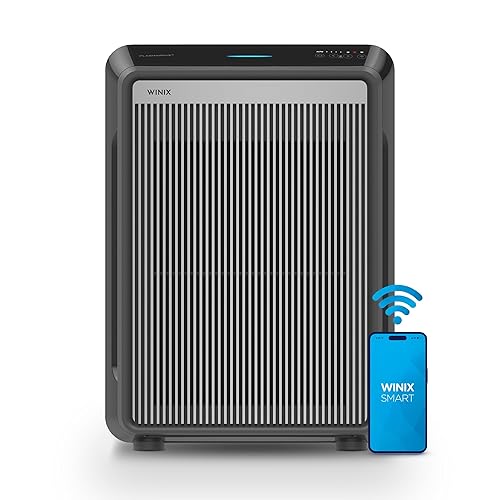
A portable HEPA purifier with a carbon pre-filter is the central piece of equipment for this job, because it addresses airborne spores and musty odors together. Look for a model with a CADR suited to your room and a filter that is easy to replace. View on Amazon
A hygrometer lets you measure relative humidity so you know whether moisture is in the safe range. Inexpensive digital models give a quick reading in each room. View on Amazon
A dehumidifier is useful in damp basements or rooms that stay above 50 percent humidity, because it removes the moisture mold depends on. View on Amazon
A fitted respirator with P100 filters protects you during cleanup of visible growth, when spores are most likely to be released. View on Amazon
Tips for Getting the Most From Your Purifier
- Run the purifier on high during the first day or two, then switch to a lower automatic setting once the air is cleaner.
- Keep the unit away from walls and furniture so air can move freely through it.
- Place a second unit in the bedroom if sleep is affected, since you spend many hours there.
- Vacuum with a HEPA-equipped vacuum to avoid spreading settled spores.
- Read about washable options in Washable Air Purifier Filter: Care Steps, Limits and Buying Tips if you want to reduce filter costs over time, though check that the washable design still includes a true HEPA stage.
- For a shortlist of units that perform well against spores, see 7 Best HEPA Air Purifiers for Mold: Expert Picks Compared (2026).
FAQ
Does an air purifier help with mold on walls?
It helps by capturing spores floating in the air, but it does not remove mold growing on the wall itself. Wall mold must be cleaned or removed, and the moisture behind it fixed.
Do air purifier help with mold in bathrooms?
A purifier can reduce airborne spores in a bathroom, but bathrooms need proper exhaust fans and good ventilation to prevent the damp conditions mold needs. Use the fan during and after showers.
Can an air purifier help with mold allergies?
Yes, a HEPA purifier can lower spore levels in the air you breathe, which may ease symptoms. It does not treat allergies medically, so consult an allergist for persistent or severe reactions.
Does a HEPA filter kill mold?
A HEPA filter traps spores rather than killing them. Captured spores remain in the filter, which is why regular replacement matters.
Can a air purifier help with mold in a basement?
It can help with airborne spores, but basements usually need a dehumidifier to control moisture, since damp concrete and stored materials keep producing growth.
Will an air purifier stop mold from coming back?
It can reduce spores that settle on new surfaces, but it will not prevent regrowth on its own. Keeping humidity below 50 percent and fixing leaks are what prevent recurrence.
Should I hire a professional for mold?
For large areas, mold in HVAC systems, or growth covering more than a few square feet, consult a qualified mold remediation professional. Health concerns should also be discussed with a doctor.
Conclusion
An air purifier with a true HEPA filter can meaningfully reduce the mold spores in the air, which helps with breathing comfort and allergy symptoms. It cannot eliminate mold growth, so pair it with moisture control, proper cleanup and humidity monitoring. Used as part of that full approach, a purifier is a practical and worthwhile tool.
Related reading
- Washable Air Purifier Filter: Care Steps, Limits and Buying Tips
- Smoke and Air Purifier: 7 Best Picks for Wildfire Smoke (2026)
- Sans Air Purifier Review (2026): Features, Pros and Cons
- Pure Air 3000 Air Purifier Review (2026): Pros, Cons & Who Should Buy
- Levoit Vital 200S Air Purifier Review (2026): Pros, Cons & Who Should Buy
Ready to choose one?

About Ella Sterling
Ella covers indoor air, comparing specs, features and long-term owner feedback to help readers choose with confidence.