
 By Ella Sterling
Updated November 2026
A Winix air purifier with PlasmaWave technology is a practical pick for people who want a true HEPA filter, a multi-stage cleaning path and smart controls in one unit. This model, the Winix 9800, is aimed at medium to large rooms and households dealing with dust, pet dander, pollen or everyday cooking odors. It suits buyers who plan to replace filters on schedule and want app or voice control. It is less suited to people who need a very quiet unit for a small bedroom, anyone who wants a purely ozone-free machine with no ionizing function, or shoppers who want the lowest possible cost of ownership over time, since replacement filters add up.
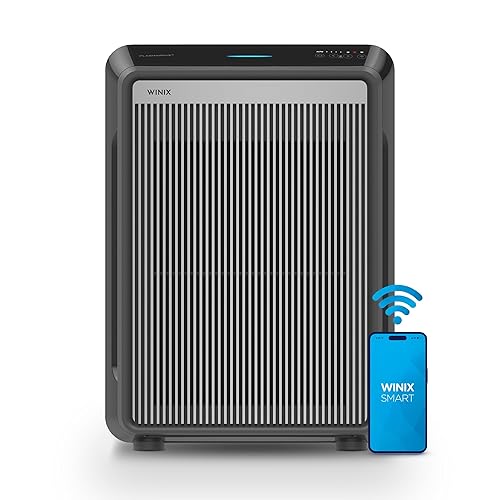
Winix 9800 4-Stage True Hepa Air Purifier with WiFi and PlasmaWave, 500 Sq Ft,Black,Large
Product Overview
The Winix 9800 is a freestanding room air purifier from Winix, a brand known for its PlasmaWave ionization feature paired with mechanical filtration. The listing identifies it as a 4-stage True HEPA unit with WiFi connectivity, rated for rooms up to about 500 square feet, and offered in a black finish. The four stages in this design combine a pre-filter for large particles, a activated carbon layer for gases and odors, a True HEPA filter for fine particles, and the PlasmaWave ionization function that Winix uses as an additional step.
Within Winix’s lineup, the 9800 sits in the larger-room category. Its positioning is about covering more floor area than compact bedroom models, which makes it a better match for open-plan living rooms, combined kitchen and dining spaces, or home offices with higher ceilings. If you are sizing a unit for your home, the general guidance in How to Select Air Purifier for Home: 7 Factors That Matter is a useful starting point before you commit to a model.
Key Features & Specifications
The table below lists the features named in the product listing and widely associated with this model. Confirm exact figures on the current manufacturer page before buying, since specifications can change between production runs.
| Feature | What It Means |
|---|---|
| Filtration stages | 4-stage system: pre-filter, carbon, True HEPA, PlasmaWave ionization |
| Filter type | True HEPA for fine particle capture |
| Coverage area | Rated for up to about 500 square feet |
| Connectivity | WiFi for app-based control |
| Ionization | PlasmaWave technology |
| Color | Black |
| Design | Freestanding tower-style unit |
Two points deserve a closer look. First, a “True HEPA” label means the filter is designed to capture at least 99.97 percent of particles at 0.3 microns under test conditions, the standard benchmark for HEPA filters. Second, the 500-square-foot rating is a manufacturer figure based on a stated air change rate. For dense smoke or heavy allergen loads, many buyers size up, which is covered in the Performance Analysis section.
Pros & Cons
Pros
- Four-stage filtration combines particle, gas and odor reduction in a single unit.
- True HEPA filter addresses fine particles such as pollen, dust and pet dander.
- Rated coverage of about 500 square feet suits larger rooms than compact bedroom units.
- WiFi connectivity allows monitoring and control through a companion app.
- PlasmaWave ionization is an added step that Winix markets for particle and odor reduction.
- Widely available replacement filters from the manufacturer and third-party sellers.
Cons
- Replacement filters are an ongoing expense, and cost of ownership grows over time.
- Larger rooms and heavy pollution may call for running the unit on higher fan speeds, which raises noise.
- Ionization features draw attention to ozone, so buyers sensitive to ozone should check current certifications and usage guidance.
- Size and weight make it less convenient for very small spaces or tight corners.
- Some owners report that app setup and connectivity can be inconsistent on certain home networks.
Performance Analysis
Performance for a room air purifier depends on three things: the clean air delivery rate, the size of the room relative to the unit’s rating, and how often the filters are maintained. The 9800’s True HEPA stage gives it a strong foundation for particulate removal, which covers the main concerns for most households: dust, pollen, pet hair and dander, and mold spores carried on particles. Gas and odor performance depends on the activated carbon layer, which is better at cooking smells and general household odors than at chemical vapors from strong cleaners or paint.
Owner feedback patterns for units in this category tend to follow a consistent script. Buyers who run the unit on auto or medium settings in rooms within the rated size often describe noticeable improvements in dust and odor within a few days. Complaints usually center on noise at higher fan speeds, filter replacement reminders that need resetting, or disappointment when a unit is placed in a room much larger than its rating. Owners also commonly note that the PlasmaWave function is a secondary feature, and that the HEPA and carbon stages do most of the work.
For allergy-focused use, pairing a purifier with good source control and humidity management tends to matter as much as the device itself. The guide to Would an Air Purifier Help With Allergies? What to Expect (2026) explains realistic expectations, and the comparison in Humidifier vs Air Purifier for Allergies (2026): Which Is Better? helps clarify where each device fits.
Who Should Buy This Product?
This unit fits a household with a living room, open-plan area or larger bedroom that needs continuous filtration without frequent babysitting. It suits pet owners dealing with shedding and dander, people managing seasonal pollen, and anyone who cooks often and wants odor control. Buyers who like monitoring air settings from their phone will appreciate the WiFi option.
It is a weaker choice for someone who needs whisper-quiet operation in a small bedroom, since higher fan speeds are where noise becomes noticeable. Renters in very small apartments may find the footprint excessive. Shoppers focused on the lowest possible long-term spending should compare filter replacement schedules before buying, and those on a tight budget can review options in Low Cost Air Purifier Picks: 6 Best Budget Models (2026).
Buying Guide
Before purchasing, measure the room you plan to use. Multiply length by width to get floor area, then confirm the unit’s rated coverage covers that number with room to spare. For rooms with high ceilings, open layouts or heavy pollutant sources, choosing a unit rated for a larger area is a sensible safety margin.
Check the replacement filter schedule and count the cost of a full year of filters. Manufacturers usually specify replacement intervals based on average use, so heavy daily use or a smoky environment will shorten filter life. Make sure you know which filter codes fit your model; the detailed replacement guide in Levoit Air Purifier Filter Review (2026): Replacement Options, Pros and Cons illustrates how to compare replacement choices for a different brand, and the same logic applies here.
Consider these well-known alternatives when comparing options:
- Winix Air Cleaner with PlasmaWave Technology (C545): a related Winix option with PlasmaWave ionization, suited to buyers who want the same core technology in a different footprint.

Winix Air Cleaner with PlasmaWave Technology (C545)
- Winix replacement filter set (115115 HEPA with carbon pre-filters): compatible replacement filters for several Winix PlasmaWave models, useful for keeping ongoing costs predictable.

Fits for Winix 5300 5300-2 6300 6300-2 P300 AM90 C909 9800 Purifiers, 3 Pack Size 21 C535 Filter A+ 3 Pack Carbon Pre-Filters 115115 HEPA Replacement Filter A for Winix PlasmaWave Air Purifier C535
If you prefer a different filtration approach, the overview in Pure Air 3000 Air Purifier Review (2026): Pros, Cons & Who Should Buy shows how other brands structure their stages and coverage.
FAQ
Is the Winix 9800 good for pet dander?
The True HEPA stage is designed to capture fine particles, including pet dander and shed hair fragments, so it is a reasonable fit for pet households. Running it continuously on a suitable speed in the main living area tends to produce the best results.
How big a room does this unit cover?
The listing identifies coverage of about 500 square feet. For best results, match the unit to your room size and consider a larger rating for open or high-ceiling spaces.
What does PlasmaWave do?
PlasmaWave is Winix’s ionization technology, which works alongside the mechanical filters. Winix presents it as an added step for particles and odors. It is not a substitute for the HEPA and carbon stages.
How often should the filters be replaced?
Replacement intervals depend on use and air quality. Follow the manufacturer’s indicator and schedule, and replace sooner in smoky or heavily polluted conditions.
Does the unit have ozone concerns?
Ionizing air purifiers can generate small amounts of ozone. Check current certifications and the manufacturer’s usage guidance, and consult a health professional if you have respiratory conditions or ozone sensitivity.
Can I control it from my phone?
The WiFi function allows app-based control and monitoring. Owners sometimes report setup issues on certain networks, so confirm your router compatibility before buying.
Is it noisy?
Noise rises with fan speed. Lower speeds are generally quiet enough for daytime living spaces, while higher speeds for heavy pollution will be more audible.
Who should talk to a professional first?
If you have asthma, severe allergies or other respiratory conditions, consult an allergist or physician before relying on any air purifier as part of your management plan.
Final Verdict
The Winix 9800 is a capable choice for medium to large rooms, offering a True HEPA filter, carbon-based odor control, WiFi convenience and the PlasmaWave ionization feature. It makes the most sense for households that run the unit regularly, keep filters on schedule and place it in a room within its rated coverage. Buyers sensitive to noise in small spaces, or those who want to avoid ozone-generating features, should weigh alternatives carefully.

About Ella Sterling
Ella covers indoor air, comparing specs, features and long-term owner feedback to help readers choose with confidence.





