As an Amazon Associate I earn from qualifying purchases. This page may contain affiliate links.
If your allergies flare indoors, a humidifier vs air purifier for allergies decision usually comes down to one question: are you dealing with airborne particles or with dry air irritating your airways? An air purifier wins for most people with pollen, dust mite, pet dander and mold spore allergies, because it physically pulls particles out of the room. A humidifier is the better choice only when dry winter air is aggravating congestion, nosebleeds or throat irritation, and it works best as a supporting tool alongside filtration rather than a replacement for it.
| Criterion | Air Purifier | Humidifier |
|---|---|---|
| Main function | Filters particles out of the air | Adds water vapor to the air |
| Removes pollen, dust mite debris, pet dander | Yes, when fitted with a true HEPA filter | No |
| Effect on mold spores | Captures airborne spores; does not kill mold on surfaces | Can encourage mold growth if humidity runs too high |
| Helps dry-air irritation | No | Yes, raises relative humidity |
| Best humidity range for allergy control | Not applicable | Generally 30% to 50% relative humidity |
| Maintenance focus | Filter replacement, prefilter cleaning | Daily water changes, tank and filter cleaning |
| Noise level | Varies; low on sleep settings | Varies; ultrasonic models are often quieter |
| Works with a central HVAC system | Standalone units; separate from ductwork | Whole-house models can connect to furnaces |
Which Removes Allergens Better?
Winner: air purifier.
Allergens such as pollen, dust mite fragments, cat and dog dander and mold spores are solid particles suspended in the air. A humidifier does not capture them. It adds moisture, which can make some particles settle slightly faster but leaves them in the room to be breathed in or stirred up again. An air purifier draws room air through a filter, and true HEPA media is rated to capture at least 99.97% of particles at 0.3 microns. Because pollen grains are much larger than that, and dander and dust are typically larger still, a HEPA unit handles most common indoor allergens. For a deeper look at how these units move air, see How Air Purifiers Work.
When shopping, check the Clean Air Delivery Rate, or CADR, which indicates how quickly a unit cleans a given room size. Air Purifier CADR Explained walks through the numbers, and Air Purifier Room Size Guide helps match a unit to your square footage.
Which Helps Dry Air and Irritated Airways Better?
Winner: humidifier.
Dry air dries out the mucous membranes in your nose and throat. When those tissues are dry, they become less effective at trapping irritants, which can make allergy symptoms feel worse even when the allergen load itself is modest. Heating season is the classic trigger. Manufacturers of humidifiers generally recommend keeping indoor relative humidity between about 30% and 50%. Staying in that band helps comfort without encouraging dust mites, which thrive when humidity stays above roughly 50%.
A humidifier cannot do this job if it is too big for the room or left running unchecked. A hygrometer, a small inexpensive humidity gauge, lets you verify the level. The Best Indoor Air Quality Monitors roundup covers monitors that track humidity alongside particle counts.
Which Is Safer for Mold and Dust Mite Control?
Winner: air purifier, with a caveat.
Mold and dust mites are the allergy triggers most affected by humidity, and this is where a humidifier can backfire. Keeping humidity too high promotes mold growth on walls, window frames and in damp corners, and it creates better conditions for dust mites. An air purifier cannot stop mold from growing on surfaces, but it can capture spores that are already airborne. The safest approach is to use a humidifier only within the 30% to 50% range and pair it with a purifier and a source-control plan such as fixing leaks and running exhaust fans while showering.
If you are unsure whether mold is present, a professional inspection is worth the cost. Anyone with asthma, a compromised immune system or a severe mold allergy should consult an allergist or physician before relying on either device as a primary control measure.
Which Is Easier to Maintain?
Winner: air purifier, for most households.
Air purifiers need periodic filter changes and occasional prefilter cleaning. Filter replacement intervals vary by model and by how dusty your home is, so check the manufacturer’s guidance and the filter indicator if the unit has one. Humidifiers demand more frequent attention. Tanks should be emptied and refilled with fresh water daily, and basins and filters need regular cleaning to prevent mineral buildup and microbial growth. Using distilled water reduces white dust and scale. Ultrasonic models in particular can disperse mineral particles into the air if water quality is poor.
For practical upkeep steps, Air Purifier Maintenance outlines a schedule you can follow.
Which Is Quieter and Less Intrusive?
Winner: depends on the model, but ultrasonic humidifiers and low-speed purifiers are both quiet overnight.
Noise varies more between individual models than between device types. Many purifiers have a sleep mode that runs at a low fan speed, and many humidifiers offer a quiet or night setting. If you plan to run either device in a bedroom, check the decibel rating listed by the manufacturer and read recent owner feedback about noise at the lowest setting. For bedroom-specific picks, see Best Air Purifiers for Bedrooms.
Which Should You Choose?
Use the following guidance to narrow the decision.
- Choose an air purifier if your main symptoms are sneezing, itchy eyes, runny nose or wheezing triggered by pollen, pet dander, dust or smoke.
- Choose an air purifier if you live near busy roads, wildfire smoke or high pollen seasons and need to clean outdoor-origin particles that drift indoors.
- Choose a humidifier if your symptoms worsen in winter, your nose or throat feels dry, or you wake with a dry mouth and congestion.
- Choose a humidifier only if you can keep humidity between 30% and 50% and commit to daily cleaning.
- Choose both if you have dry winter air and year-round particle allergies. Run the purifier continuously and the humidifier as needed, checking humidity with a hygrometer.
- Choose neither as a standalone fix if mold is visible or you have ongoing moisture problems. Address the source first, and consult a doctor for persistent symptoms.
When comparing models, Air Purifier Buying Guide and How to Select Air Purifier for Home: 7 Factors That Matter cover the features that matter most for allergy control.
Top Picks by Option
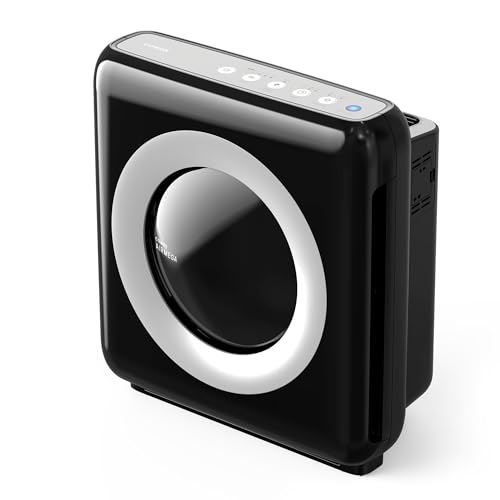
For an air purifier, look at true HEPA models from established brands such as Coway AP-1512HH Mighty Air Purifier, which many owners pair with a bedroom or living room of moderate size. View on Amazon
For a humidifier, a whole-house or console option suits larger spaces, while a compact evaporative model suits a single room. Vicks V745 Warm Mist Humidifier is a widely sold example of a basic tabletop unit. View on Amazon
For a broader list of humidifier options, see 30 Best Humidifiers.
FAQ
Can a humidifier make allergies worse?
Yes. If humidity rises above about 50%, dust mites and mold can multiply, which may worsen symptoms. Ultrasonic and evaporative humidifiers that are not cleaned regularly can also spread microbes or mineral dust into the air. Keep humidity in the 30% to 50% range and clean the unit as directed.
Does an air purifier help with humidity?
No. Standard air purifiers filter particles and do not add or remove significant moisture. Some combination units include humidifying or dehumidifying features, but the core filtration works independently of humidity control.
Should I run a purifier and humidifier at the same time?
Often yes, especially in winter. The purifier removes airborne particles while the humidifier relieves dryness. Monitor humidity with a hygrometer and avoid pushing levels above 50%.
What HEPA rating should I look for?
Look for true HEPA, which is rated to capture at least 99.97% of particles at 0.3 microns. Terms like “HEPA-type” or “HEPA-like” do not carry the same standard. Match the unit’s CADR to your room size for effective results.
When should I see a doctor about allergies?
See an allergist or physician if symptoms persist despite environmental control, interfere with sleep or daily life, or include wheezing, shortness of breath or chest tightness. Consult a professional before relying on any device to manage asthma or serious allergic conditions.
Conclusion
For most people with allergies, an air purifier is the stronger choice because it removes the particles that trigger symptoms. A humidifier earns its place when dry air is making symptoms worse, but it must be kept within a safe humidity range and cleaned often to avoid creating new problems. If you have both dry winter air and year-round allergens, using the two together with a hygrometer gives the best results. When in doubt, start with a purifier sized correctly for your room, then add humidity control only if dryness is still a problem.