As an Amazon Associate I earn from qualifying purchases. This page may contain affiliate links.
If someone smokes indoors, or if you’re dealing with smoke that drifted in from a neighbor or a nearby patio, an air purifier for tobacco smoke can make a real difference in air quality and odor. The catch is that tobacco smoke is a mix of fine particles and gases, and a unit that handles one well may do little for the other. This guide focuses on the features that matter for smoke: a true HEPA filter for particles, a meaningful amount of activated carbon for odor and vapor-phase compounds, a Clean Air Delivery Rate (CADR) that matches your room, and a filter replacement schedule you can actually live with. The list below covers 10 models across budget, mid-range and premium tiers, and the buying guide explains how to pick among them.
Our Top Picks
The picks below are ordered roughly by how well each one fits the selection criteria for tobacco smoke: particle capture, carbon load, coverage and ongoing filter cost. This is a research-based list built from manufacturer specifications and patterns in owner feedback. We have not run lab tests on these units.
Quick Comparison
| Product | Best for | Key feature |
|---|---|---|
| Coway Airmega 400 | Large rooms with heavy smoke | High CADR with a thick activated carbon layer |
| Coway Airmega 300 | Living rooms and open-plan spaces | Four-stage filtration with substantial carbon |
| Blueair Blue Pure 211+ | Budget-conscious smoke control | Particle filter paired with a carbon pre-filter |
| Blueair Blue Max 680i | Large, smoky commercial or home spaces | Strong airflow for high-volume rooms |
| Levoit Core 300 | Bedrooms and small offices | Quiet operation with a True HEPA filter |
| Levoit Core 600S | Medium-to-large smoky rooms | Smart controls and auto mode |
| Winix 5500-2 | Smokers who want a classic carbon-plus-HEPA design | Plasmawave with a carbon filter |
| Honeywell HPA300 | Whole-room coverage on a moderate budget | True HEPA with a large-room rating |
| Hamilton Beach TrueAir | Compact spaces and apartments | Compact footprint with HEPA and carbon |
| Rabbit Air MinusA2 | Premium, quiet, long-term smoke control | Multi-stage filtration with a deep carbon layer |
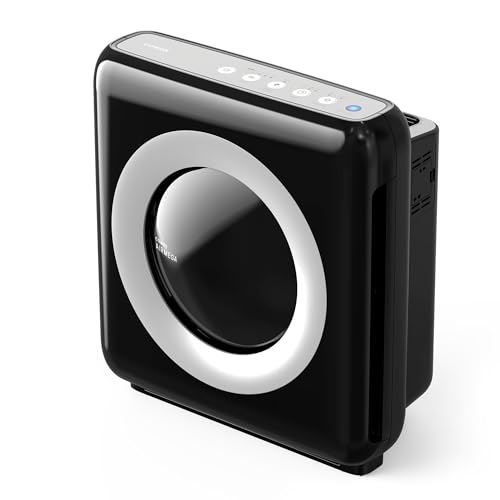
Coway Airmega 400
This is a strong fit for a large living room or open-plan area where tobacco smoke has settled into soft furnishings and the air feels heavy. It is designed for a bigger footprint than most compact purifiers and is a premium option.
Key specs
- Coverage rated for large rooms, with a CADR in the high range for its class
- Multi-stage filtration including a True HEPA filter and activated carbon
- Replacement filter set on a periodic schedule specified by the manufacturer
Pros
- Large carbon component suited to lingering odor
- Strong airflow for its coverage area
- Filter status indicators make maintenance straightforward
Cons
- Replacement filters are a significant ongoing expense
- Large footprint may not suit small apartments
Coway Airmega 300
A good match for a living room or bedroom-sized open space where you want strong smoke and odor control without the largest footprint of the Airmega line. It is a common recommendation for households where one person smokes near a shared living area.
Key specs
- Designed for mid-to-large rooms
- Four-stage filtration: pre-filter, True HEPA, activated carbon and a washable pre-filter layer
- Auto mode that adjusts fan speed to measured particle levels
Pros
- Good balance of carbon load and coverage
- Auto mode responds to smoke events
- Sleek design that fits typical living rooms
Cons
- Carbon filters wear out faster under heavy smoke
- Premium pricing tier
Blueair Blue Pure 211+
This is a practical choice for a budget-conscious household, a shared apartment or a single room where smoke is occasional. It is one of the most widely discussed budget options for smoke and odor.
Key specs
- Suited to small-to-medium rooms
- Particle filter combined with a carbon pre-filter
- Three-speed fan with a simple control layout
Pros
- Affordable entry point with carbon included
- Compact and easy to move between rooms
- Low-noise operation on lower fan speeds
Cons
- Limited coverage for large or heavily smoked rooms
- Carbon load is lighter than premium models
Blueair Blue Max 680i
Best for big open spaces or a home where smoke is a daily issue and you want high airflow. It is built for higher-volume rooms than most residential purifiers.
Key specs
- High CADR rated for large rooms
- Particle and carbon filtration in a multi-stage design
- Smart controls for scheduling and filter monitoring
Pros
- Strong airflow for big rooms
- Smart features help track filter life
- Robust build for continuous use
Cons
- Large size and noise on high speeds
- Premium tier with costly replacement filters
Levoit Core 300
A solid fit for a bedroom or small office where smoke has been a problem and you need quiet nighttime operation. It is a frequently recommended compact option.
Key specs
- Designed for small rooms
- True HEPA filter with a pre-filter
- Sleep mode with dimmable display
Pros
- Quiet operation suitable for bedrooms
- Compact footprint
- Simple, low-maintenance design
Cons
- Limited activated carbon, so odor control is weaker than carbon-heavy models
- Not suited to large rooms
Levoit Core 600S
A good choice for a medium-to-large room where you want smart features and automatic operation. It is positioned for households that want hands-off air cleaning.
Key specs
- Coverage rated for medium-to-large rooms
- True HEPA filter with activated carbon in the filter stack
- Smart app control and auto mode
Pros
- Good coverage for the price tier
- Auto mode and app control
- Filter replacement indicators
Cons
- Carbon load is modest for heavy smoke
- Some owners report app connectivity issues
Winix 5500-2
A common pick for smokers who want a classic carbon-plus-HEPA design with a long-established filter system. It suits living rooms and bedrooms where smoke has settled into fabrics.
Key specs
- Coverage for medium-sized rooms
- True HEPA filter with a large activated carbon filter
- PlasmaWave technology plus carbon filtration
Pros
- Carbon filter adds meaningful odor control
- Established filter design with widely available replacements
- Multiple fan speeds
Cons
- Ozone-generating features are a concern for some buyers, so check certifications
- Carbon filter needs frequent replacement with heavy smoke
Honeywell HPA300
A dependable choice for whole-room coverage on a moderate budget. It is often considered for family homes where smoke is an occasional issue rather than a daily one.
Key specs
- Rated for large rooms
- True HEPA filter for fine particles
- Three fan speeds and an filter-change indicator
Pros
- Strong particle capture from a True HEPA filter
- Good room coverage for its tier
- Simple controls
Cons
- Limited carbon, so odor from smoke may linger
- Fan can be noticeable on high speed
Hamilton Beach TrueAir
Best for apartments and compact spaces where you need a small footprint and both HEPA and carbon filtration. It suits a bedroom or studio where smoke is a recurring problem.
Key specs
- Designed for small-to-medium rooms
- HEPA filter with activated carbon
- Compact tower design
Pros
- Compact size fits tight spaces
- Includes carbon for odor
- Budget-friendly filter tier
Cons
- Coverage is limited for big rooms
- Carbon load is light for heavy smoke
Rabbit Air MinusA2
A premium option for long-term smoke control where quiet operation and a deep carbon layer are priorities. It suits households that want the strongest odor handling in a residential unit.
Key specs
- Coverage for large rooms
- Multi-stage filtration with a True HEPA filter and deep activated carbon
- Quiet operation at low speeds
Pros
- Deep carbon layer for strong odor handling
- Quiet on low speeds
- Solid build quality
Cons
- Premium tier with higher long-term costs
- Large footprint compared with compact units
Buying Guide
Picking an air purifier for tobacco smoke comes down to four things: how well it captures particles, how much activated carbon it carries, whether its CADR matches your room, and what the filters will cost you over time. Tobacco smoke carries fine particulate matter and vapor-phase odor compounds, so a unit with only a particle filter will often leave the smell behind.
Selection criteria
- True HEPA filtration for fine particles
- Activated carbon for gases and odor
- CADR matched to room size
- Filter cost of ownership over a year
For background on how the particle and gas stages work, see How Air Purifiers Work. The ratings behind coverage are explained in Air Purifier CADR Explained.
Important features
A true HEPA filter captures at least 99.97 percent of particles at 0.3 microns, according to the standard manufacturers reference. Look for “True HEPA” wording rather than “HEPA-type” or “HEPA-like.” Activated carbon is measured by weight; a heavier carbon bed generally holds more odor compounds before it saturates. Check whether the carbon is a dedicated filter layer or only a thin pre-filter coating.
Specs to check
- CADR: the higher the number, the faster the room is cleaned. Smoke rooms benefit from a CADR well above the room’s square footage minimum.
- Room coverage: manufacturers rate units for specific square footage. Use a conservative rating for smoke.
- Carbon weight: compare the carbon filter weight across models where the manufacturer publishes it.
- Replacement schedule: many carbon filters need replacing more often when smoke is heavy.
For sizing help, read Air Purifier Room Size Guide. For a wider set of decision factors, How to Select Air Purifier for Home: 7 Factors That Matter covers the trade-offs in detail.
Choosing by need
- Daily indoor smoker in a large room: prioritize a high CADR and a deep carbon bed. Premium large-room models fit here.
- Occasional smoke from outside: a mid-range model with a True HEPA filter and modest carbon is usually enough.
- Bedroom with a smoke problem: choose a quiet, compact unit with a True HEPA filter and reasonable carbon. See Best Air Purifiers for Bedrooms for more options.
- Tight budget: a compact unit with carbon included will handle light smoke better than a particle-only model.
Things to watch out for
- Some units use ozone-generating technology; check for low-ozone certification before buying.
- Carbon filters are often sold in sets. Budget for the full set over a year, not just the first filter.
- A pre-filter extends the life of the HEPA and carbon layers. Clean or replace it on the schedule the manufacturer lists. The upkeep steps are covered in Air Purifier Maintenance.
- Smoke does not disappear from surfaces. Purifiers help with airborne particles and odor, but thirdhand residue on walls, fabric and carpet needs separate cleaning.
Indoor air quality more broadly is covered in Indoor Air Quality Guide: The Basics. If you want to measure results, Best Indoor Air Quality Monitors reviews monitoring options.
FAQ
Does an air purifier remove tobacco smoke smell?
It can reduce smell, but only if it has a meaningful activated carbon filter. A HEPA filter removes particles that carry some odor, but the gaseous compounds that cause most of the smell need carbon. Expect the best results from units with a substantial carbon bed and a CADR matched to the room.
What CADR do I need for smoke?
For smoke, it is safer to choose a unit whose coverage rating exceeds your room size. The formula is outlined in Air Purifier CADR Explained. A purifier running at a higher fan speed will clean smoke faster than one running on low.
Is a HEPA filter enough for tobacco smoke?
A True HEPA filter handles the particles well, but it does little for the gases in smoke. For odor and vapor-phase compounds, you need activated carbon. Look for a unit that has both.
How often should I replace carbon filters after smoke exposure?
Replacement depends on how much smoke the unit sees. Heavier exposure saturates carbon faster. Follow the manufacturer’s schedule and check the filter indicator, and replace sooner if odor returns.
Can an air purifier handle secondhand smoke from a neighbor?
It can help reduce smoke that drifts in, particularly fine particles and some odor. It will not seal a home against outdoor air, so closing windows and doors near the source also matters.
Are ozone-producing purifiers safe for smoke?
Ozone is a respiratory irritant, and purifiers that produce it are not recommended for indoor use by many health agencies. Choose a model that does not generate ozone and check for low-ozone certification.
Should I consult a professional about smoke-related health concerns?
If anyone in the home has asthma, COPD, heart disease or another condition aggravated by smoke, consult a doctor or an indoor air specialist for guidance beyond what a purifier can provide.
Conclusion
For a large room with daily smoke, a premium unit with a deep carbon bed and high CADR, such as the Coway Airmega 400 or Rabbit Air MinusA2, gives the most headroom. For living rooms and open-plan spaces, the Coway Airmega 300 or Blueair Blue Max 680i are strong fits. For bedrooms and compact spaces, the Levoit Core 300 and Hamilton Beach TrueAir offer quiet, small-footprint options, though with lighter carbon. For a budget-conscious household, the Blueair Blue Pure 211+ and Honeywell HPA300 cover the basics. Whichever you choose, match the CADR to your room, prioritize a True HEPA filter plus real activated carbon, and budget for filter replacements over the year.