As an Amazon Associate I earn from qualifying purchases. This page may contain affiliate links.
A dehumidifier air purifier combo pulls moisture and airborne particles out of a room in one appliance. This guide explains what these units actually do, when one is a sensible choice over two separate machines, and how to size, place and maintain one so it performs as advertised. By the end, you should be able to judge whether a combo fits your space and avoid the most common disappointments.
What a Dehumidifier Air Purifier Combo Actually Does
A combo unit runs two jobs through one housing. The dehumidifier side uses a refrigerant coil or, less commonly, a desiccant wheel to condense water vapor out of the air and collect it in a tank or drain line. The air purifier side pushes room air through a filter, typically a pre-filter for large debris, an activated carbon layer for odors and gases, and a HEPA-grade layer for fine particles. Some units add UV or ionizers, which vary widely in how much they contribute, so check the specifications before counting on them.
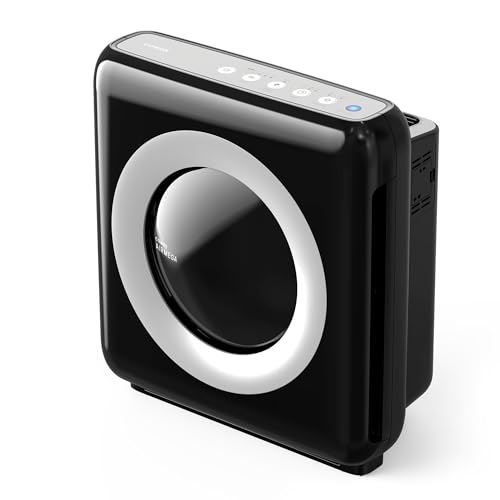
Shopping for one? See our guide: Pure Air 3000 Air Purifier Review (2026): Pros, Cons & Who Should Buy.
The two functions do not interfere with each other in principle. Dehumidification lowers relative humidity, which discourages dust mites and mold growth, while filtration removes particles that those organisms, pollen and pet dander produce. In a damp basement, for example, a combo can address the moisture source and the musty air it creates at the same time.
Where the Two Functions Overlap
Humidity and airborne particulates are linked more than many people realize. Mold spores and dust mite allergens tend to be most problematic when indoor relative humidity stays above roughly 50 percent. Keeping humidity in the 30 to 50 percent range is a common target recommended by many indoor air guides, which is one reason pairing moisture control with filtration makes practical sense in damp rooms.
Is a Combo Right for Your Space?
A combo makes the most sense when you have a single problem area that suffers from both excess moisture and stale or allergen-laden air. Basements, laundry rooms, bathrooms without strong exhaust fans and small bedrooms in humid climates are typical examples. It is less useful in a large open floor plan where a dehumidifier and a purifier would each need to run in different zones anyway.
Consider a combo if you match most of these conditions:
- The room is under about 500 square feet and fully enclosed or semi-enclosed.
- Humidity regularly reads above 55 percent on a hygrometer.
- You notice musty smells, condensation on windows, or visible mold near the ceiling or corners.
- Allergy symptoms or dust build-up are worse in that same room.
- You have limited floor space or outlets and want one appliance instead of two.
If your main issue is humidity from a structural source such as groundwater seepage, a combo will help with the air but will not fix the leak. Address the source first, then use the unit to manage what remains.
Step-by-Step: Sizing and Choosing Your Combo
Step 1: Measure the Room
Calculate the room volume by multiplying length by width by ceiling height in feet. A 15 by 12 foot room with an 8 foot ceiling is 1,440 cubic feet. Dehumidifiers are rated by pints of water removed per day under standard test conditions, often 80 degrees Fahrenheit and 60 percent relative humidity, and manufacturers usually list a recommended room size. Air purifiers list a Clean Air Delivery Rate, or CADR, for smoke, dust and pollen, and a room coverage figure based on achieving a set number of air changes per hour.
Step 2: Check the Dehumidification Capacity
Match the pints-per-day rating to your conditions. A general guide: units rated around 30 pints per day suit moderately damp rooms of several hundred square feet, while units at 50 pints or more are better for basements or very humid climates. Oversizing is not a major problem for dehumidifiers because they cycle off when the target humidity is reached, but undersizing means the machine runs constantly and never catches up.
Step 3: Check the Air Purification Specs
Look for a CADR figure and confirm it applies to the particle types you care about. Also check whether the filtration includes a true HEPA layer, which manufacturers typically describe as capturing 99.97 percent of particles at 0.3 microns. A carbon layer adds value for odors, but the amount of carbon matters; thin carbon pads do less than deeper beds. More on CADR is covered in the site’s Air Purifier CADR Explained resource, which is worth reading before comparing numbers.
Step 4: Compare Drainage and Tank Options
| Feature | Why it matters | What to look for |
|---|---|---|
| Water tank size | Determines how often you empty it | Larger tank or auto-shutoff with indicator light |
| Continuous drain | Essential for basements or long-running use | Port for a hose; check that the unit can run while draining |
| Filter access | Affects long-term upkeep | Tool-free access to pre-filter and main filter |
| Noise level | Matters in bedrooms and offices | Manufacturer-stated decibel levels at low and high settings |
| Humidistat | Keeps humidity at your target without manual checks | Adjustable setpoint with digital display |
Step 5: Plan Placement
Place the unit with at least 12 inches of clearance on the intake and exhaust sides, and keep it away from walls and furniture that block airflow. Position it roughly centered in the room if possible, not tucked in a corner where air will short-circuit. If the room has a closed door, leave a small gap or run the unit with the door open to let air circulate through the whole space.
Setup and Maintenance Checklist
Before first use, and then on a regular schedule, work through this list:
- Measure and record the room volume and current humidity with a hygrometer.
- Set the humidistat to 45 to 50 percent as a starting point.
- Clean the pre-filter every two weeks in a busy room, or monthly in a quieter one.
- Empty the tank or confirm the drain hose is clear, and check for any water pooling beneath the unit.
- Wipe the intake grille and the coil area to remove dust that reduces efficiency.
- Replace carbon and HEPA filters according to the manufacturer’s stated interval, which often ranges from about six months to a year depending on use and air quality.
- Check for mold on the unit’s housing and in the tank periodically, and clean with a diluted mild detergent if present.
Common Mistakes to Avoid
- Ignoring the moisture source. A combo cannot stop water entering through cracks or poor grading. Fix the source or the machine will run endlessly.
- Setting humidity too low. Going well under 30 percent can dry out skin and airways and is unnecessary for most homes.
- Letting the pre-filter clog. A blocked pre-filter reduces airflow across both the coil and the purifier stages, lowering performance on both fronts.
- Skipping filter replacement. Old carbon stops absorbing odors and can release previously trapped material. Track replacement dates.
- Buying on the headline number alone. A high pints-per-day figure with a thin carbon layer may still disappoint for odor control.
- Running it in a sealed room with no air exchange. Stale air builds up as the purifier recirculates the same volume, so leave a path for fresh air.
Tips for Getting the Most From a Combo
- Run the unit on auto or humidistat mode rather than constantly on high, which saves energy and reduces noise.
- Keep the room door slightly open or run the unit in the room with the most activity for better overall air quality.
- Use a separate hygrometer to verify the built-in sensor, since many built-in readings can be off by several percentage points.
- If the room is also a bedroom, choose a model with a quiet sleep setting and check its decibel rating at that setting.
- Consider a continuous drain hose for basements to avoid daily tank emptying.
Recommended Gear
A digital hygrometer lets you confirm the humidity reading that drives the dehumidifier side, which is useful for checking whether the unit is actually reaching your target. View on Amazon
A replacement activated carbon pre-filter or carbon filter pad helps keep odor control effective between full filter changes. View on Amazon
A continuous drain hose kit allows the unit to run without emptying the tank, which suits basements and other long-running installations. View on Amazon
A small room thermometer and humidity monitor is helpful for tracking conditions across several rooms, especially if you plan to use more than one unit. View on Amazon
FAQ
Can a dehumidifier air purifier combo replace two separate machines?
In a single small to mid-sized room with a clear need for both, a combo can do the job of two units. In larger or multi-zone spaces, separate machines sized for each function often perform better.
What humidity level should I aim for?
Most indoor air guidance points to somewhere between 30 and 50 percent relative humidity. Staying near 40 to 50 percent is a common compromise between controlling mold and dust mites and avoiding dryness.
How often should I replace the filters?
Follow the manufacturer’s interval, which often falls between about six months and a year. Heavy use, pets, smoke or high pollen seasons may call for earlier replacement, and a clogged pre-filter should be cleaned sooner.
Will it remove mold from my walls?
No. It can reduce airborne mold spores and lower humidity that feeds growth, but visible mold on surfaces needs to be cleaned or removed separately. For significant mold, consult a professional remediation service.
Is it safe to run continuously?
Most units are designed for extended operation, and the humidistat cycles them as needed. Check the manual for any stated limits, and keep the intake and exhaust clear to prevent overheating.
Does a combo help with odors from pets or cooking?
Carbon filtration can reduce many common odors, and deeper carbon beds generally perform better. Results depend on the odor source and how much carbon the unit contains, so manage the source where possible.
Can I use it in a bedroom?
Yes, if the unit has a low or sleep mode with a quiet decibel rating. Check the noise figures before buying, since some models are noticeable at night even on low.
Should I see a professional about humidity or allergies?
If you have persistent mold, water intrusion, or allergy or respiratory symptoms that do not improve, consult a qualified professional such as a licensed mold inspector, building contractor, or your physician.
Conclusion
A dehumidifier air purifier combo is most useful in a single damp, enclosed room where moisture and airborne particles cause problems together. Size the unit by room volume, check both the pints-per-day rating and the CADR, and place it with clear airflow. Keep up with filter and tank maintenance, and fix any water source you can, and the combo will do far more than either function alone.