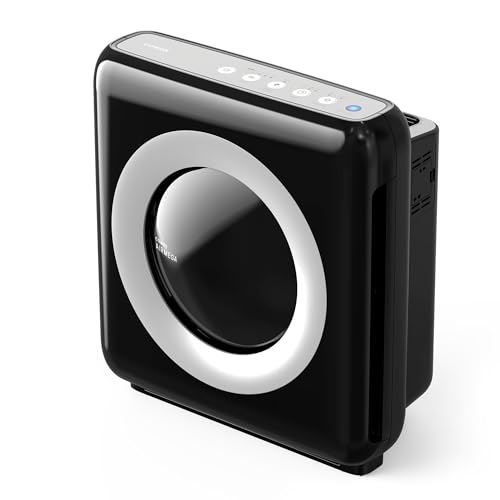
As an Amazon Associate I earn from qualifying purchases. This page may contain affiliate links.
Levoit air purifier filtration is built around a multi-stage system that pairs a pre-filter, a True HEPA filter, and an activated carbon layer. This review is for shoppers who want a straightforward, widely sold purifier for a bedroom, home office, or medium living space and who plan to replace filters on a regular schedule. It is a good fit for people managing dust, pet dander, pollen, and everyday cooking or household odors. It is less suited to buyers who need a large-room powerhouse, a unit with smart air-quality sensors across multiple rooms, or a machine with very low ongoing filter costs. Anyone dealing with heavy smoke, chemical vapors, or medical air-quality needs should consult a professional and look beyond a consumer purifier.
Product Overview
Levoit makes a line of compact air purifiers sold in the US, and their filtration approach is typical of mid-range units in this category. Air enters through a washable or replaceable pre-filter that catches larger particles such as hair and lint. Next, a True HEPA filter captures fine particles, including dust, pollen, and most pet dander. Many models add an activated carbon layer that adsorbs gases and odors, such as cooking smells, smoke residue, and some volatile compounds. A fan then pushes the cleaned air back into the room.
The design goal is to cover a single room with quiet operation and simple controls. Most Levoit units include a fan speed selector, a sleep or night mode that dims the display, and a filter-change indicator. The filter-life reminder is one of the more useful features for owners, because a clogged filter stops performing well even if the fan still runs. Understanding how these stages work together is the foundation for judging any unit in this category. For more on the mechanics, see How Air Purifiers Work.
Key Features & Specifications
The table below lists features that manufacturers generally specify for this product family. Check the exact model’s packaging or product page before buying, since configurations differ between versions.
| Feature | What It Means |
|---|---|
| Filtration stages | Pre-filter, True HEPA filter, activated carbon (on most models) |
| HEPA standard | True HEPA is designed to capture at least 99.97% of particles at 0.3 microns, per the standard |
| Fan speeds | Multiple manual speeds plus an auto or sleep mode on most models |
| Filter-change indicator | Alerts the owner when the filter should be replaced |
| Coverage | Typically marketed for small to medium rooms; check the CADR rating for your model |
| Replacement filters | Sold separately; the HEPA and carbon filters are replaced on a schedule set by the manufacturer |
Clean Air Delivery Rate (CADR) is the number that tells you how much filtered air a unit delivers. Manufacturers usually publish CADR for smoke, dust, and pollen separately. Before buying, compare the rating to your room size using a guide like the Air Purifier Room Size Guide, and read Air Purifier CADR Explained to understand what the numbers mean.
Pros & Cons
Pros
- Multi-stage filtration combines mechanical capture with carbon adsorption for both particles and odors.
- True HEPA filtration is a recognized standard for fine particles such as dust, pollen, and pet dander.
- Filter-change reminders help owners maintain performance without guesswork.
- Compact footprint suits bedrooms, nurseries, offices, and apartments.
- Multiple fan speeds and a sleep mode allow quiet overnight operation.
- Replacement filters are widely available, which simplifies ongoing maintenance.
Cons
- Coverage is best in small to medium rooms; large open-plan spaces will need more units or a higher-CADR model.
- Activated carbon layers typically hold less gas-phase capacity than dedicated chemical filtration systems, so strong or persistent chemical odors may not be fully handled.
- Replacement filters are an ongoing cost, and owners who run the unit continuously should factor that into their decision.
- Consumer purifiers do not replace source control. Ventilation, cleaning, and humidity management still matter.
- Specific performance claims vary by model, so buyers must verify the CADR and filter specs for the exact unit.
Performance Analysis
Performance in this category depends on three things: the airflow the fan delivers, how efficiently the filter captures particles at the airflow rate you run, and how well the carbon layer handles gases. Because particle capture is governed by filter media and airflow, a True HEPA filter running at a moderate fan speed generally outperforms a higher speed with a clogged filter. Owners commonly report that the unit is most noticeable on dust and pet hair when running on a medium-to-high setting in a closed room with doors shut.
Owner feedback patterns for this product family tend to cluster around three themes. First, many people appreciate the quiet operation on low and sleep settings, which matters for bedroom use. Second, odor reduction from cooking and pets is frequently mentioned as a meaningful improvement, though owners generally describe it as reducing everyday smells rather than eliminating strong chemical odors. Third, some owners note that filter replacement is the main ongoing expense and that they keep track of the indicator to avoid running a saturated filter.
Limitations matter too. The effective performance in a room depends on its size, ceiling height, and air exchange with the rest of the home. Doors, open floor plans, and HVAC systems all change how quickly air cycles through the unit. Placing the purifier where air can flow freely, away from walls and furniture, helps it reach its rated effectiveness. For general maintenance, including pre-filter cleaning and filter swaps, review Air Purifier Maintenance.
Who Should Buy This Product?
This type of purifier suits several groups well. Households with dust, pollen, or pet dander sensitivity will likely notice a difference in bedrooms and living areas. Renters and apartment dwellers often prefer compact units that do not require installation. People who cook frequently and want help with lingering smells may find the carbon stage useful. Parents setting up a nursery may value the quiet, low-light operation.
Shoppers who should look elsewhere include those needing to clean a large open-plan area, those dealing with heavy smoke or wildfire smoke, and anyone managing a medical condition that requires a specialized air-quality plan. For allergy or asthma concerns, talk with a doctor or allergist before relying on any consumer purifier. If you are weighing options for specific rooms, Best Air Purifiers for Bedrooms and Best True HEPA Air Purifiers offer useful comparisons.
Buying Guide
Start by matching the unit’s CADR to your room size. A common rule of thumb used by many manufacturers and reviewers is to choose a CADR at least two-thirds of the room’s square footage for particle reduction, and higher for smoke or heavy allergy needs. Confirm the specific rating printed on the box or product page for the model you are considering. For a deeper method, see How to Select Air Purifier for Home: 7 Factors That Matter.
Next, look at the full cost of ownership. Filter replacement intervals and prices vary, and owners who run the purifier continuously will replace filters more often. Check whether the carbon layer is included or sold separately, and whether the pre-filter is washable. Noise level matters for bedrooms, so look for a published decibel rating on the lowest setting if it is available. Finally, consider whether you want a timer, auto mode with a particle sensor, or simple manual controls.
Well-known alternatives that shoppers commonly compare against this type of purifier include the Coway AP-1512HH Mighty, a long-established option often recommended for medium rooms; the Blueair Blue Pure 211+, which uses a particle and carbon filter combination and is popular for quiet operation; and the Winix 5500-2, a HEPA-plus-carbon unit frequently cited for its multi-stage design. Each can be found through View on Amazon, View on Amazon, and View on Amazon. Compare their CADR, filter replacement cost, and noise ratings side by side before deciding.
FAQ
Does Levoit air purifier filtration include a HEPA filter?
Most models in this line use a True HEPA filter as the main particle-capture stage. Verify the filter type on the specific product page, since configurations can differ.
How often should I replace the filters?
Follow the filter-change indicator and the manufacturer’s guidance. Replacement timing depends on use, air quality, and whether the unit runs continuously. Pre-filters are often cleaned rather than replaced.
Will it remove cooking odors?
The activated carbon stage can reduce many everyday cooking and pet odors. Owners generally report improvement for ordinary smells, but strong or chemical odors may persist.
Is it quiet enough for a bedroom?
Many owners use the lowest or sleep setting overnight for quiet operation. Check the published noise rating for the model you are considering.
What room size is it suited for?
Units in this category are generally marketed for small to medium rooms. Compare the CADR to your square footage using a room-size calculator before buying.
Can it replace ventilation or source control?
No. A purifier reduces airborne particles and some gases but does not replace cleaning, ventilation, humidity control, or removing pollutant sources. People with respiratory conditions should consult a doctor or allergist.
Is this purifier good for wildfire smoke?
It can help with smoke particles when rated appropriately and sealed in a room, but heavy smoke events call for higher-CADR units and good practices. Check current guidance from local health authorities.
Final Verdict
Levoit air purifier filtration offers a practical, multi-stage approach that suits bedrooms, offices, and medium living spaces. Its True HEPA stage addresses dust, pollen, and pet dander, while the carbon layer helps with everyday odors. It is best for buyers who match the unit to their room size, commit to scheduled filter changes, and set realistic expectations about chemical odors and very large spaces. If that describes your situation, consider the model that fits your room and check current details before buying: View on Amazon.