
 By Graham Fisher
Updated November 2026
The frigidaire dehumidifier 70 pint category is aimed at people dealing with serious moisture: finished basements that smell damp, crawl spaces, large open-plan rooms, or homes in humid climates where a smaller unit runs constantly and still falls behind. The listing we are reviewing here is the Frigidaire 60 Pint Dehumidifier, which sits just below the 70 pint mark and is often shopped alongside it. This review looks at what the unit is built to do, how its capacity rating should be read, and where it is likely to fit or fall short. Buy it if you have a large, consistently damp space and want a dependable, mid-to-large capacity machine from a well-known appliance brand. Skip it if your problem is a small bedroom, a single closet, or a space where you need true air purification, since a dehumidifier does not filter particles from the air.
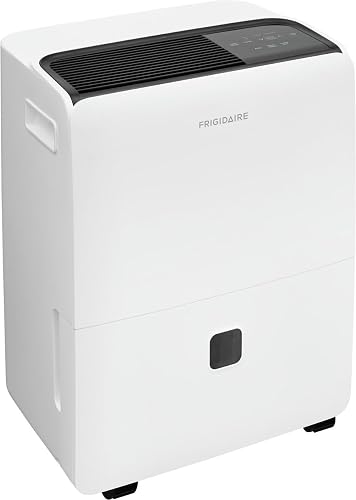
Frigidaire 60 Pint Dehumidifier
Product Overview
The Frigidaire 60 Pint Dehumidifier is a standalone, floor-standing unit designed to pull moisture out of indoor air by drawing it across a cold coil, condensing the water vapor, and collecting it in a bucket or routing it through a drain. Frigidaire is a long-established household appliance brand, and its dehumidifier line is positioned for basements, utility areas and general whole-home moisture control rather than specialty commercial use. The model name refers to its rated water removal capacity under standardized test conditions, which is the number most shoppers use to compare units.
Capacity ratings deserve a careful read. Manufacturers typically test at a set temperature and relative humidity, often around 80°F and 60% RH for the figure most commonly printed on the box. Real-world extraction will be lower in cooler or drier rooms, and higher in hot, wet conditions. Owners generally report that the unit performs closest to its rating in warm basements that are actively humid, and that output drops noticeably once the room settles near the setpoint and the compressor cycles less often. That is normal behavior for any dehumidifier and not unique to this model.
Key Features & Specifications
The table below lists the specifications we can attribute with reasonable confidence to this product line. Check the printed label or the Amazon listing for exact values on the unit you receive, since model revisions can change details such as tank size and power draw.
| Feature | What it means in practice |
|---|---|
| Rated capacity (60 pint) | Maximum moisture removal per day under standard test conditions. Expect less in cooler, drier rooms. |
| Refrigerant-based cooling coil | Condenses water from air; this is the mechanism behind most full-size dehumidifiers. |
| Removable water bucket | Collects water for manual emptying. Useful for spaces without a floor drain. |
| Continuous drain option | Allows a hose connection so the unit can run unattended, which matters most for basements and crawl spaces. |
| Humidity setpoint control | Lets you choose a target relative humidity; the unit cycles on and off to maintain it. |
| Auto shutoff when full | Stops operation when the tank is full if you are not using a drain hose. |
| Washable air filter | Captures dust and lint that could otherwise clog the coil. Requires periodic cleaning. |
| Floor-standing, portable design | Can be moved between rooms, though a full tank is heavy and should be emptied before moving. |
Pros & Cons
Pros
- Large rated capacity suited to basements, garages and open floor plans that a small unit cannot keep dry.
- Continuous drain capability allows hands-free operation in spaces with a nearby drain or sump.
- Humidity setpoint control reduces unnecessary cycling once the target is reached.
- Established brand with a familiar control layout and broadly available replacement filters.
- Washable filter lowers ongoing consumable costs compared with models that need frequent replacements.
Cons
- Heavy when the tank is full, which makes manual emptying and repositioning a two-step chore.
- Noise is noticeable at full speed, so it is better suited to basements or utility rooms than bedrooms.
- Actual water removal falls well below the rated figure in cool or dry conditions.
- Large footprint compared with compact units, which can be a problem in tight spaces.
- Does not purify air or remove odors on its own; it addresses moisture, not particles or chemical smells.
Performance Analysis
Performance for a unit like this comes down to three variables: the room’s starting humidity, its volume and air leakage, and how much moisture is entering from outside or from below grade. A 60-pint-rated machine is sized for a substantial amount of moisture, which is why it is often recommended for basements up to a few thousand square feet in damp climates. Owners in humid regions commonly describe it as a workhorse that keeps a finished basement in a comfortable range once the initial dehumidification pass is done, rather than as a quick fix for a room that has been wet for weeks.
Owner feedback patterns for large dehumidifiers tend to cluster around a few themes. The first is that the unit works best when run on a continuous drain, because the bucket fills faster than most people expect in a truly damp space and the auto shutoff then interrupts operation. The second is that noise is a trade-off: the compressor and fan are audible, and placement against a wall or in a corner can amplify it, so keeping it away from living areas is advisable. The third is that filter maintenance matters. A clogged filter reduces airflow and efficiency, so a monthly rinse in a dusty environment is a reasonable habit. Manufacturers typically specify cleaning intervals in the manual, and following them is the simplest way to preserve output.
For energy use, large dehumidifiers draw meaningful power while running, but they cycle off once the humidity setpoint is met. Running it at a moderate setpoint, such as 50% RH, generally uses less energy than holding a very low target, and it is also gentler on the coil. Pairing it with a hygrometer lets you confirm the real room humidity rather than relying on the unit’s built-in sensor, which can read differently depending on placement.
Who Should Buy This Product?
This unit is a good match for homeowners with a finished or unfinished basement that stays damp, people with a crawl space or garage that needs consistent moisture control, and households in humid climates where the air never seems to dry out. It also suits anyone who wants a continuous-drain setup and does not mind a larger machine taking up floor space. If you have a floor drain or a sump pump nearby, the continuous drain option is especially useful.
You should skip it if your space is small, such as a bedroom, bathroom or closet, since a unit this size will overshoot your needs and run loudly. It is also the wrong choice if your main concern is airborne dust, pet dander or smoke, because a dehumidifier does not filter those particles. In that case, an air purifier is the right tool. If you are unsure which problem you have, measure the room’s humidity first; if it sits consistently above about 55% RH, a dehumidifier is likely the correct fix.
Buying Guide
Start by sizing the unit to the space and the moisture load rather than choosing on capacity alone. A common rule of thumb is to match rated capacity to the room’s square footage and the severity of the dampness, with larger capacity needed for basements that are wet year-round. Ceiling height, air leakage and whether the space is heated or cooled all shift the result, so treat any calculator as a starting estimate. Confirm the continuous drain connection and whether the bucket or hose route suits your layout before you buy, because retrofitting a drain later is more awkward than planning for it.
Consider noise and footprint next. Large units are louder and heavier, so if the machine will sit near a home office or living area, a quieter, smaller model may be the better daily companion even if it runs longer. Check the filter type and replacement or cleaning schedule, since this drives long-term upkeep. Finally, look at the warranty and whether parts and service are easy to access in your region.
Several other well-known large-capacity units are worth comparing. The FrigidairePortable, Quiet, Energy Efficient, Humidity Absorber, Moisture Extractor, for Bedroom Living Room Garage Attic Crawl Space 50 Pint Dehumidifier w/Wifi is a 50-pint option with Wi-Fi control, which suits people who want to adjust settings remotely and whose space is moderately sized.

FrigidairePortable, Quiet, Energy Efficient, Humidity Absorber, Moisture Extractor, for Bedroom Living Room Garage Attic Crawl Space 50 Pint Dehumidifier w/Wifi
For bigger basements, the Continuous Drain & Water Tank 1.06 Gal, Intelligent Humidity Control, Quiet Operation, Auto Shut Off, 24H Timer for Home 80 Pint Dehumidifier for Basement 5500 Sq. Ft. with Drain Hose, ENERGY STAR is rated for a larger area and includes a 24-hour timer and drain hose, which can be useful if you need to run the unit on a schedule.

Continuous Drain & Water Tank 1.06 Gal, Intelligent Humidity Control, Quiet Operation, Auto Shut Off, 24H Timer for Home 80 Pint Dehumidifier for Basement 5500 Sq. Ft. with Drain Hose, ENERGY STAR
If you want a broader look at how these units compare, see Best Dehumidifiers and Dehumidifier for Mold in Basement: 5 Best Picks Compared (2026). For a closer look at a smaller sibling model, Frigidaire 50 Pint Dehumidifier: Setup, Sizing, and Maintenance Guide covers sizing and upkeep in detail.
FAQ
Is a 70 pint dehumidifier too big for a small basement?
Usually, yes. A unit rated this high will remove more moisture than a small space needs, which means it cycles on and off frequently and can run louder than necessary. For small basements, a mid-range capacity is typically more efficient. Measure the room’s humidity and square footage before choosing.
Does the Frigidaire 60 Pint Dehumidifier work without a drain hose?
Yes. It can collect water in its removable bucket and will shut off when the tank is full. For long unattended operation, though, a continuous drain connection is strongly preferred, since emptying a large bucket daily is tedious in a damp basement.
How often should I clean the filter?
Check the filter monthly and rinse it when it looks dusty. In homes with pets, construction dust or heavy lint, you may need to clean it more often. Let it dry completely before reinserting it. Follow the cleaning schedule in the owner’s manual.
Will it remove musty odors?
It helps indirectly by lowering humidity, which slows mold and mildew growth that causes many musty smells. It does not filter odor molecules from the air, so existing smells from mold colonies or other sources may need cleaning or a separate air treatment.
How loud is it?
Expect a steady hum from the compressor and fan at full speed. It is best placed in a basement, garage or utility room rather than a bedroom. Owners generally find it tolerable once it is out of living areas.
Can I run it in a cold garage or crawl space?
Dehumidifiers become less effective in cold air because the coil must be warm enough to condense moisture. Check the manufacturer’s operating temperature range before installing it in an unheated space, and consider a model designed for low-temperature operation if your area gets cold.
What humidity level should I set?
Most homes do well between 40% and 50% relative humidity. Going much lower can dry the air uncomfortably and increase energy use. A basic hygrometer will confirm the actual reading in the room.
Is it worth buying if I already have an air purifier?
Yes, if humidity is the issue. The two appliances solve different problems. A purifier removes particles, while a dehumidifier controls moisture that feeds mold and dust mites. Running both can be a sensible combination in damp, allergy-prone homes.
Final Verdict
The Frigidaire 60 Pint Dehumidifier is a practical, high-capacity choice for basements, garages and other large spaces that stay damp. Its continuous drain option, setpoint control and washable filter make it well suited to long-term, low-attention use, and its size is appropriate for jobs that smaller units cannot handle. The trade-offs are weight, noise and a footprint that rules it out for small rooms. If your space is large and consistently humid, it deserves a place on your shortlist. Measure your room first, and consult a qualified professional if you suspect structural moisture, water intrusion or mold that goes beyond surface cleaning.
About Graham Fisher
Graham Fisher is part of our editorial team and reviews and edits our indoor air guides, checking product details against manufacturer specifications and owner feedback.



