As an Amazon Associate I earn from qualifying purchases. This page may contain affiliate links.
A house plant air purifier is a planter-style device or plant-based product designed to improve indoor air by pairing living plants with some form of active filtration or airflow. Shoppers usually want one of two things: a way to add greenery that also does something useful for indoor air, or a clear sense of whether plants can meaningfully clean a room at all. This guide compares six products across filtration method, room coverage, maintenance, and noise, so you can match a design to your space. Every pick is included on the basis of published specifications, brand track record, and patterns in owner feedback. None of these were tested in a lab or in our own homes.
Our Top Picks
Quick Comparison
| Product | Best for | Key feature |
|---|---|---|
| Molekule Air Mini+ | Small bedrooms and offices | PECO photo-electrochemical filtration |
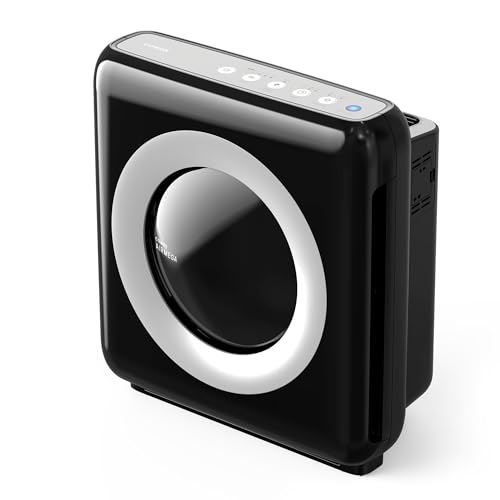
| Coway AP-1512HH Mighty | Medium living rooms | True HEPA plus activated carbon, four-stage filtration |
| Levoit Core 300 | Budget-conscious buyers in small rooms | Three-stage HEPA with a quiet sleep mode |
| Dyson Pure Cool TP04 | Rooms where a fan and purifier are both wanted | Oscillating fan with HEPA and carbon filtration |
| Brookstone Smart Planter Air Purifier | Desk and shelf placement with a living plant | Planter housing a compact air-cleaning module |
| Lotus Living Plant Pot with Soil Filter | Owners who want a low-tech, no-power option | Passive plant-and-soil system with no electricity |
Molekule Air Mini+
This compact unit suits small bedrooms, nurseries, and home offices where space is limited and the goal is steady, quiet filtration. Owners often describe it as a sleek countertop or nightstand fixture that stays unobtrusive.
Key specs
- Designed for rooms up to roughly 250 square feet, per manufacturer guidance
- Uses PECO (photo-electrochemical oxidation) technology alongside a pre-filter
- Compact footprint intended for tabletop or floor placement
Pros
- Small footprint fits bedside tables and desks
- Filtration approach targets gases and odors as well as particles
- Owners frequently mention quiet operation on low settings
Cons
- Coverage is limited, so it is not a fit for large open-plan spaces
- Replacement filter cost adds up over time, so plan for the long run
Coway AP-1512HH Mighty
This is a well-established choice for medium living rooms and bedrooms where you want a dependable HEPA-based unit. It suits buyers who want a straightforward, widely serviced machine.
Key specs
- Covers rooms up to about 361 square feet, per manufacturer specifications
- Four-stage filtration including a True HEPA filter and activated carbon
- Three fan speeds plus an auto mode with an air quality sensor
Pros
- True HEPA filtration is well documented for particle capture
- Carbon stage helps with cooking and household odors
- Brand has a long record in the Korean and US markets
Cons
- Larger footprint than compact desktop units
- Filters need periodic replacement, which is an ongoing expense
Levoit Core 300
This is a practical option for buyers who want reliable three-stage HEPA filtration in a small room without spending heavily. It is a common starting point for first-time purchasers.
Key specs
- Designed for rooms up to roughly 219 square feet, per manufacturer guidance
- Three-stage filtration: pre-filter, True HEPA, and activated carbon
- Sleep mode dims the indicator light and lowers fan speed
Pros
- Strong value for the filtration it offers
- Sleep mode is popular with light sleepers
- Simple controls with a filter-change indicator
Cons
- Coverage is modest, so larger rooms need more units or a bigger model
- Some owners find the highest fan speed noticeable
Dyson Pure Cool TP04
This suits people who want a fan and an air purifier in one device, particularly in a living room or home office where air movement is useful year-round. It is a premium option within this list.
Key specs
- Combines an oscillating fan with HEPA and activated carbon filtration
- Includes a connected app showing real-time air quality data
- Sealed filtration design intended to limit unfiltered air leakage
Pros
- Doubles as a fan, which many owners value in warm months
- App-based monitoring gives a clear view of indoor readings
- Well-established brand with a broad service network
Cons
- Premium pricing tier compared with most others here
- Fan-style bladeless design takes up more floor space than slim towers
Brookstone Smart Planter Air Purifier
This is a desk- or shelf-friendly option for people who want a living plant as the centerpiece and a built-in purification module in the pot. It works best as a supplement rather than a whole-room solution.
Key specs
- Planter housing with a compact electronic cleaning module
- Designed for tabletop use in small spaces
- Powered by a standard household outlet
Pros
- Combines a living plant with active filtration in one object
- Small footprint suits desks and shelves
- Appeals to buyers who dislike the look of traditional purifiers
Cons
- Limited airflow means coverage is very small
- Plant care and module maintenance both require attention
Lotus Living Plant Pot with Soil Filter
This is a low-tech, no-power option for owners who want to add plants to a room and accept modest expectations about their effect on air quality. It suits people who prefer simplicity and no electricity use.
Key specs
- Passive design with no motor or power cord
- Plant and soil system intended to support root-zone microbial activity
- Pot sized for shelves, sills, and desks
Pros
- No electricity required and no filters to buy
- Adds greenery that many people find calming
- Silent operation with no fan noise
Cons
- Effect on particulate levels is small compared with mechanical filtration
- Requires regular plant care, watering, and light
Buying Guide
Choosing a house plant air purifier depends on whether you want measurable particle removal, a decorative object, or both. Plants alone move very little air and remove comparatively small amounts of pollutants in a typical room, so a mechanical filter is the only dependable way to make a noticeable difference in particle counts. For background on how these machines work, see How Air Purifiers Work.
Selection criteria
- Filtration type: True HEPA captures fine particles. Activated carbon addresses gases and odors. PECO and similar technologies are marketed for gases and volatile compounds, though independent verification varies.
- Room coverage: Match the unit to the room size using the manufacturer’s rated area, and treat that figure as a starting point. See Air Purifier Room Size Guide.
- Noise: Check decibel ranges on the highest and lowest settings, especially for bedrooms.
- Running cost: Filter replacement intervals and prices drive the long-term expense more than the purchase price.
Important features
Look for a clearly labeled True HEPA filter rather than a generic “HEPA-type” claim. An air quality sensor and auto mode reduce guesswork. A filter-change indicator helps you avoid running an exhausted filter. For a deeper look at rated airflow, read Air Purifier CADR Explained.
Specs to check
- Clean Air Delivery Rate (CADR) for smoke, dust, and pollen
- Rated room area in square feet
- Filter replacement interval in months
- Noise level in decibels at low and high speeds
- Power draw in watts for ongoing energy use
Choosing by need
- Allergies or asthma triggers: Prioritize True HEPA and a sealed design.
- Odors from cooking or pets: Prioritize a substantial activated carbon stage.
- Bedroom use: Prioritize low noise and a sleep mode.
- Decor and plant lovers: Accept a smaller effect on air in exchange for a living feature.
Things to watch out for
- Plants do not replace filtration. Treat plant-based products as complements.
- Ozone-generating devices can irritate airways. Confirm a product is certified as ozone-free.
- Check how often filters must be replaced and what the replacements cost, not just the purchase price.
- Coverage claims assume good circulation. Keep doors and vents clear.
If you have asthma, severe allergies, or a respiratory condition, consult a physician or allergist before relying on any air cleaner as part of your management plan.
FAQ
Do house plants actually clean indoor air?
Studies in sealed chambers have shown measurable removal of some volatile compounds by certain plants, but real rooms have far more air exchange and volume. In typical homes, plants add little measurable benefit compared with ventilation and mechanical filtration.
How many plants do I need to make a difference?
Early chamber research suggested dozens of plants per square meter, a density that is impractical in homes. Most people choose plants for appearance and wellbeing, not for air-cleaning results.
Is a planter with a built-in filter better than a regular purifier?
Usually not for particle removal. A standard True HEPA purifier with a similar airflow rating will generally outperform a small planter-based module. The planter form factor is valued more for looks and placement flexibility.
Which plants are best for indoor air?
Common choices include pothos, snake plant, spider plant, and peace lily. Choose species that suit your light and care habits, since a plant you cannot keep alive contributes nothing.
How often should I replace the filter?
Follow the manufacturer’s interval, which typically ranges from several months to a year depending on use and filter type. Pre-filters can often be cleaned, while HEPA and carbon filters usually need replacement.
Can a house plant air purifier help with allergies?
A purifier with a True HEPA filter can reduce airborne allergens like pollen and dust in the room where it runs. Plants alone do not offer comparable relief. Consult an allergist for a complete management plan.
Are these units safe to run around pets and children?
Mechanical HEPA purifiers without ozone generation are generally considered safe for household use. Keep cords out of reach, follow manufacturer guidance, and keep plants nontoxic to pets where possible.
Conclusion
For measurable particle removal in a small bedroom or office, the Molekule Air Mini+ and Levoit Core 300 cover the most common needs, with the Molekule leaning toward gas and odor handling. For a medium living room, the Coway AP-1512HH Mighty offers a well-documented True HEPA and carbon combination. The Dyson Pure Cool TP04 suits people who want fan and purifier functions together. The Brookstone Smart Planter and Lotus Living Plant Pot appeal to plant lovers who understand they are decorative or supplementary rather than whole-room solutions. Match the pick to your room size, noise tolerance, and maintenance habits, and keep expectations realistic about what plants alone can do.