 By Audrey Hayes
Updated November 2026
Air quality in Ashland OR is often better than in Portland OR on ordinary days, but the gap narrows sharply during wildfire season, when Southern Oregon valleys can fill with smoke for weeks. If you are choosing between the two as a place to live, or simply trying to decide how much attention your home’s air needs, the short answer is this: Ashland tends to win for people who want fewer urban pollutants and cleaner baseline readings, while Portland wins for people who need dense medical infrastructure and who can rely on a larger, more varied set of indoor and outdoor air protection options.
This comparison looks at both cities across the criteria that actually affect daily breathing: outdoor pollutant sources, smoke exposure, pollen and mold, ozone, indoor air strategy, and how easy it is to monitor conditions. It is not a substitute for medical advice. If you have asthma, COPD, heart disease or a child with respiratory conditions, talk with a physician or allergist about what level of exposure is safe for you.
Comparison at a Glance
| Criterion | Ashland, OR | Portland, OR |
|---|---|---|
| Population and traffic density | Small city, far fewer vehicles | Large metro, heavy commuter traffic |
| Typical outdoor pollutants | Woodsmoke in winter, dust, regional smoke | Vehicle exhaust, industrial sources, woodsmoke |
| Wildfire smoke exposure | High during late-summer fire seasons | Moderate, often reached by smoke drifting west |
| Ozone on hot days | Lower, but can rise during heat waves | Higher, especially in summer afternoons |
| Pollen and mold | Seasonal grass and tree pollen, valley humidity | Wetter climate, strong mold and tree pollen |
| Public monitoring | Fewer stations, relies more on regional data | Denser network of official and community sensors |
| Medical and specialist access | Limited, regional referrals common | Extensive, including pulmonology and allergy clinics |
| Indoor air strategy fit | Simple filtration usually sufficient | Layered approach often needed |
Outdoor Pollution Sources: Which City Has Cleaner Baseline Air?
Winner: Ashland OR for everyday baseline air.
Portland is a major metropolitan area with a port, interstate highways, and industrial corridors along the Willamette and Columbia rivers. Those sources contribute nitrogen dioxide, fine particulate matter (PM2.5) and volatile organic compounds, especially during morning and evening commutes and in areas near freight routes. Neighborhoods close to major arterials often show higher readings than the city average, so where you live inside Portland matters a great deal.
Ashland is a much smaller city with less traffic and fewer heavy industrial emitters. Its main everyday pollution source in colder months is residential wood burning, which can push PM2.5 up on still, cold evenings when smoke gets trapped in the valley. Outside of those periods and wildfire events, Ashland generally reads cleaner than the Portland metro.
For a sense of how to interpret these numbers, see What Is the Air Quality Index Today? How to Read It and Act, which explains the scale and what each band means for sensitive groups.
Wildfire Smoke: Which Place Gets Hit Harder?
Winner: Portland OR, with a caveat.
This one is closer to a tie than most people expect, and the outcome depends on the year. Ashland sits in the Rogue Valley, a basin surrounded by mountains. When fires burn in the Siskiyous, the Cascades or across the state line in California, smoke can settle into the valley and stay for days because there is little wind to clear it out. Residents often report that Ashland’s smoke events feel longer and heavier than those in Portland, even when the peak readings are similar.
Portland gets smoke too, but it usually arrives after moving over a wider area, so it tends to be thinner and shorter-lived. Because Portland has a larger population, it also has more official monitors and more public alerts, which means residents get earlier and more detailed warnings.
If you live in either city, the practical approach is the same: check the forecast, plan indoor refuges, and understand how the scale works. What Is the Air Quality Index in Spokane, WA? Today's Reading Explained walks through the same type of smoke-season reading that Oregon residents face, which makes it a useful companion read.
Ozone and Summer Heat: Which City Fares Better?
Winner: Ashland OR.
Ground-level ozone forms when sunlight reacts with emissions from vehicles and industry. Portland’s traffic and its urban heat island effect give ozone more fuel and more time to build, particularly on hot summer afternoons. Ozone readings in Portland can climb into the moderate or unhealthy-for-sensitive-groups range on heat-wave days.
Ashland’s ozone is generally lower because there are fewer precursor emissions. However, the valley does heat up in summer, and ozone can rise there during extended heat waves, especially when smoke or regional transport adds to the mix. The sensible rule for both cities is to limit strenuous outdoor exercise in the afternoon when ozone is at its peak, and to exercise earlier in the morning when levels are lower.
Pollen, Mold and Humidity: Which Triggers Are Worse?
Winner: Ashland OR for most allergy sufferers, though it depends on the trigger.
Portland’s wetter, milder winters and damp springs support heavy tree pollen and a long mold season. Many residents with allergies report that indoor mold becomes a year-round concern, particularly in older homes with poor ventilation. A dehumidifier that holds indoor relative humidity between about 40 and 50 percent is commonly recommended to slow mold growth, and that advice applies in both cities.
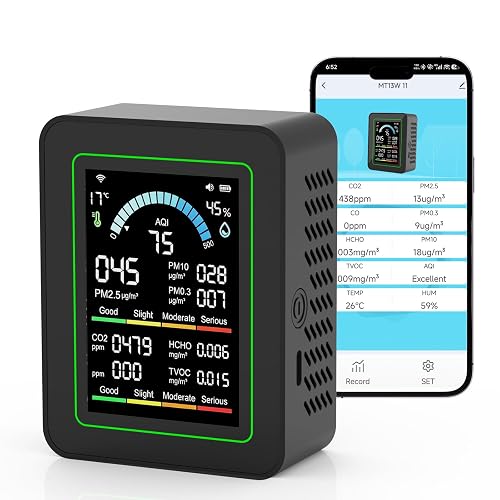
Ashland’s drier summers and cooler valley nights can reduce mold pressure, but grass pollen in late spring and early summer can be intense. Dust and dry-season particulates also matter more in Ashland, so a filter with a high-efficiency rating is often the better fit there. For people who react to both pollen and smoke, a HEPA-based setup is typically more useful than a basic filter, and Best Indoor Air Quality Monitors covers devices that can track humidity and particle levels so you can see when your home drifts out of range.
Monitoring and Information: Which City Is Easier to Track?
Winner: Portland OR.
Portland has a denser network of official monitoring stations and a wider range of community sensors, which gives residents more precise, neighborhood-level data. Local agencies also tend to issue more frequent and more localized alerts. This is a real advantage for households that want to time outdoor activity or open and close windows based on current conditions.
Ashland has fewer stations, so residents often rely on nearby monitors and regional forecasts to estimate local conditions. That approach works reasonably well for general planning, but it can miss valley-specific smoke pockets. Anyone living in Ashland who needs precise tracking should consider a personal indoor monitor and check regional maps alongside official reports. Where to Find an Air Quality USA Map and How to Read It explains how to pull up the maps that cover both regions.
Medical and Specialist Access: Which City Serves Sick Residents Better?
Winner: Portland OR.
This is not really an air quality criterion, but it matters a lot for people with respiratory disease. Portland has major hospital systems, pulmonology and allergy specialists, and more options for pulmonary rehabilitation. Ashland has a regional medical center and clinics, but specialists are fewer, and many patients travel to larger cities for complex care. If you have a chronic lung condition, weigh this factor as seriously as the air itself.
Indoor Air Strategy: Which City Needs More Equipment?
Winner: Ashland OR for simpler setups, Portland OR for layered protection.
In Ashland, a single well-sized air purifier with a true HEPA filter in the main living space often covers most needs, supplemented by a sealed, tight home during smoke events. Because the main threats are seasonal, you can also plan around them: run filters harder in fire season and winter wood-burning months, and relax the routine the rest of the year.
Portland’s year-round mix of traffic pollution, mold, pollen and occasional smoke usually calls for a more layered strategy. That can mean a purifier with activated carbon for gases and odors, a dehumidifier for damp months, and a monitor to tell you when to act. Filter cost of ownership also adds up faster when you run equipment year-round, so factor replacement schedules into your planning. Room-size matching matters in either city: a purifier rated for a smaller room will not clean a larger one effectively, even if it runs constantly.
Which Should You Choose?
Choose Ashland OR if:
- You want lower everyday traffic and industrial pollution.
- You are willing to plan around seasonal woodsmoke and wildfire episodes.
- You want a simpler indoor setup, usually one good HEPA purifier.
- Your main triggers are dust or seasonal grass pollen rather than year-round mold.
Choose Portland OR if:
- You need dense medical care, including specialists for chronic respiratory disease.
- You want detailed, neighborhood-level monitoring and frequent alerts.
- You are sensitive to mold and need a year-round dehumidification plan.
- You are comfortable running a layered indoor setup with carbon filtration.
Choose either city and invest in good indoor equipment if:
- You have asthma, allergies or heart disease and need reliable clean-room air.
- You want to prepare for smoke events, which can affect both places.
Recommended products for each option, each a real Amazon US product that suits the kind of home air plan described above:
For Ashland, a HEPA-based room purifier matched to your room size is the core purchase: View on Amazon. For Portland’s layered approach, pair a purifier with a whole-room dehumidifier: View on Amazon. A dedicated monitor helps either city: View on Amazon.
FAQ
Is air quality in Ashland OR really better than in Portland?
On ordinary days, yes. Ashland has less traffic and industry, so its baseline pollution is generally lower. During wildfire season, however, the Rogue Valley can trap smoke for longer periods, so the advantage can disappear. Check the current reading rather than relying on a general reputation.
When is the worst air quality season in Ashland?
Late summer is usually the highest-risk period because of wildfire smoke. Winter can also bring elevated fine particles when cold, still air traps woodsmoke in the valley. Spring brings heavy grass and tree pollen for allergy sufferers.
Do I need an air purifier if I live in Ashland?
Many residents find one HEPA purifier useful, especially during smoke events or if they have allergies or asthma. Whether you need one depends on your health and sensitivity. If you have a respiratory condition, ask your doctor what level of indoor filtration is appropriate for you.
How do I check air quality in either city?
Use official government air quality maps and local agency alerts, and consider a personal indoor monitor for conditions inside your home. Check the forecast in the morning if you plan outdoor exercise, since afternoon ozone can be higher in summer.
Is Portland’s mold problem worse than Ashland’s?
Portland’s wetter climate generally supports a longer mold season, so many residents report more persistent mold concerns there. Ashland’s drier summers help, but humidity still varies by house and season. Keeping indoor humidity around 40 to 50 percent helps in either city. If mold is visible or you suspect a serious problem, consult a professional remediation service.
Conclusion
When you compare air quality in Ashland OR with Portland OR, Ashland generally offers cleaner everyday air with fewer urban pollutants, while Portland offers better monitoring and far more medical resources. Both cities share wildfire smoke risk, so your indoor plan matters in either place. Pick the city that fits your health needs and lifestyle, then set up a filtration and monitoring routine that matches its specific pattern of pollution. For any serious respiratory condition, keep your physician involved in those decisions.
Related reading
- Why Is New York Air Quality Sometimes Poor? Causes and Fixes
- Why Is Boise Idaho Air Quality Sometimes Poor? Causes and Fixes
- Why Is Air Quality in NY Often Poor? Causes and Fixes
- Why Is Air Quality in Los Angeles Often Poor? Causes and Fixes
About Audrey Hayes
Audrey Hayes is part of our editorial team and reviews and edits our indoor air guides, checking product details against manufacturer specifications and owner feedback.